Puerto Vallarta is about to put one of its defining spaces to a direct public test. From November 21 to 23, residents will be able to vote on whether the Puerto Vallarta Malecón remains a pedestrian promenade or once again allows vehicle traffic. The consultation will run daily from 9 a.m. to 6 p.m., using electronic ballot boxes distributed at 20 locations across the municipality.
The exercise was announced by Mayor Luis Ernesto Munguía González, who framed it as a way to anchor a sensitive decision in the opinion of local people rather than in a closed-door political agreement. The process will be organized and supervised by Jalisco’s electoral institute, giving it formal rules, audited technology, and observers used to running official votes.
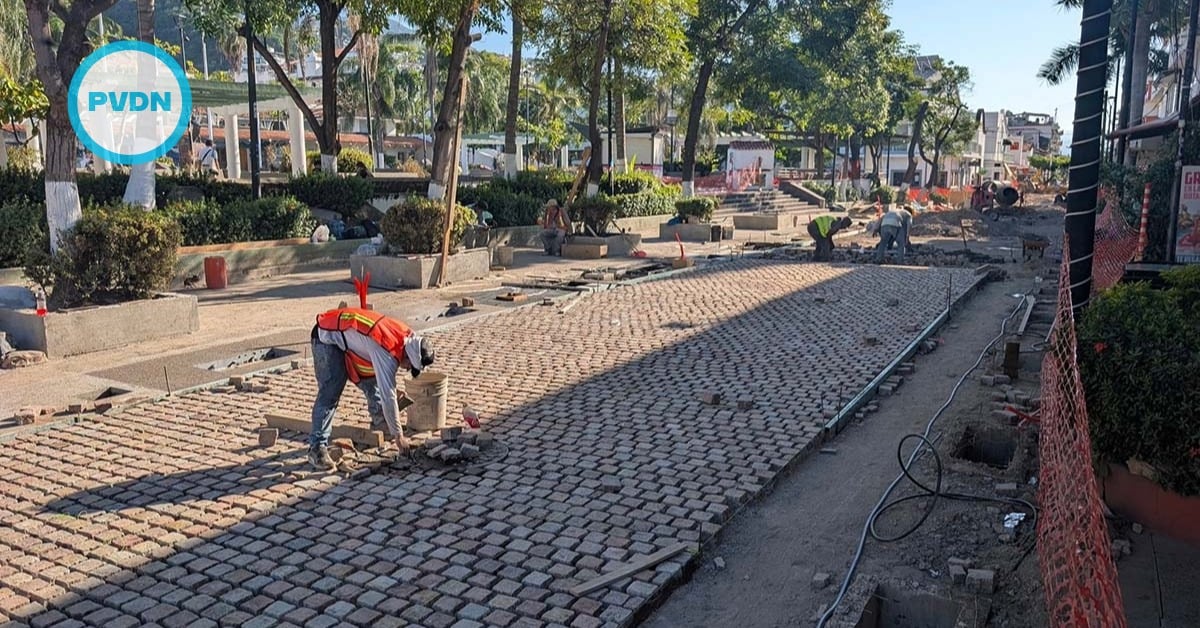
City hall has presented the question in simple terms. Voters will be asked whether they want the Malecón to stay as a car-free space or whether they support reopening the stretch to vehicle circulation. Officials say the result will guide how the municipal government defines long-term mobility and design plans for the waterfront, which is already the focus of ongoing renovation works and budgeted improvements.
Puerto Vallarta Malecón
The Malecón is more than a pretty boardwalk. It is a rebuilt waterfront esplanade that runs through the historic center and connects to the southern beachfront. After Hurricane Kenna destroyed much of the old seafront in 2002, authorities rebuilt the area with a wider pedestrian walkway, public art and a redesigned sea wall. Since then, the strip has become a car-free icon, lined with sculptures, street performers, restaurants, and small shops that depend on foot traffic.
For years, that pedestrian character went largely unquestioned. That changed as business groups and some drivers argued that closing the roadway shifted congestion into nearby streets and made loading, deliveries, and parking more complicated for establishments around the center. In 2021, local merchants formally asked the city to reopen the Malecón to vehicles, pointing to traffic and parking as key obstacles to competitiveness. At the same time, many residents and workers have defended the car-free model as part of the city’s identity and as a safety issue for families who walk the waterfront every day.
The tension between those two views has sharpened in 2025, as the current administration launched a broad rehabilitation of the area and discussed extending pedestrian segments. Protests, neighborhood meetings, and independent surveys have followed the work crews along the seafront. Some neighbors worry about losing vehicle access and changes to traditional routes, while others fear any step that could bring cars back into the space they see as the city’s living room.
Earlier this year, the municipality ran a broader consultation process under the banner “Mi Malecón Renace,” inviting residents and visitors to submit proposals on lighting, security, landscaping, drainage, and cultural use of the promenade. That survey mixed online forms with street modules on the boardwalk and in neighborhoods. The new vote narrows the focus to one core issue that has dominated recent conversations: whether the main stretch should be for people only or shared again with vehicles.
What the vote could change
The consultation result will not rebuild the Malecón overnight, but it will set political direction around a space that carries economic, cultural, and emotional weight for Puerto Vallarta. If a clear majority supports reopening to cars, city planners would face a complex task. They would have to study how to reintroduce traffic on a waterfront now shaped as a paseo, with restaurants placing terraces toward the sea and families using the space as a continuous sidewalk. Any change would intersect with drainage upgrades, storm readiness, and ongoing investments tied to coastal climate risks.
If most voters back the current pedestrian model, the message would reinforce the idea of the Malecón as a people-first corridor. That could strengthen arguments for adding protective elements such as bollards, clearer separations between terraces and walking lanes, and more shade and seating. It would also influence how future administrations talk about mobility in the center, including decisions on bus routes, delivery schedules, and efforts to calm traffic on surrounding streets that absorb the vehicles no longer allowed at the seawall.
Regardless of the outcome, the consultation is a test of how far Puerto Vallarta is willing to go with participatory tools on urban questions that used to be decided in technical committees or behind closed doors. Electronic ballot boxes will allow rapid counting. Oversight by electoral authorities is meant to answer doubts about neutrality that often surround local surveys or online polls.
For residents, the three-day window offers something more immediate. It is a chance to say, in a simple yes or no, what kind of waterfront they want in the years ahead. A Malecón where engines return to the edge of the sea, or a walkway that keeps betting on noise from waves, buskers, and conversation instead of traffic.