More than 5,000 people used electronic ballot boxes to weigh in on whether Puerto Vallarta’s Malecón should stay car-free or reopen to traffic.
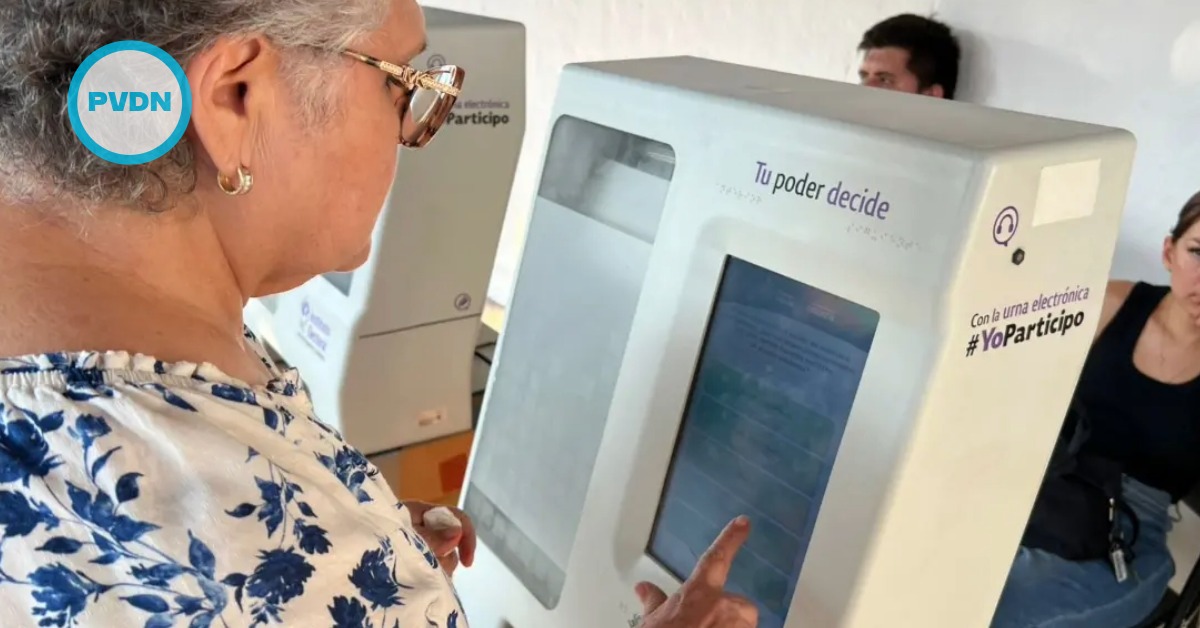
Over one long weekend, more than 5,000 people filed through electronic ballot boxes across Puerto Vallarta to decide how they want to experience the Puerto Vallarta Malecón in the years ahead. Residents, workers, and tourists tapped their answers into touch screens, asking whether the seafront promenade should remain car-free or be reopened, fully or partially, to vehicle traffic.
The consultation ran from Friday to Sunday at 20 sites around the city, from plazas and community centers to schools, health clinics, and shopping areas, each hosting two electronic ballot boxes for a total of 40. The municipal government organized it with technical support from Jalisco’s electoral institute, which provided the machines and training but stopped short of running a formal state-level vote.
According to city officials, participation exceeded internal expectations. Preliminary tallies indicated about 1,064 people voted on Friday and roughly 2,000 on both Saturday and Sunday, before electoral staff removed the machines Sunday night and returned them to Guadalajara amid warnings of possible highway blockades. Detailed results are now being processed and are not expected to reach the mayor’s desk until later this week.
A non-binding test of public mood
Despite the heavy interest, the exercise does not have the legal weight of a binding popular consultation under Jalisco’s electoral code. Municipal officials describe it as a broad opinion survey designed to guide decisions on street design, traffic rules and public works along the waterfront, rather than as a referendum that forces a specific outcome.
Participants worked through a 15-question digital questionnaire. Beyond the core yes-or-no on keeping the Malecón pedestrian or reopening it to traffic, the survey asked about partial access, potential time windows for vehicles, perceived benefits and harms, safety, congestion and ideas for managing intersections and cross streets. Demographic questions aimed to capture who was answering: age, neighborhood, relationship to the city and how often they use the boardwalk.
To take part, voters did not need to show an official ID, and staff marked voters’ thumbs with ink that many reported faded within an hour. That choice opened the door for tourists, temporary residents and locals without updated voter credentials to weigh in as easily as long-time registered voters. City Hall argues that this made the results more reflective of the people who actually walk the Malecón every day, even if it fell short of the stricter controls required for a formal electoral process.
Statisticians advising the municipality had warned that at least 1,426 participants were needed to generate a reliable snapshot of opinion, equivalent to 0.5 percent of Puerto Vallarta’s voter roll. With roughly 5,000 ballots cast, officials say the consultation comfortably cleared that threshold and should provide a strong read on how the city’s core users feel about cars on the waterfront, even if the law still leaves the final call in political hands.
The electoral institute has emphasized that its role is limited to logistical assistance and the loan of electronic ballot boxes, as it has done in other local exercises. Once it delivers the compiled results to City Hall, the institute’s involvement will effectively end, leaving elected officials to decide how much weight to give the numbers when they choose the Malecón’s next chapter.
Puerto Vallarta Malecón at the center of the debate
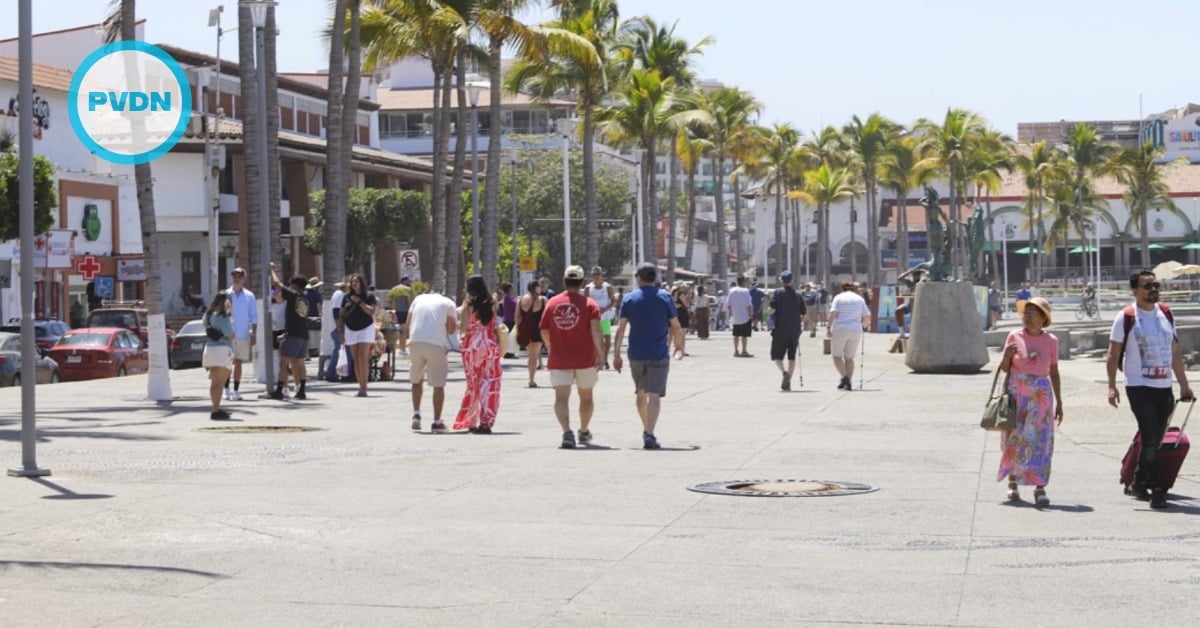
For Puerto Vallarta, the stakes go well beyond a single stretch of pavement. The oceanfront walkway is the city’s showcase, a kilometer-long boardwalk where families, visitors and street performers mix with vendors, restaurants and bars. More than 80 percent of the route is already pedestrian-only, with a marked bike lane, and the promenade was fully revamped and inaugurated in its current form in 2011.
Tourism figures underline how central that space has become. During the peak holiday period at the end of 2024, Puerto Vallarta welcomed an estimated 45,000 tourists a day, many of whom gravitated to the Malecón, Olas Altas and the Los Muertos pier as their main gathering spots. Hotels averaged around 85 percent occupancy, turning the boardwalk into a dense, moving crowd from morning through late night.
That popularity has sharpened a long-running tension. Some business owners along the refurbished pedestrian strip have argued for years that closing the seafront road to cars and rerouting buses hurt drive-by sales, forcing layoffs and closures even as overall tourism grew. They have pushed for a compromise, such as allowing vehicles during limited hours, to bring back customers who prefer to arrive by car or taxi.
Others see the car-free boardwalk as a hard-won public asset that should not be diluted. For families with children, older adults, street artists and people using mobility aids, the absence of traffic has made the Malecón a rare place in the city where walkers, joggers and cyclists can move without dodging vehicles. For them, reopening the strip to cars would risk eroding the very atmosphere that draws visitors in the first place.
This latest consultation is not the first attempt to gauge opinion. Earlier in the year, the municipality promoted a “Mi Malecón Renace” process that invited residents to respond online and at in-person modules as part of a broader management plan for the historic center, tied to a 2030 vision. Those results have yet to be shared publicly, adding pressure on City Hall to show that this new round of citizen input will actually shape decisions.
At the same time, the city is already investing in upgrades along the waterfront, from new planters and lighting to changes in drainage and street furniture aimed at making the area more accessible and resilient during heavy rains. The mayor has said the consultation will help define the final design, including details such as bollards, crosswalks and traffic controls, depending on whether vehicles remain barred or regain some access.
For now, the only certainty is that thousands of people have taken the time to say how they want to move through the city’s best-known public space. In a town that now attracts millions of visitors a year, the way leaders interpret those 5,000 electronic ballots will signal whether the Malecón’s future leans toward cars, people on foot, or an uneasy mix of both. The answer, when it finally arrives later this week, will say a lot about whose Vallarta City Hall wants to build.