Smoke, not flames, is now the immediate issue for parts of coastal Jalisco. Authorities have activated an atmospheric alert in Cabo Corrientes and Tomatlán, and the warning will stay in place until the fires are controlled. For many readers, especially those outside the area, that raises a practical question: what does an atmospheric alert actually mean, who faces the greatest risk, and how serious is the fire response unfolding south of Puerto Vallarta right now?
Smoke spreads across coastal Jalisco
Jalisco’s SEMADET activated an atmospheric alert on Tuesday in Cabo Corrientes and Tomatlán as wildfire smoke spread across the coast. Officials identified impacts in Llano Grande de Ipala, Mayto, Villa del Mar, La Cruz de Loreto, and Gargantillo. They also cited Tequesquite, La Gloria, and nearby areas. The alert will remain active until the fires are controlled and fully extinguished.
Officials urged residents to reduce outdoor activity and keep doors and windows closed. They also said people with respiratory conditions should be especially careful and seek medical help if symptoms appear. For readers outside Jalisco, the main point is simple. The smoke is now the immediate public health concern, even for people not near the fire line.
Dry-Season Fires Hit Vallarta and Bahía de Banderas
What the alert means
An atmospheric alert warns that smoke from a fire is reaching populated areas. In practice, that means the risk can travel beyond the burn zone. A person may not see flames nearby and still be breathing unhealthy air. That is why these alerts matter for residents, visitors, and part-time foreign homeowners along the coast.
Smoke from forest fires can irritate the eyes, throat, and lungs. It can also worsen asthma, COPD, and some heart conditions. Children, older adults, pregnant women, and outdoor workers usually face a higher risk. Even healthy adults can feel coughing, eye irritation, chest tightness, or shortness of breath when smoke lingers. The safest response is to spend less time outside and avoid exercise outdoors until conditions improve.
Firefighters widen the response
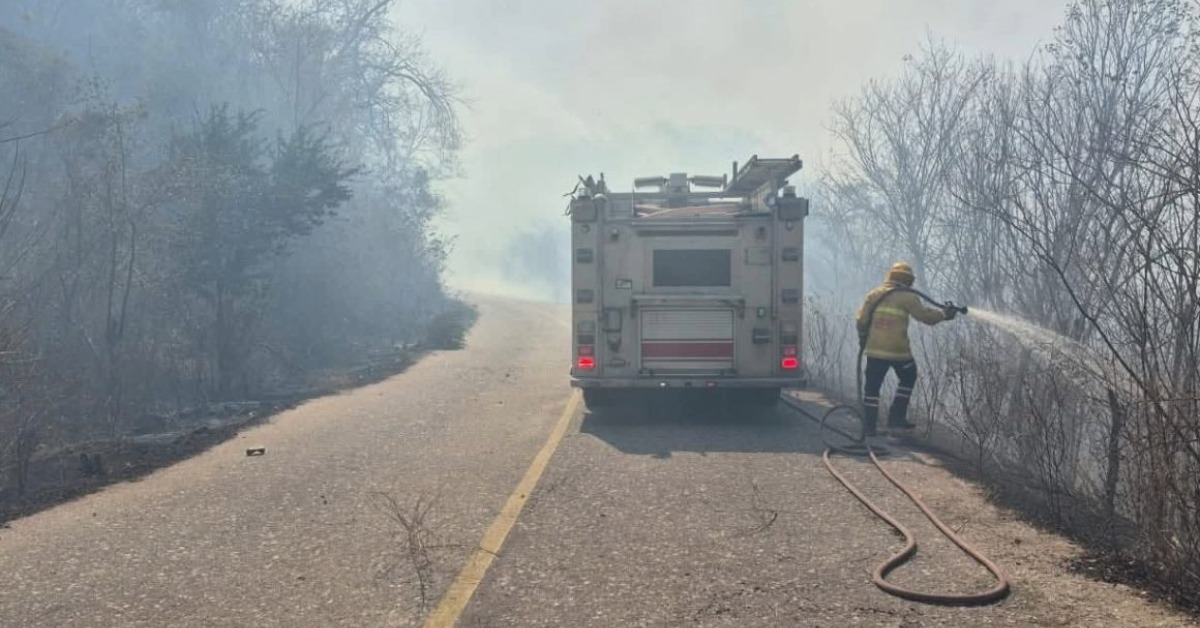
The alert came as firefighting efforts continued in rugged terrain south of Puerto Vallarta. Earlier reports said crews had been battling fires since Saturday in the El Mirador and Llano Grande de Ipala areas. By Tuesday, follow-up reporting said the complex was about 50 percent under control. Crews were working from fronts in both Cabo Corrientes and Tomatlán.
Local reports said 117 combatants and eight support staff were deployed with 18 vehicles. Authorities also added the Witari helicopter to support air operations in hard-to-reach areas. That matters on this stretch of coast, where mountains, forest, and scattered communities can slow containment and complicate smoke movement.
Why this matters beyond one fire
This is also a reminder of how wildfire coverage works in coastal Jalisco. The story is not only about flames. It is also about air quality, health risk, and how quickly smoke can disrupt daily life in small towns, beach communities, and rural corridors. For many readers, that is the part that feels most immediate.
The region has dealt with major smoke and fire episodes before, especially during the dry season. That history matters because it shows how fast a local fire can become a wider public health issue. For now, the message from authorities is direct. The atmospheric alert is active, smoke is affecting communities in both municipalities, and the emergency response is still unfolding.