Federal authorities say the operation unfolded early Sunday in the municipality of Tapalpa, where security forces moved to detain Nemesio Rubén Oseguera Cervantes, known as “El Mencho,” leader of the Jalisco New Generation Cartel. Officials said a shootout followed, leaving him critically wounded. He later died during an air transfer toward Mexico City. Authorities have also reported additional fatalities among suspected cartel gunmen and injuries to service members, framing the raid as one of the most consequential strikes against organized crime in years.
For residents of Jalisco, the immediate significance was less about the details of the raid and more about what followed: a rapid, coordinated attempt to paralyze movement and raise the cost of enforcement through disruption rather than prolonged firefights.
Retaliation spreads across Jalisco and into Puerto Vallarta
Within hours, authorities and witnesses reported multiple incidents consistent with cartel retaliation tactics: vehicles set on fire, key roadways blocked, and traffic funneled into choke points. Jalisco’s government activated a statewide emergency posture as reports multiplied from the Guadalajara metro area and along routes linking inland cities with coastal destinations. As the day progressed, the picture remained fluid, with officials cautioning that the number of affected points could shift as crews cleared debris and security forces pushed patrols into problem corridors.
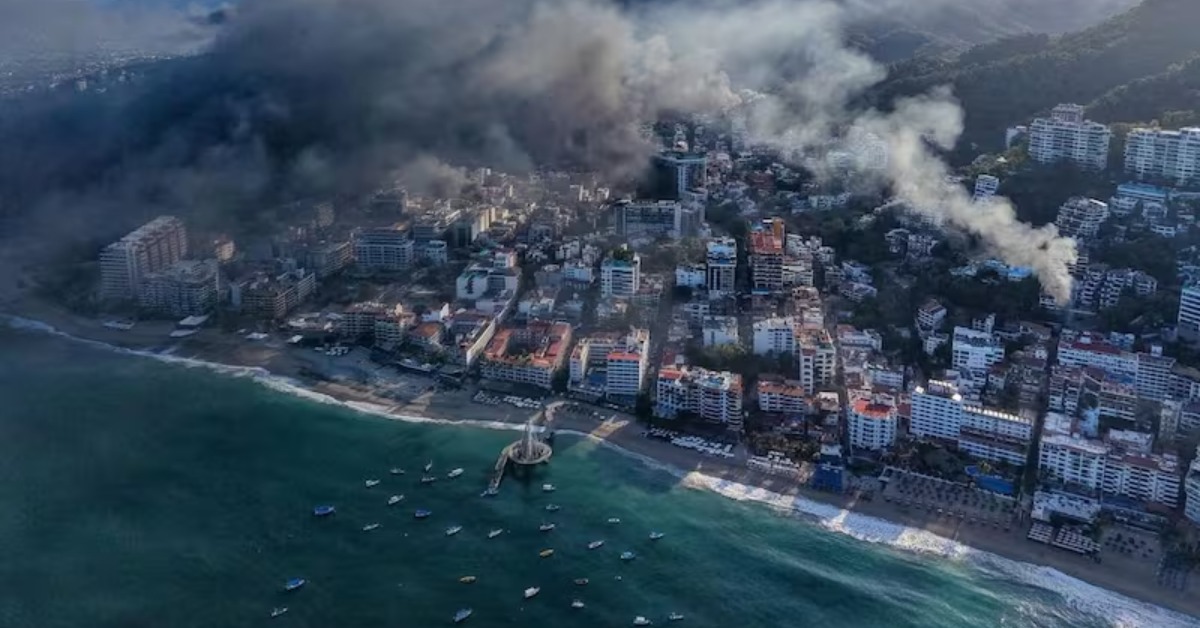
In Puerto Vallarta, fires were reported near the Costco complex in the Fluvial Vallarta area. Early accounts focused on vehicles burning in the parking area and heavy smoke in the vicinity, prompting evacuations and a surge of emergency response. Public information available Sunday did not offer a definitive, official damage assessment for the store itself, but the incident became a focal point because of its location in a high-traffic commercial zone and the broader sense that everyday spaces were suddenly vulnerable.
Travel disruptions and daily-life impacts hit fast
The fastest-moving effects were practical. With roadblocks affecting access routes and creating unpredictable travel times, airlines began canceling and suspending operations to Puerto Vallarta, and disruptions were also reported for Guadalajara-area flights. At the same time, passenger bus companies across the region announced partial or total suspensions on certain routes, citing road safety concerns and advising customers to check official channels before traveling.
Foreign governments also issued safety guidance to their citizens, urging people in affected areas to limit movement and seek shelter as security operations continued. For expats and long-term foreign residents, the day’s most useful takeaway was also the simplest: treat mobility as the variable. If you had plans involving highways, airport transfers, or intercity buses, the safest assumption was that schedules and routes could change with little notice, and that the fastest updates would come from official alerts and transport operators rather than rumors circulating in group chats.
World Cup scrutiny intensifies for Guadalajara
The unrest occurred at a sensitive moment for Jalisco, as Guadalajara is scheduled to be part of Mexico’s hosting responsibilities for the 2026 World Cup. FIFA has already tied Guadalajara’s main stadium into the tournament plan, including four group-stage matches, and the city is also slated to host World Cup-related playoff matches in March 2026. That calendar puts added weight on any episode that visibly disrupts transportation corridors, commercial activity, or public confidence.
Sunday’s events do not determine what security conditions will look like months from now, but they do raise immediate questions that organizers, local government, and federal security planners will have to answer publicly: how quickly mobility can be restored after a major enforcement action, how resilient the city’s transport links are under stress, and what contingency plans exist when violence spills into areas that tourists and residents use daily.
What remains unclear and what to watch next
Even with federal confirmation of the cartel leader’s death, key details remain unresolved in the near term. Authorities have not offered a complete public accounting of how many incidents occurred across the state, how long transport suspensions will last, or whether additional retaliation is expected as the CJNG’s internal succession becomes clearer. In Puerto Vallarta, official clarity on the Costco-area fire will matter not just for accuracy, but because it shapes how residents interpret risk in commercial districts.
The next signals to watch are operational rather than rhetorical: whether flights and bus routes resume on a predictable timetable, whether roadblocks reappear after initial clearances, and whether officials shift from general shelter guidance to more targeted advisories by neighborhood and corridor.