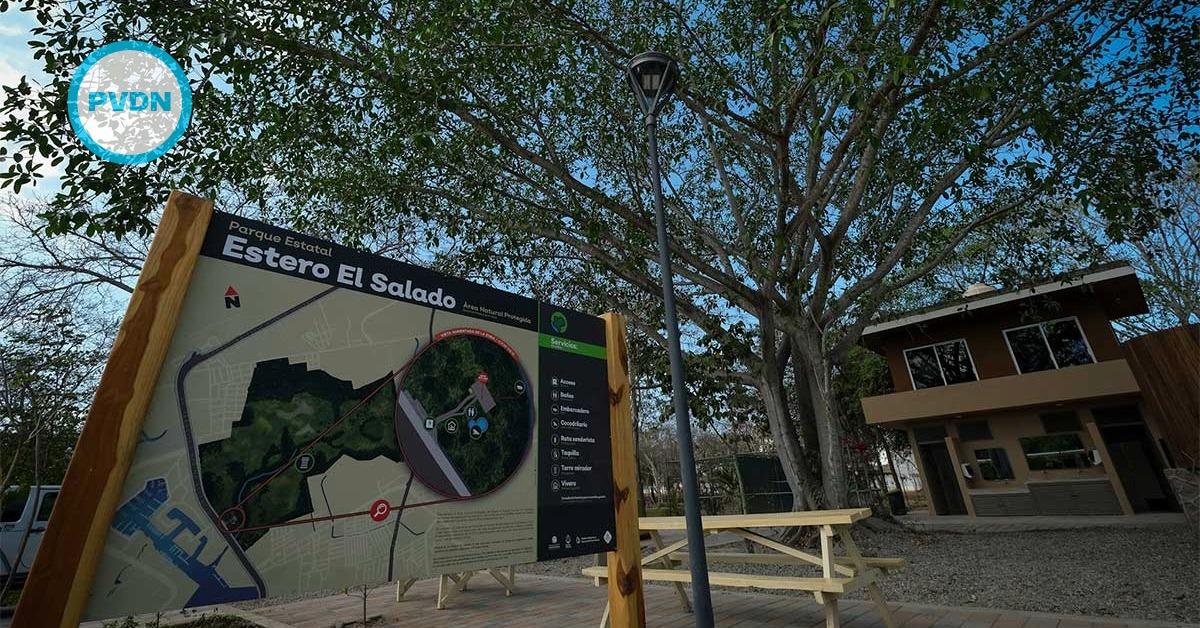
Most people come to Puerto Vallarta chasing blue water and sunset cocktails. Few realize a living wetland sits almost in the hotel zone, where mangroves filter city runoff, birds stitch across the sky, and crocodiles slide through quiet channels. Estero El Salado is the kind of place you can hear before you see—the sudden hush, the buzz of insects, the splash under a boardwalk. Why is this pocket of wilderness still here, and what does it protect for the city beyond tourism?
The wetland hiding in plain sight
Puerto Vallarta has a way of funneling attention toward the coastline. Even longtime residents can fall into the habit: the Malecon for a walk, the beach for a reset, the mountains for a weekend escape. Estero El Salado breaks that mental map. It’s not “out there,” and that’s the point. This mangrove estuary sits inside the urban footprint, close to the main hotel corridor and the everyday rhythm of traffic, errands, and work.
Step into it and the city’s volume drops fast. The air changes, too—saltier, earthier, damp with plant life. Mangroves knit their roots into the water like living scaffolding. Narrow channels carry brackish water that shifts with the sea. It’s the kind of landscape you’d expect to reach after a boat ride, not a short drive across town.
What the mangroves do for the city
It’s easy to describe a mangrove as “beautiful” and leave it there, but Estero El Salado earns its reputation because it functions like infrastructure. Mangroves are natural filters. They slow water down, trap sediment, and help improve water quality by catching what washes off streets and built-up areas. In a coastal city where intense rains are part of life, wetlands also act as buffers—absorbing and spreading floodwaters instead of forcing everything into a rush.
There’s another quiet job happening here: mangroves are among the ecosystems known for storing “blue carbon,” holding large amounts of carbon in soils and plant matter over long periods. That global climate story can feel abstract, but in a place like Puerto Vallarta, it ties back to something tangible: keeping living systems intact makes the city more resilient, season after season.
A wildlife corridor, not a zoo
Estero El Salado isn’t an animal attraction dressed up as nature. It’s a working habitat, and its residents behave like it. Birdlife tends to be the first thing people notice. Depending on the time of year, you can spot waders stalking the shallows, herons posted like statues, and bursts of movement where the mangrove canopy thickens. Over time, surveys and inventories have logged well over a hundred bird species in and around the estuary, which is extraordinary for a site surrounded by development.
On the ground and along the waterline, the cast shifts. Iguanas can be impossibly casual, soaking up heat where the sun finds them. Crabs flicker across mudflats. Raccoons and opossums show up in the margins. And then there are the crocodiles—present enough to command respect, elusive enough that the estuary still feels like theirs, not ours. The right way to think about this place is as a corridor of life threaded through a dense city, a reminder that “urban” doesn’t have to mean biologically empty.
Protection with a history—and ongoing pressure
Estero El Salado’s survival isn’t accidental. It was set aside as a protected natural area in 2000, a move that mattered precisely because Puerto Vallarta was growing fast and the land was valuable. In the years since, the protected footprint has been strengthened and expanded, pushing the area to roughly a little over 200 hectares.
That protection doesn’t make the estuary untouchable. Urban wetlands have a predictable set of threats: pollution carried by runoff, trash during heavy rains, noise, invasive species, and constant pressure from nearby construction and land-use change. The estuary’s biggest advantage—being in the middle of the city—is also its most complicated challenge. A place this accessible needs care, staffing, monitoring, and community buy-in, not just a line on a map.
How to experience it respectfully
For expats, Estero El Salado can be a reset button—especially if you’ve started to feel like Vallarta is only ever the same loop of beaches, restaurants, and crowded hotspots. It’s also one of the best places to take visiting friends who say they “want to see the real Mexico” but don’t quite know what that means. Here, the lesson is simple: a city can be both lived-in and wild.
If you go, treat it like the habitat it is. Keep your distance from wildlife, stay quiet enough to hear what’s happening around you, and don’t try to turn a crocodile sighting into a closer story. When guided tours are available, they’re often the best way to understand what you’re looking at, because this ecosystem isn’t just scenery—it’s a living system with rules. The reward for moving slowly is that the estuary reveals itself in layers: the shimmer of fish near roots, the sudden lift of wings, the way mangroves hold the shoreline together one tangled root at a time.
In a beach city built on postcards, Estero El Salado is something rarer: a place that doesn’t perform. It simply persists. And if Puerto Vallarta is serious about protecting what makes it special, this “natural oasis” might be one of the most important stories it can tell—quietly, from the middle of town.