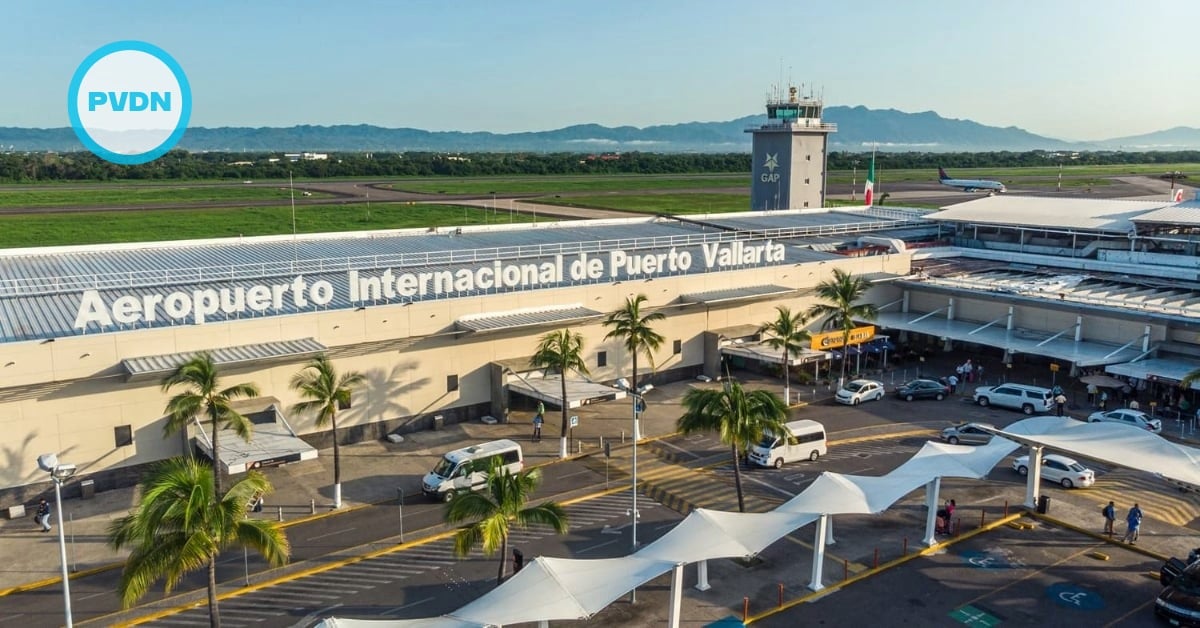
The Bay is getting ready for a busy winter. Airport officials in Puerto Vallarta say high season 2025–2026 will bring up to 54 routes and more than a thousand weekly operations at peak, thanks to stronger connectivity and a terminal upgrade that will double capacity. Year to date, traffic through the city is edging ahead of last year, pointing to resilient demand even as U.S. leisure travel wobbles.
Puerto Vallarta airport
Let’s start with the scoreboard. Through the end of October, Puerto Vallarta airport handled 5.62 million passengers, a 1.6% increase against the same period in 2024, according to operator GAP’s latest traffic tables for October 2025. International throughput to Vallarta is a bit lower year-to-date, but a stronger domestic market has kept overall numbers in positive territory.
Those totals reflect a simple reality on the ground: the runway is busy, and getting busier. Airport leaders say the destination will operate up to 54 routes at peak and exceed 1,000 weekly movements, positioning Vallarta among Mexico’s most dynamic terminals this winter. They also point out that the airport ranks second on the Mexican Pacific for international traffic and fifth nationwide for international connectivity, with 23 routes to the United States and 15 to Canada—a network breadth that matters when one market softens and another picks up.
There’s helpful context inside GAP’s October report as well. Domestic passengers moving through Vallarta are up more than 10% this year to date, offsetting that slight dip on the international side. That shift mirrors what hoteliers and tour operators have noticed: more Mexicans flying to the coast, while U.S. demand has cooled a notch. It’s not a reversal, just a rebalancing that leaves total volume trending up.
What travelers will notice this winter
Construction cranes are part of the story. The new terminal building—designed to double operational capacity—is now past the halfway mark. GAP says the project is targeting high-efficiency operations with renewable energy, optimized water systems, and landscaping built around native species. The expansion adds gates and breathing room across the journey, from check-in to boarding, with a layout that aims to cut bottlenecks and wait times once it opens.
On the route map, Canadians will feel especially well served. Seasonal additions—plus returning winter frequencies—push Vallarta’s Canadian footprint to the mid-teens, while U.S. links remain broad and frequent from the West Coast, Mountain West, Midwest, and East. Independent route trackers currently list 23 U.S. destinations and a mid-teens count in Canada with nonstops to Toronto, Vancouver, Montreal, Calgary, Ottawa, Quebec City, and more, reflecting the seasonal swing that defines the bay.
All of this feeds the local economy. Air links are the oxygen line for the Puerto Vallarta–Bahía de Banderas corridor, sustaining jobs from airport ground crews to restaurant servers, tour guides, drivers, and the small suppliers who keep hotels and condos running. A steadier shoulder season helps, too; if domestic flyers keep growing, businesses worry less about sharp drop-offs when spring break ends.
Airport executives are frank about near-term risks: U.S. demand has cooled, and airlines everywhere are juggling fleet and staffing pressures. But Vallarta’s connectivity—especially the depth of its North America network—gives the destination options. If one origin softens, another can be promoted. When the new terminal opens, the capacity and experience gains should make that sales pitch easier.
Back to the immediate horizon: this winter’s schedule is built for volume. Routes and weekly operations rise, the runway stays busy, and the tourism engine hums. If the numbers continue on their current path, Puerto Vallarta will close 2025 slightly above last year, with a larger, greener terminal on the way to carry the bay into its next chapter.