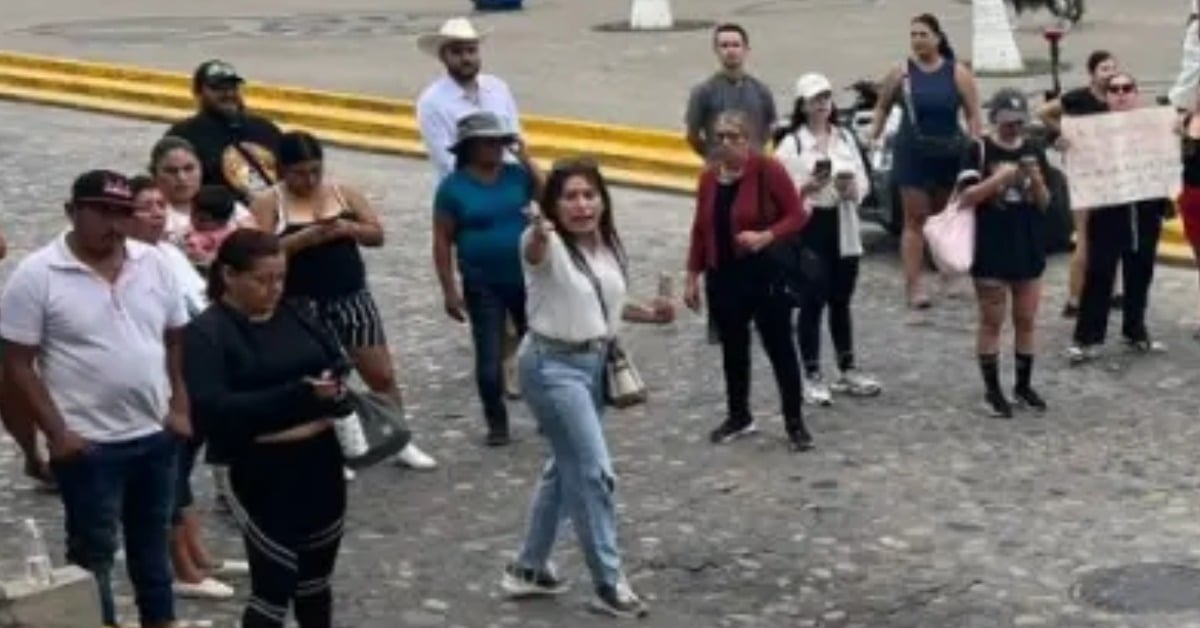
Residents blocked streets around City Hall in Puerto Vallarta on Friday, August 29, pressing officials to abandon plans for parking meters in Puerto Vallarta and to hear them in person. Demonstrators gathered near the presidencia, halting traffic on Morelos and parts of Juárez while calling for the mayor to show up.
City staff attempted to keep vehicles moving by opening Juárez to two-way traffic, but the blockade remained in place throughout the morning. On signs and chants, protesters tied the parking-meter plan to day-to-day service gaps, including spotty water supply downtown.
Puerto Vallarta parking meters
The dispute has been escalating throughout the month. A council session on July 31 ended in chaos after residents entered the chamber to oppose the project. That meeting was then suspended. Records cited in local reporting indicate that the city had already formed a “Grupo Licitador,” moving toward a 15-year concession for a virtual parking meter system in the historic core and nearby neighborhoods.
A day earlier, residents forced their way into City Hall corridors before another session, reflecting the tension around the plan. Video from the university broadcaster UDGTV shows the crowd confronting police at the door and later filling the council room to demand answers.
What residents want
Friday’s blockade remained small—roughly two dozen people—but loud and pointed. Some called for basic fixes first: steady water service, street repairs, and clear rules for loading and taxi stands, before any new fees for curbside parking. Others argued the app-based scheme would exclude older residents and workers without cards or smartphones.
Where the plan stands
Despite visible steps toward a tender, the city’s message is that nothing is final. On August 6, Mayor Luis Ernesto Munguía González stated that the project is still “under review” and any decision must incorporate both social and technical analysis. Independent outlets in the Bay Region have repeated that there is no definitive go-ahead yet.
In mid-August, the mayor added that “there is no rush.” He said any scheme must be built in collaboration with merchants, residents, and business groups, and framed “controlled parking” as part of a broader effort to revitalize the historic center. Local coverage the same week echoed that line.
Politics enters the fight
The local PAN committee formally rejected moving ahead without a comprehensive mobility plan, calling the measure “regressive” if applied in isolation. Their statement emphasizes transparency regarding how meter revenue will be spent and demands participation before rollout.
The street meets the council
Wednesday night’s council meeting ran late and mostly passed without allowing residents to speak. Afterward, some tried to secure a commitment from the mayor. Coverage suggests he proposed a noon meeting on Thursday at the municipal complex (UMA). Accounts differ on whether organizers then showed up; one outlet says most didn’t, leaving the talks up in the air.
Beyond the meters: water and daily strain
While meters are the flashpoint, this week’s street actions also carried water-shortage grievances. A separate protest on the Malecón on Thursday morning blocked traffic for nearly two hours until utility officials promised a case-by-case follow-up. That frustration bled into Friday’s chants outside City Hall.
What happens next
Formally, the council can proceed with a concession call once its committees have finished drafting the terms. Practically, the project’s future hinges on trust. The city says it wants consensus; residents want proof—clear maps, pricing, exemptions, and credible reinvestment in the center before any rollout. Until both sides are in the same room with documents on the table, expect more pressure on the street than progress at the dais.