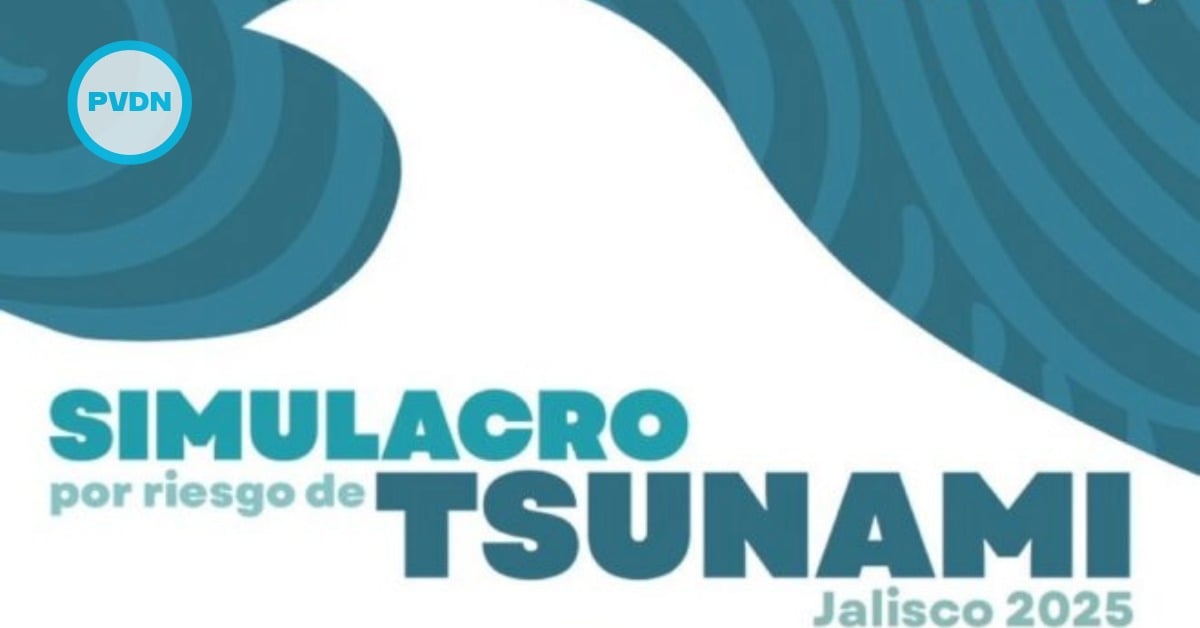
Puerto Vallarta will join Jalisco’s coast in a Puerto Vallarta tsunami drill on Wednesday, November 5, at 10:00 a.m. The exercise will sound all 27 tsunami warning sirens from Vallarta to Barra de Navidad and time how quickly people and institutions move to safer ground. Officials are using a strong-quake scenario off Cihuatlán to stress-test evacuation routes and communications. Expect audible alerts and movement near beaches and low-lying zones for a short window late morning as agencies, schools, and businesses practice what to do when seconds matter.
Puerto Vallarta tsunami drill Nov. 5
Puerto Vallarta will take part in a statewide tsunami drill on Wednesday, November 5, at 10:00 a.m. Authorities say the exercise, held for World Tsunami Awareness Day, will activate the coastal warning network and test evacuations in low-lying areas. State Civil Protection has been signalling the date and time across its channels and urging coastal municipalities to participate.
The drill will sound all 27 sirens along Jalisco’s Pacific front, from Puerto Vallarta to Barra de Navidad, as part of a coordinated alert. These sirens are placed to cover populated coastal strips and are tied into the state’s early warning system—meant to cue immediate movement to higher ground when a real threat is detected.
Puerto Vallarta tsunami drill
For planning purposes, the state is using a hypothetical magnitude-7.6 earthquake at 12 km depth, with an epicenter ~76 km southwest of Barra de Navidad along the Mesoamerican Trench. In the scenario, a wave train up to 5.5 meters arrives at the coast within 7–14 minutes, which is why the drill emphasizes fast, familiar routes and short, clear instructions. Local coverage of the state briefings has outlined those parameters, and officials have kept the 10:00 a.m. start so schools and workplaces can join.
Residents and visitors should expect siren tests and brief movement near beaches, river mouths, hotel zones, and other exposed areas. The goal is not to alarm people but to normalize what “go time” looks like—leave the waterline, get upslope, and listen for updates from local authorities. The date aligns with the global calendar: the United Nations has observed World Tsunami Awareness Day on November 5 since 2015 to promote life-saving preparedness.
What’s being measured and why it matters
Officials will watch for simple things that save lives: how quickly alarms are heard, how fast people start moving, and whether gates, streets, and stairways actually work under pressure. They’ll also time how long it takes agencies to share consistent, helpful information. This isn’t academic; this summer’s trans-Pacific tsunami alert, triggered by a major quake far from Mexico, was a reminder that distant events can ripple into local hazards and demand rapid, proportionate action on our coast.
Under Jalisco’s Protection Civil Law, public agencies, companies, and schools are required to run at least three evacuation drills per year, spaced roughly every 120 days. That baseline turns one-off events like Wednesday’s exercise into part of a steady rhythm of readiness—especially important in places where a few minutes can decide outcomes.