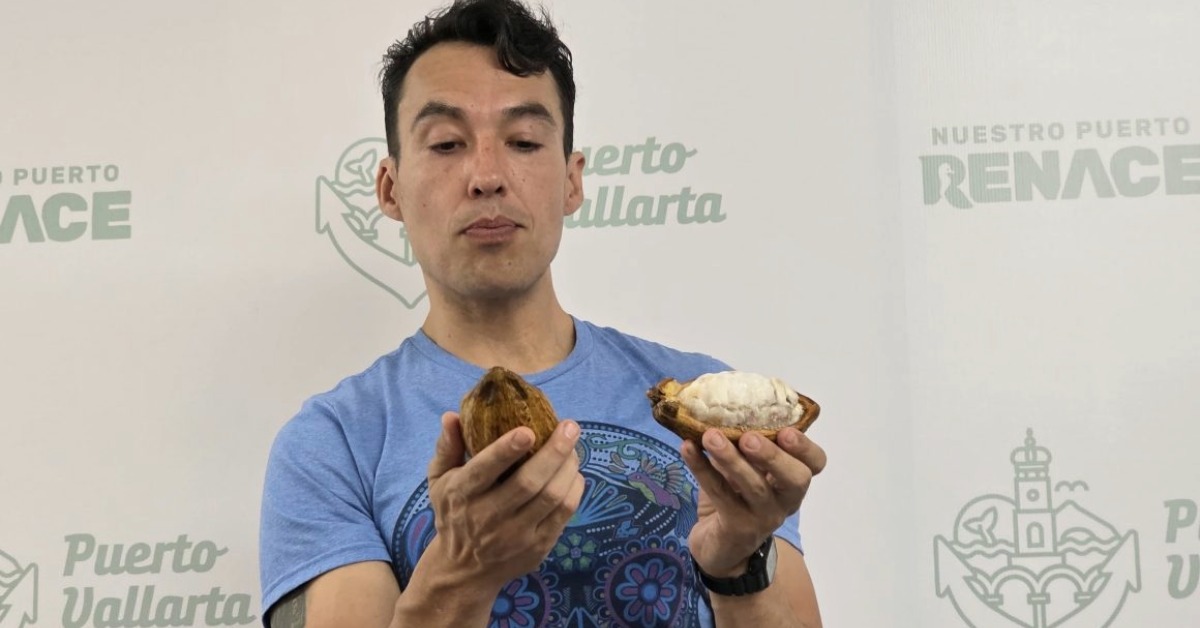
Puerto Vallarta’s next cultural event is about more than sweets. On April 10 and 11, Isla del Río Cuale will host a free festival built around cacao, the seed that shaped ritual, trade, and daily life in Mesoamerica. Producers, artisans, and cultural organizers are preparing workshops, tastings, and family activities, but the bigger story is why cacao still carries weight in Mexico today. For many international readers, this is a chance to see chocolate in its original cultural setting, not only as a dessert.
Puerto Vallarta puts cacao on the calendar
Puerto Vallarta will host the Festival del Cacao y Chocolate on April 10 and 11 at Isla del Río Cuale. Organizers say the event will bring together producers, artisans, and cultural promoters in a public program centered on cacao’s place in Mexican life. Admission will be free. Activities are expected to run from 10 a.m. to 9 p.m. The schedule includes food and drink samples, talks, workshops, crafts, and cacao-based products, including cosmetics.
The event is also being presented as an educational program, not only a market. Organizers expect about 20 producers and artisans, including some from Nayarit. Traditional knowledge holders from Tabasco are also expected to take part. A drawing contest for primary school children will feed into an on-site gallery. Some workshops, including artisanal chocolate making and sensory sessions, will require advance registration. Saturday’s program is expected to close with a concert.
More than a food fair
For many foreign residents and visitors, chocolate is usually the finished product. This festival is trying to slow that story down. Its focus is the cacao seed itself and the network around it: farming, craft, food, ritual, education, and trade. That matters because the event is not centered on a single brand or restaurant. It presents cacao as a living part of Mexican culture. It links growers, artisans, educators, and public space.
That approach also shapes how the festival fits into Puerto Vallarta. The site is already associated with art, workshops, and community activity. Holding the event there gives the program more room than a private tasting or vendor fair. It lets organizers combine commerce with education, family activities, and cultural interpretation. For readers outside Mexico, that context is important. The story is not simply that Puerto Vallarta has another festival. The story is that a well-known tourist city is using a public cultural space to frame cacao as a heritage commodity.
Why cacao still carries weight in Mexico
The background helps explain that choice. In Mesoamerica, cacao was far more than a sweet ingredient. It formed part of ritual life, social status, and exchange. It appeared in ceremonial settings and, in some periods, also functioned as currency and tribute. That long history is why Mexican organizers often talk about cacao as patrimony, memory, and culture, not only agriculture or food.
Cacao also remains part of Mexico’s rural economy. Official figures put national production at 28,447.6 tons in 2024, with most output concentrated in Tabasco, Chiapas, and Guerrero. Puerto Vallarta is not a cacao-growing center. Even so, it can serve as a meeting point between consumers and the people who work with the crop. That helps explain why a cacao festival can make sense in a coastal tourism city far from the main producing zones.
Why Isla Cuale fits the event
The venue adds another layer of meaning. The Instituto Vallartense de Cultura operates the Centro Cultural Cuale and its public event space on the island. Puerto Vallarta’s tourism board describes Isla del Río Cuale as the cultural heart of the city. It sits between the historic center and the Romantic Zone and has long been tied to workshops, markets, and community gatherings. In practical terms, that makes it easy for both residents and visitors to reach.
For international readers, the location also helps explain why this matters. Many people know Puerto Vallarta for its beaches, nightlife, and restaurants. A cacao festival on Isla Cuale shows a different side of the city. It points to a local agenda that uses public cultural space to preserve and reinterpret Mexican traditions. For readers looking for context, that may be the deeper value of the event. It is not only about chocolate. It is about returning a familiar product to its place in the wider Mexican story.