Puerto Vallarta’s city hall is talking big this year: a public-works package that could top 600 million pesos and reshape everything from healthcare to the Malecón waterfront. The headline numbers are tempting—a first stage for the Civil Hospital, a major sports complex in La Bobadilla, and a specialized autism clinic—but the total is still being finalized. The real story will be in the sequencing: which projects start first, what gets delayed, and how the city proves the money becomes concrete.
A record-spending pitch for 2026
Puerto Vallarta’s municipal government says it intends to push public works investment past 600 million pesos in 2026, using a mix of municipal and state resources while also pursuing federal funding. Mayor Luis Ernesto Munguía González framed the goal as a historic level of investment for the city, arguing that coordination with the state and successful management of outside resources would allow Vallarta to launch projects that are meant to be transformative rather than cosmetic.
That framing matters because the headline figure is an ambition, not a finished accounting. The mayor acknowledged that the total is still being defined, even as certain projects already have earmarked funds. In practical terms, residents should expect a year where announcements come fast, timelines overlap, and the city’s capacity to plan and execute will be tested in public.
Health projects take center stage
The largest figure tied to the package is the Civil Hospital, with an initial stage estimated at roughly 400 million pesos. If that number holds, it would dominate the year’s public-works conversation on its own, and it signals that the administration wants its legacy measured in services that touch daily life, not just photo-op infrastructure.
Another health-related project is a specialized clinic focused on autism care, with nearly 30 million pesos earmarked. Even at a smaller price tag, the clinic is the kind of project that can have outsized impact for families navigating long waits, fragmented services, or expensive private options. For many expat households raising children in Mexico—or supporting extended family here—this is also the kind of development that shapes decisions about where to live and how secure daily life feels.
Sports, waterfront access, and public space upgrades
The mayor also highlighted about 200 million pesos for the La Bobadilla Sports Complex, positioned as a major investment in sports infrastructure. Projects like this tend to land differently depending on where you live: for nearby neighborhoods, they can mean years of disruption followed by a real community anchor; for the wider city, they can shift where events, training, and everyday recreation concentrate.
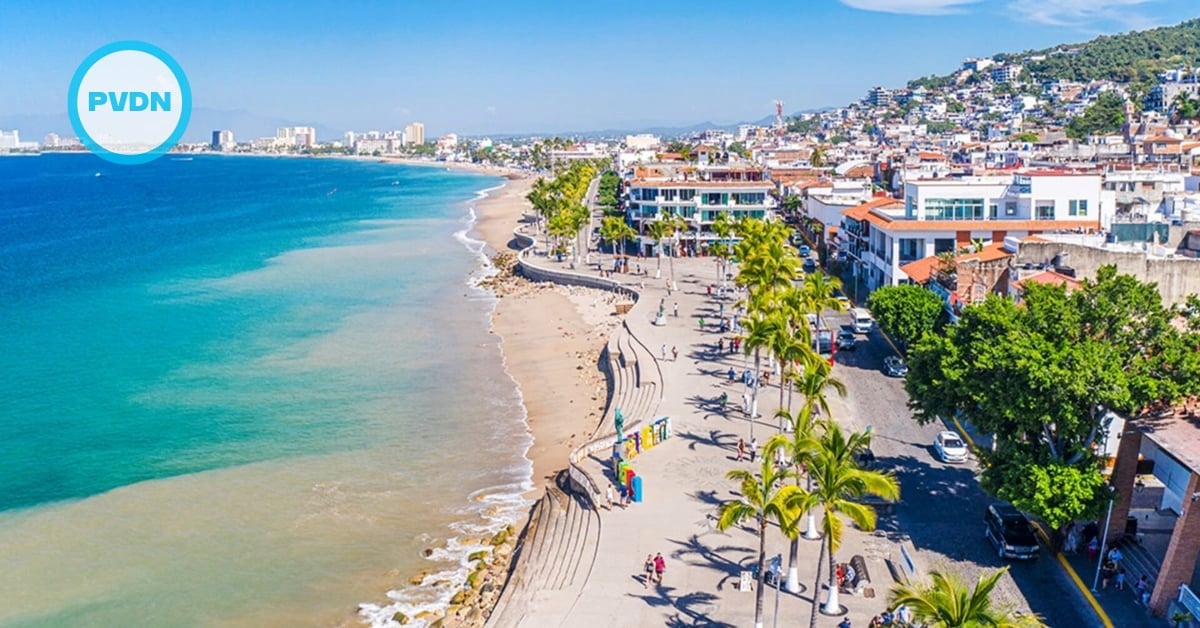
Beyond health and sports, the plan leans into public space and the visitor-facing parts of Vallarta that locals also use heavily. The Las Peñas pier, at the north end of the Malecón area, is included as part of the bay’s “nautical staircase” concept—an idea aimed at improving maritime connectivity and waterfront function. Additional projects are expected to be funded through trusts, including rehabilitation work on Isla del Río Cuale, improvements at the viewpoint, and complementary actions in the Historic Center. If executed well, these are the kinds of upgrades that can make Vallarta feel more walkable, better maintained, and easier to enjoy year-round, not just in high season.
What to watch as the numbers become reality
Big packages often succeed or fail on mundane details: procurement, transparency, traffic management during construction, and whether projects are phased to reduce disruption. For residents—Mexican and foreign alike—the most useful signal won’t be another large number. It will be the publication of clear scopes, start dates, and construction calendars that acknowledge how people actually move through the city.
If the administration can turn this into a sequence of well-managed builds, 2026 could mark a noticeable step up in healthcare capacity, sports amenities, and the quality of Vallarta’s public spaces. If not, it risks becoming another year of stalled sites and unfinished promises—expensive in pesos, and even more expensive in public trust.