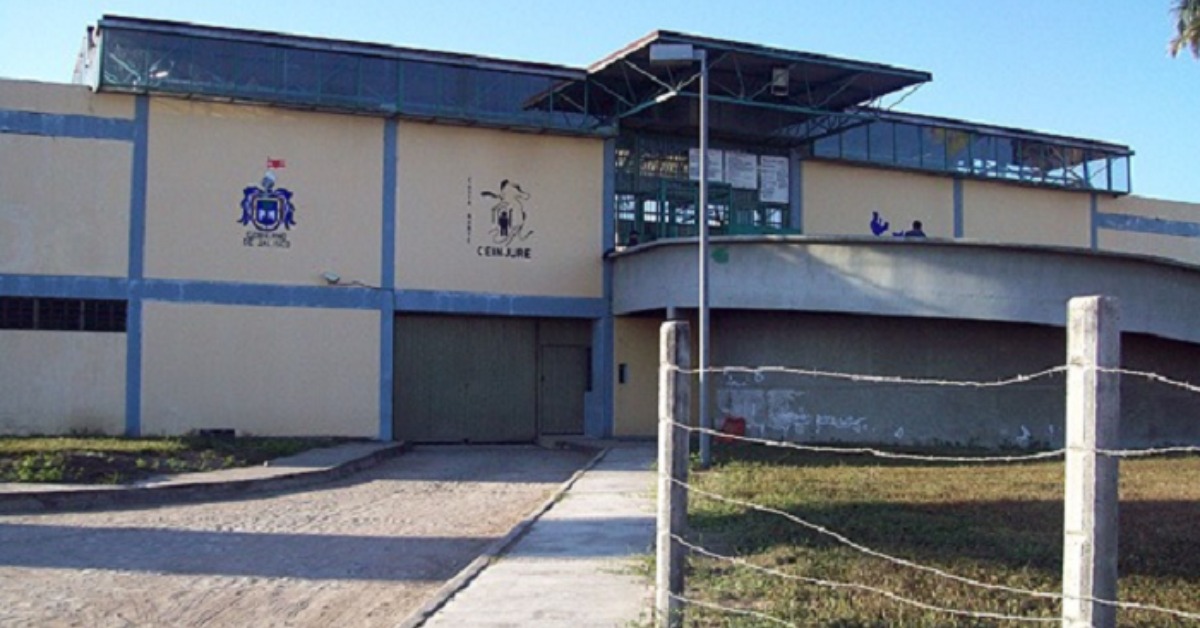
Authorities carried out a new surprise inspection Monday at the Centro Integral de Justicia Regional (CEINJURE) in Puerto Vallarta, the state prison complex located in Ixtapa. Officials said the operation involved prison police, state police, the Mexican Army, and the National Guard. The teams entered the facility early in the day to conduct a detailed review of the prison and complete a roll call of inmates.
The latest action appears to be part of a broader effort to tighten control inside the prison after months of instability. Officials have described these inspections as part of supervision and order measures inside the facility. In the latest report, authorities did not immediately detail whether any contraband was found during Monday’s search. Even without those results, the operation matters because it shows the prison remains under close watch and that authorities still consider the site a security priority.
Why the prison remains under pressure
The reason is not hard to find. On February 22, the prison became the scene of one of the most serious security incidents in Puerto Vallarta this year. Authorities said 23 inmates escaped after armed attackers hit the prison gate with a vehicle while gunfire broke out outside. A prison guard was killed during the attack. The event triggered a broad security response and quickly turned the prison into a symbol of how serious the February violence had become in the region.
In the days that followed, officials said several of the escapees were recaptured, while one was later reported dead after a confrontation. Authorities also moved quickly to stop further unrest inside the prison. Just days after the escape, state officials transferred inmates they identified as possible instigators of violence to Puente Grande, the larger prison complex near Guadalajara. That step suggested the concern was not limited to the breakout itself. Officials were also focused on preventing new disorders inside the facility.
What repeated inspections suggest
The pattern became clearer in early March. During another extraordinary review at the prison, authorities deployed a large security force and reported the seizure of marijuana, medications, improvised weapons, tools, lighters, microphones, and electrical extensions. Officials also transferred six inmates to Puente Grande, describing them as possible generators of violence. Those details help explain why the inspections have continued. The focus is not only on finding fugitives outside the prison. It is also about regaining control inside it.
That is an important distinction for readers trying to understand the story. A prison escape can look like a one-day crisis. Repeated surprise operations usually point to something deeper. They suggest officials are still checking for hidden phones, drugs, weapons, improvised tools, and internal power structures that could support new violence. In Puerto Vallarta, ongoing inspections indicate that authorities do not view the February breach as closed. They appear to be treating it as an ongoing security problem that still requires direct intervention.
Why this matters beyond the prison
For many residents and foreign readers, the prison is not part of daily life. It sits away from the hotel zone and the city’s tourism image. But the issue still matters because it speaks to public safety, institutional control, and the state’s ability to contain violence after a major breach. When authorities keep returning to the same prison with multi-agency operations, that becomes a signal in itself. It tells the public that the prison remains a top security concern for security officials.
It also matters because Puerto Vallarta depends heavily on stability, confidence, and the perception that serious incidents are being contained. Repeated inspections do not necessarily mean a new emergency is unfolding in the city. They do mean the prison remains a sensitive point in the local security landscape. The next thing to watch is whether officials begin releasing more detailed results from these operations and whether the current strategy leads to lasting control inside the facility, not just another round of emergency searches.