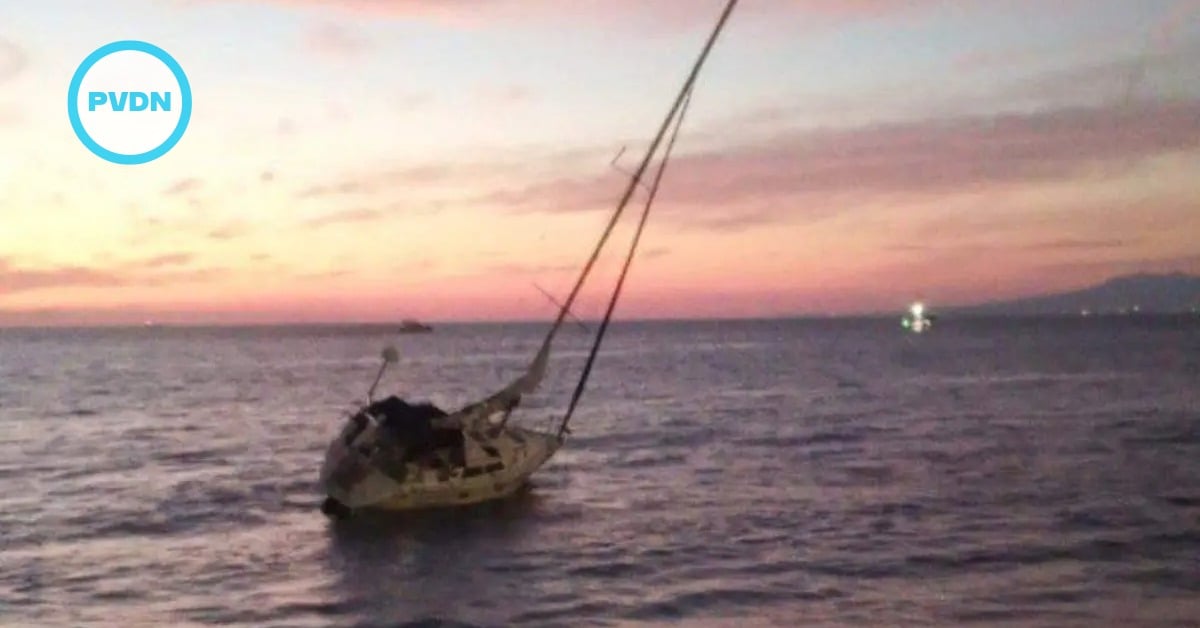
A sailboat reported in distress off the Sheraton hotel zone in Puerto Vallarta sparked an evening response from lifeguards and civil protection units on Sunday, November 9. The three people aboard were assessed at the scene; none had injuries, according to initial local reports. The incident unfolded just offshore in the north hotel zone, a busy stretch of beach popular with walkers and small craft.
Officials received the alert shortly after 6:25 p.m., when the first calls suggested a sinking vessel. Responders entered through the Sheraton access and found two people already in the water and a third still aboard. By then, the boat had come to rest on the bottom near shore, with low tide exposing sections of the hull. Rescuers stabilized the scene and confirmed all three occupants were unharmed.
Puerto Vallarta sailboat
By late evening, a clearer picture emerged: what began as a “possible sinking” was, in practical terms, a grounding near shore during a falling tide. That distinction matters for what happens next. A true sinking farther out would trigger a different set of recovery challenges; a grounded sailboat close to the beach can often be refloated or removed once tides and weather cooperate. Local coverage noted that responders initially treated it as a sinking, then updated the characterization after arriving on scene.
Maritime coordination kicked in as crews called in the Port Captaincy and the Mexican Navy to evaluate hazards and keep the area safe. Those authorities typically assess whether fuel or batteries pose a risk, whether surf or currents could push debris toward swimmers, and when it’s safe to attempt a tow or a controlled removal. In this case, authorities indicated they would continue supervision and determine whether additional support was needed for the boat’s removal once sea conditions permitted.
Witness accounts and early images often fuel confusion in the first hour of an incident. From the sand, a grounded sailboat can look like it’s going down—especially if a wave fills the cockpit or a mast lists sharply. That’s why official updates tend to evolve as responders verify conditions up close. Here, the key facts held steady after those first minutes: there were three people aboard, all were reached, and none required hospital care.
The location is notable. The Sheraton stretch sees a mix of small recreational craft and tour traffic, and it sits within a bay still processing October’s loss of the Marigalante, the city’s galleon-style attraction. In that widely covered event, protection agencies and volunteers worked for hours before the ship ultimately sank offshore. No passengers were aboard, and the crew evacuated safely, but the images rattled residents who know the bay’s moods. Sunday’s sailboat case is smaller in scale, yet it inevitably revives that recent memory.
What happens next
The near-shore status gives officials options. If the hull is intact, a refloat timed to a higher tide and calmer surf can be enough to bring the sailboat off the bottom. If the keel or rudder is damaged, crews may strip weight—removing sails, booms, fuel, or batteries—to prevent further harm and reduce environmental risk before attempting a tow. Coordination with the Port Captaincy ensures that the chosen plan keeps swimmers clear and limits beach disruption. Local reporting indicates that monitoring would continue while conditions were evaluated.
For residents and visitors, the takeaway is simple and practical. When responders are on the beach, give them room to work and avoid crowding the waterline while equipment is in play. If you’re on a small boat, check tides, daylight, and forecasted swell before heading out, and carry the basics—PFDs for every person, a charged phone or VHF, and a way to signal for help. Those routine steps are why Sunday’s case ended with everyone walking away.
In the coming days, authorities are expected to confirm whether a refloat or removal occurred and whether any minor pollution control was needed. Given how quickly crews reached the site and the absence of injuries, this incident looks like the kind of near-shore scare that can be solved with patience, tide tables, and a plan. For a bay still healing from last month’s high-profile loss, a quiet, injury-free ending is a welcome result.