Puerto Vallarta authorities investigate a second violent crocodile killing in July. Two suspects were detained as concerns rise over threats to local wildlife.
Puerto Vallarta’s growing wildlife crisis deepened this weekend after the body of a nearly three-meter crocodile was discovered in the early hours of Saturday morning, marking the second such incident in less than two weeks. Authorities have confirmed that two men were taken into custody in connection with the killing.
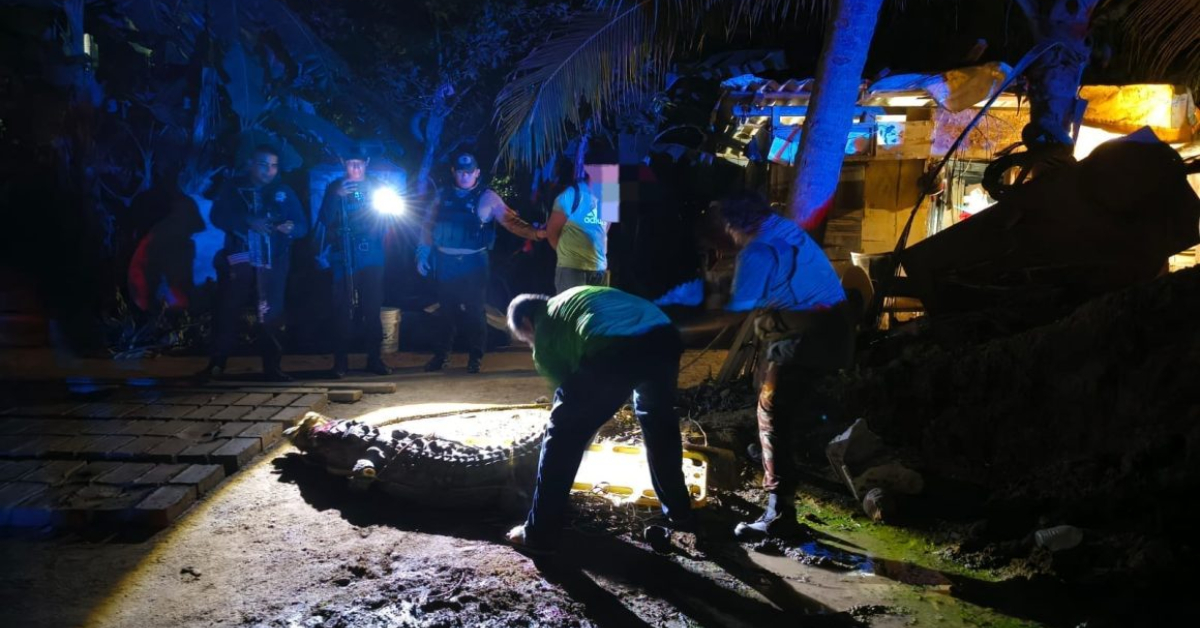
According to police reports, the reptile—measuring 2.92 meters—was found bound and lifeless, showing clear signs of trauma. Officers from the Tactical Operational Group (GOT) were on patrol shortly after midnight when they received a call reporting suspicious activity: three individuals seen carrying a crocodile and the sound of gunfire in the area.
When GOT agents arrived at the scene, they found the animal’s body lying on the pavement, tied by the legs and snout. The crocodile had visible injuries to its head, suggesting a violent death. No suspects were initially present, but a search of the surrounding area led to the detention of two individuals who were unable to explain their presence near the crime scene.
Though the arrests were initially for administrative offenses, authorities suspect the men may be linked to the killing. The case was promptly handed over to the Public Prosecutor’s Office, which ordered the collection of forensic evidence and transferred the animal’s remains to the municipal Ecology Department.
A biologist transported the carcass to the Boca de Tomates turtle conservation camp, where a necropsy will be conducted to determine the precise cause of death.
This is the second confirmed case of a crocodile killing in Puerto Vallarta this July, triggering alarm among local conservationists and city officials. While crocodile sightings in the region are not uncommon—especially in coastal and river-adjacent neighborhoods—deliberate acts of violence against the protected species have become a growing concern.
Environmental groups say the rise in such incidents points to a dangerous trend that could threaten the area’s delicate ecosystem. “These animals are protected for a reason,” said a spokesperson from a local wildlife organization. “They play a critical role in the balance of their habitat. These killings are not just tragic—they’re illegal.”
Puerto Vallarta is home to various species of wildlife that live in close proximity to urban areas, particularly in mangroves, estuaries, and near the Ameca River. As the city continues to expand and attract more visitors and residents, encounters between humans and wildlife have increased.
Authorities reiterated their call to the public to report any sightings of wildlife in distress or suspicious activity that could be linked to poaching or animal abuse. “Puerto Vallarta is known for its natural beauty,” a municipal official noted. “We must all take part in preserving the fragile ecosystems that make this place so unique.”
The crocodile, believed to belong to the American crocodile species (Crocodylus acutus), is protected under Mexican law. Killing or capturing one without proper authorization is a criminal offense that may result in fines or imprisonment.
As the investigation continues, environmental groups hope this case will serve as a wake-up call to reinforce protections for native wildlife in Puerto Vallarta and across Jalisco.