Neighbors in 5 de Diciembre turned a chronic nuisance into a firm timeline. After a morning protest over persistent street flooding, City and Historic Center Manager Juan Pablo Martínez Torres committed to a plan. The city will launch technical and economic studies now, then move to re-pipe the flow that has run for four years.
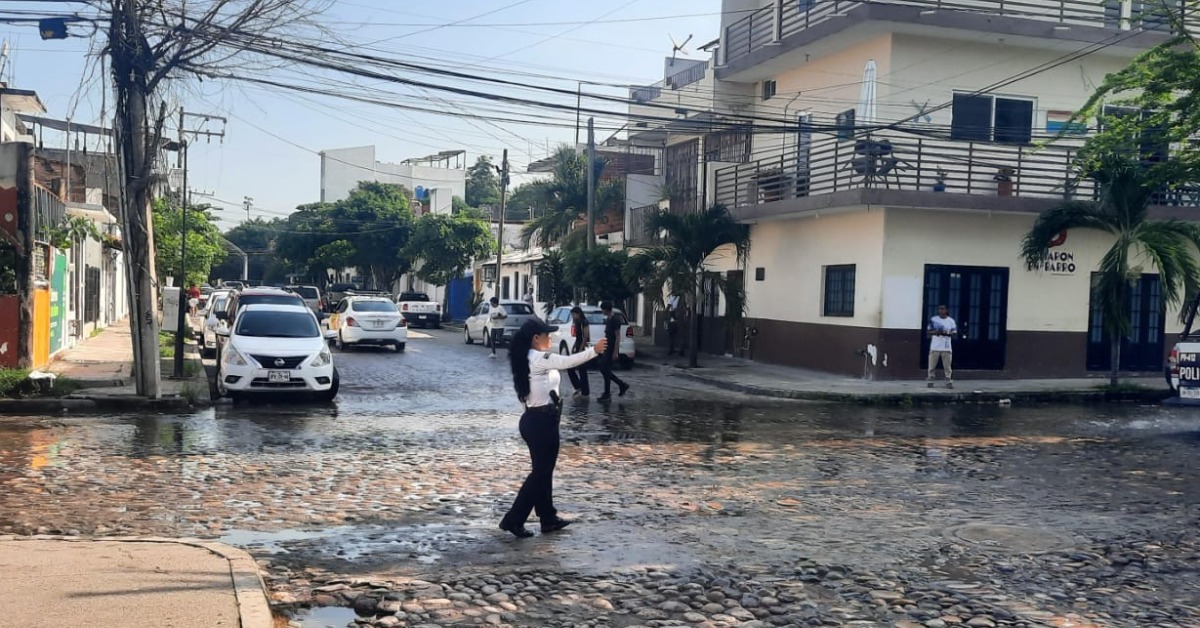
The problem, neighbors say, began after a condominium went up where the old Colonial Cinema once stood. Water from an uncontaminated spring has since spilled downhill, swamping several blocks and snarling traffic near the downtown entrance. Protesters blocked Colombia and then Avenida México for about two hours, and lifted the blockade when city officials arrived and offered a concrete path forward.
Puerto Vallarta water runoff
Martínez Torres said the city will evaluate whether the spring can become a resource rather than a hazard. The proposal is to use the water for irrigating the Agustín Flores Contreras sports complex and for city flowerbeds and medians. The plan also envisions channeling the flow from its source to the Los Camarones stream.
An environmental authority will review potential impacts and define any required safeguards. That step matters. Turning a nuisance into irrigation involves pipe sizing, pressure control, and discharge quality checks, even for a clean spring. The review will shape how the system is built and maintained.
A plan that captures and controls the flow
The city’s approach is straightforward. Capture the spring at the source, stabilize the flow through new piping, and direct it to a controlled endpoint. In daily practice, that means fewer slick sidewalks and fewer hours of traffic slowed by standing water. It also turns wasted water into a predictable supply for green areas.
For residents, the immediate gain would be simple: dry blocks that stay passable year-round. For the city, irrigating with spring water can reduce demand on other systems and keep public spaces healthier in the dry months.
Accountability and the August 30 deadline
The commitment sets a clear clock. Martínez Torres said the project will be completed on paper and under construction by August 30 at the latest. Meeting that date requires quick study work, a defined route, and an agreed budget. It also requires access to the source point inside or adjacent to the identified building.
The city plans a separate meeting with the building’s administrator. The goal is to ensure the developer covers the fix linked to their project. That accountability is central. Without it, neighbors risk another round of temporary patches instead of a durable solution.
A protest that brought a practical path
Residents say the flooding has worn down patience and pavement alike. It has soaked curbs, coated streets with algae, and forced drivers and pedestrians into awkward detours. The morning action was disruptive by design, timed for the daily surge into the city center.
It also worked. The blockade ended when the city put dates, studies, and a physical plan on the record. The next test comes on Tuesday at SEAPAL, where neighbors will see the routing and weigh the timeline. If the process stays on track, the water that has flooded 5 de Diciembre could soon be flowing where it should—through pipes, toward plant roots, and finally into Los Camarones—rather than across the neighborhood’s streets.