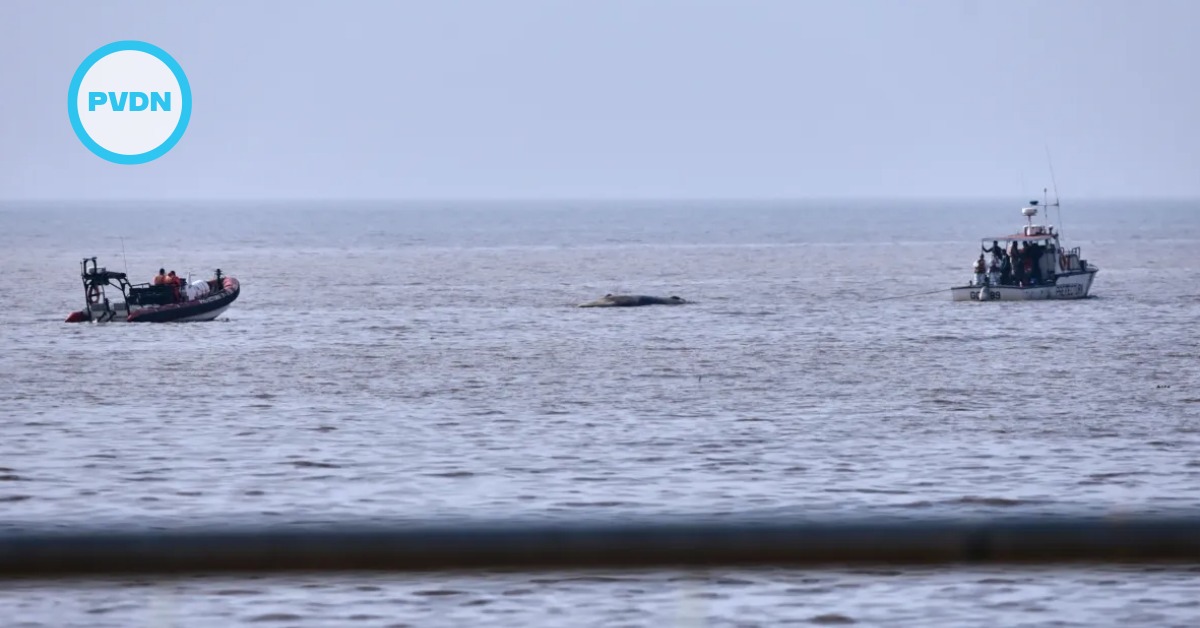
In a sunny Puerto Vallarta bay known for its gentle giants, a split-second collision caught on video has shocked locals and tourists alike. The footage, widely shared online, shows a speedboat barreling into a whale that has surfaced. Outrage is swelling on social media and among environmentalists, who insist this was no freak accident. As authorities and boat operators respond to the incident, the video has reignited a crucial conversation about marine safety during peak whale season.
High-Speed Collision Caught on Camera
The short video that spread across social networks is as stunning as it is disturbing: a small speedboat races over the waves off Puerto Vallarta, Jalisco, when a humpback whale suddenly surfaces in its path. In the clip, passengers’ voices erupt in panic—“¡Para, para!” (“Stop, stop!”) they scream—spotting the whale at the last second. Yet the boat does not slow down in time. The camera jerks as the vessel collides head-on with the massive marine mammal. A sharp cry rings out, then the recording cuts off abruptly. In just a few heart-stopping seconds of footage, the grave dangers of careless boating in whale-inhabited waters are laid bare for all to see.
Public Outrage and an “Avoidable Tragedy”
Reactions to the video were swift and vehement. Conservationists and residents alike expressed anger that such an incident could occur in a bay famous for whale watching. The footage was originally shared by a local environmental group called Nado por las Ballenas (“Swim for the Whales”), which condemned the collision as entirely preventable. “¡Una tragedia evitable!” the organization wrote in a scathing post—“An avoidable tragedy!” The group explained that excessive speed and the lack of a proper lookout on the boat were to blame. Nado por las Ballenas warned that when boat captains fail to follow basic navigation rules around whales, they put both human lives and marine life at risk. Many Puerto Vallarta locals on social media echoed this frustration, demanding that authorities identify and punish the boat operator for recklessness. What might have been a magical encounter with a whale instead became a moment of horror—one that outraged viewers, and hope will serve as a wake-up call.
Whales and Tourists Both in Peril
Thankfully, in this widely circulated video, there were no immediate reports of human injuries. But experts say the outcome could easily have been catastrophic. Humpback whales frequenting Banderas Bay can reach 40 feet in length and weigh 20 to 30 tons. A collision at high speed with an animal of that size is like hitting a semi-truck on the water. Boats have been capsized by less. Passengers thrown by such an impact could face life-threatening injuries or drowning. As the video’s narrator lamented, a thrill ride can turn deadly in an instant if skippers ignore safety protocols. The danger, of course, goes both ways. Despite their bulk, whales are surprisingly vulnerable to boat strikes. Biologists note that propeller blades and hull impacts can inflict deep gashes, broken bones, or internal injuries on whales. Even if a whale survives a strike, the trauma can cause extreme stress. Mothers have been known to become separated from their calves in the chaos of a collision, an often fatal outcome for the dependent young. In this case, the whale in the video was seen swimming away, but its condition remains unknown. Such incidents leave lasting scars—on the marine creatures and on the conscience of a community that treasures them.
A Series of Incidents in a Busy Whale Season
This alarming collision was not an isolated case. It comes amid one of the busiest humpback whale seasons Puerto Vallarta has seen in years. Every winter, typically from December through March, hundreds of humpbacks migrate to the warm, calm waters of Banderas Bay to mate, give birth, and nurse their young. This season has been especially active; observers have counted up to 100 whales in the bay at once, with sighting rates about double the norm. But with that boom in whale activity has come an unsettling spike in boat accidents. Local conservation groups report that the speedboat crash captured on video marked at least the third serious whale-boat collision in the bay this season alone. The first incident occurred in early December, just as whale-watching tours were ramping up. In that case, a tour boat carrying visitors struck a whale near Puerto Vallarta’s busy shoreline. A 70-year-old American woman, a long-time expat resident, was killed in the impact when she was thrown against the side of the boat. Another passenger sustained a head injury but survived. According to witnesses and officials, the whale had surfaced unexpectedly close to shore, catching the boat off guard. The humpback itself was seen swimming away with no obvious wounds, but a tourist’s life was lost in an instant. The tragedy sent shockwaves through the expat community and raised immediate questions about safety measures on whale tours.
Then, only weeks later in mid-January, a second collision was reported — this time involving an adult female whale. That incident did not cost any human lives, but it injured the whale. Details are scarce, but researchers believe the whale may have been a mother with a calf nearby. It’s unclear if a private boat or a tour vessel was involved, but once again, excessive speed or inattention likely played a role. By the time responders arrived, the vessel in question had left, and the injured whale was difficult to track. The pattern of hit-and-run incidents was growing. Marine biologists and tour operators grew increasingly concerned, urging all boaters in the bay to slow down and stay vigilant.
Finally, in early February, the worst fears of conservationists were realized: an infant humpback calf was discovered badly wounded in the northern end of Banderas Bay, near the Punta de Mita area. Activists from the nonprofit Ecología y Conservación de Ballenas A.C. (Ecobac) found the young whale swimming weakly, trailing blood. A closer inspection revealed gruesome parallel gashes along its back—eight distinct slashes consistent with a boat’s propeller blades. The calf, likely only a few months old, had been literally run over by a boat. Its injuries were so severe that experts doubted it would survive long. “It’s heartbreaking,” said Astrid Frisch Jordán, president of Ecobac, in an emotional interview. “We feel sad and frustrated,” she confessed, explaining that this was now the third whale struck this season despite all the warnings. What should have been a successful growing season for a newborn whale had turned into a fight for its life due to human recklessness. Rescuers monitored the calf from a distance, but there was little they could do for such extensive wounds in the open sea. If the young whale perished from its injuries, it would be a tragic bookend to a season already marred by loss.
Are Regulations Enough?
The rash of whale collisions has left locals and officials asking what more can be done to prevent these accidents. Mexico has well-established whale-watching regulations, considered among the strictest in the world on paper. During whale season, any boat operating in Banderas Bay is expected to exercise extreme caution. Official norms require that licensed whale-watching vessels keep a minimum distance (usually around 60 to 80 meters) from the whales, and unlicensed boats should stay even farther away. No more than four tour boats at a time are supposed to surround a whale or pod. Perhaps most crucially, speed limits are imposed: once in a known whale area, boats should not exceed about 5 knots (around 9 km/h), and must slow to an idle speed of roughly 2 knots when within close range of whales. Captains are instructed to avoid sudden changes in course or speed that could startle whales or lead to collisions. They are also told never to chase or cut off a whale’s path, and to always approach from the side or rear at a respectful distance.
Seasoned whale-watch captains in Puerto Vallarta take these rules to heart. Many reputable tour companies voluntarily brief their passengers on whale safety and strictly enforce the “no fast moves” policy whenever whales are near. A designated crew member often acts as a bow lookout, scanning the water for any sign of the gentle giants. After all, whales spend much of their time submerged and can surface with little warning, so a vigilant human observer is critical. These precautions have allowed thousands of tourists each year to marvel at humpback tail flukes and dramatic breaches up close, without disturbing the animals or endangering boatloads of people. Indeed, veteran tour operators note that for many years, the bay’s whale-watching trips have enjoyed an excellent safety record. Incidents were rare and usually minor. That’s partly why the recent spate of collisions—especially one caught on video—has rattled so many nerves.
Speeding and Distracted Boaters Under Fire
If the regulations are clear, why are whales still getting hit? Conservationists argue that the problem largely lies with a subset of boaters who flout the rules. Some are unlicensed operators or private pleasure craft who may not even realize they’re barreling through active whale areas. Others might be legitimate tour boats whose captains grew complacent or were chasing an adrenaline rush for their customers. And increasingly, distractions like smartphones at the helm are contributing to dangerous situations on the water. “Despite all the courses and safety talks, some captains still speed or get distracted on their cell phones,” Astrid Frisch observed bluntly, after learning of the latest video. In her view, complacency and overconfidence are a deadly mix. Puerto Vallarta’s popularity as a coastal playground means everything from jet skis and sport-fishing boats to water taxis crowd the bay, especially during the winter high season. Without constant vigilance, any of these vessels can unknowingly cross paths with a surfacing whale. At high speeds, there’s often no time to react or for the whale to get out of the way. Environmental groups have implored authorities to step up enforcement—spot-checking for valid whale-watching permits, enforcing speed zones, and penalizing anyone seen harassing or endangering marine fauna. Federal environmental officers (PROFEPA) have, in fact, increased patrols in the bay since the December fatality, and they promise zero tolerance for boats involved in hit-and-run incidents with wildlife. Yet the ocean is vast, and catching every negligent boater in the act is a challenge.
In the wake of the viral video, officials from Jalisco and neighboring Nayarit (which share jurisdiction over Banderas Bay) publicly reiterated the safety rules. The Puerto Vallarta harbormaster’s office issued a bulletin urging all captains to appoint a dedicated lookout whenever navigating whale-rich waters, and to immediately slow down at any sign of a whale spout or tail. Boaters were reminded that causing harm to a protected species like the humpback whale is not only morally reprehensible but also a criminal offense under Mexican law. Fines can reach into the tens of thousands of pesos, and repeat offenders or egregious cases could even face jail time. These warnings aim to put negligent boaters on notice: the bay’s whales must be respected, or there will be consequences.
Tourism, Ecology, and Accountability
The stakes are high for both the region’s ecology and its economy. Whale watching is more than just a pastime here – it’s a pillar of Puerto Vallarta’s winter tourism. Thousands of visitors (and many expat residents) eagerly book excursions each season to witness the humpbacks’ acrobatics, often marking it as the highlight of their time in Mexico. A healthy, predictable population of whales returning annually means booming business for tour operators, hotels, and local guides. But every headline of a whale injured by a boat—or a tourist injured by a whale strike—threatens to sour that eco-tourism appeal. No one wants to set out on a dream whale safari only to end up in a nightmare scenario. Likewise, the expat community, which tends to be very engaged in local conservation issues, worries that a few bad actors could tarnish Vallarta’s reputation as a safe, sustainable travel destination.
There is also genuine affection and concern for the whales themselves. Many locals feel a sense of guardianship over “their” whales, who return to the bay like clockwork each year to bear young. Schoolchildren learn about protecting whales in their curriculum, and local charities sponsor whale rescue and research programs. So when a baby whale washes up dead or a video shows a whale being run over, it strikes a deeply emotional chord in the community. Memorials were held quietly for the American woman who lost her life in December’s collision, but also, symbolically, for the whale calf found gravely wounded a few weeks later. Each incident is a painful reminder that coexistence between humans and these majestic creatures requires constant care and respect.
Balancing thrill and safety is an ongoing challenge. Responsible tour operators argue that whale watching can be perfectly safe and enriching if done right. They point to decades of operations without major incidents and to the stringent training they undergo to obtain licensure. Many hope that increased education and peer pressure within the boating community will improve compliance. For example, charter companies are now more actively briefing private yacht captains and even recreational boat renters about whales in the area. There’s talk of requiring all boat owners in the bay to attend a seasonal “whale safety” workshop. Technological aids are also being explored, such as real-time whale-sighting alerts via a mobile app, so captains know where to be extra cautious. But ultimately, it comes down to individual responsibility behind the wheel.
Renewed Calls for a Culture of Respect
As the outrage over the speedboat video slowly turns into reflection, one message resonates above all: this didn’t have to happen. Every expert agrees that most whale collisions are avoidable with basic precautions. Slow down. Post a lookout. Keep your distance. It’s a simple mantra, yet this season’s events show that not everyone is heeding it. “The repeated accidents prove that a culture of respect for marine life is still lacking,” said Frisch, urging a change in mindset as much as enforcement. Community leaders and environmentalists in Puerto Vallarta are seizing the moment to intensify their outreach. Local radio and newspapers have begun running PSAs about whale season etiquette. Whale enthusiasts organized a public forum after the video went viral, bringing boat operators and biologists together to discuss solutions. Even many tourists, far from shying away, have been inspired to become amateur advocates—sharing the video and pledging to only support tour companies with a solid safety reputation.
Meanwhile, the authorities continue their investigations. The precise date and boat involved in the viral video have yet to be confirmed publicly, though unofficial reports suggest it may have been a private recreational vessel rather than a licensed tour operator. If the captain is identified, they could face serious repercussions for violating wildlife protection laws. But enforcement after the fact is little comfort when a whale lies injured, or a family loses a loved one. Everyone agrees that prevention is paramount. There is a sense of collective responsibility in the air: the idea that “this is our bay, our whales, and our visitors, so we must protect them.”
As the humpbacks begin their long migration back north in March, Puerto Vallarta will bid them farewell with both awe and anxiety. The bay has given these whales a nursery and humans a spectacle; it must not become a battleground between the two. The viral video from Puerto Vallarta’s waters has delivered an unforgettable lesson to anyone who operates a boat near whales: no photo or thrill is worth a life, whether human or cetacean. In the end, the hope is that this shock will spur lasting change. Stricter rules and better enforcement can help, but ultimately it’s about fostering a true culture of respect on the water. Only then can Puerto Vallarta remain a place where whales and people meet in peace—where the only screams during a whale encounter are screams of joy and wonder, not terror.