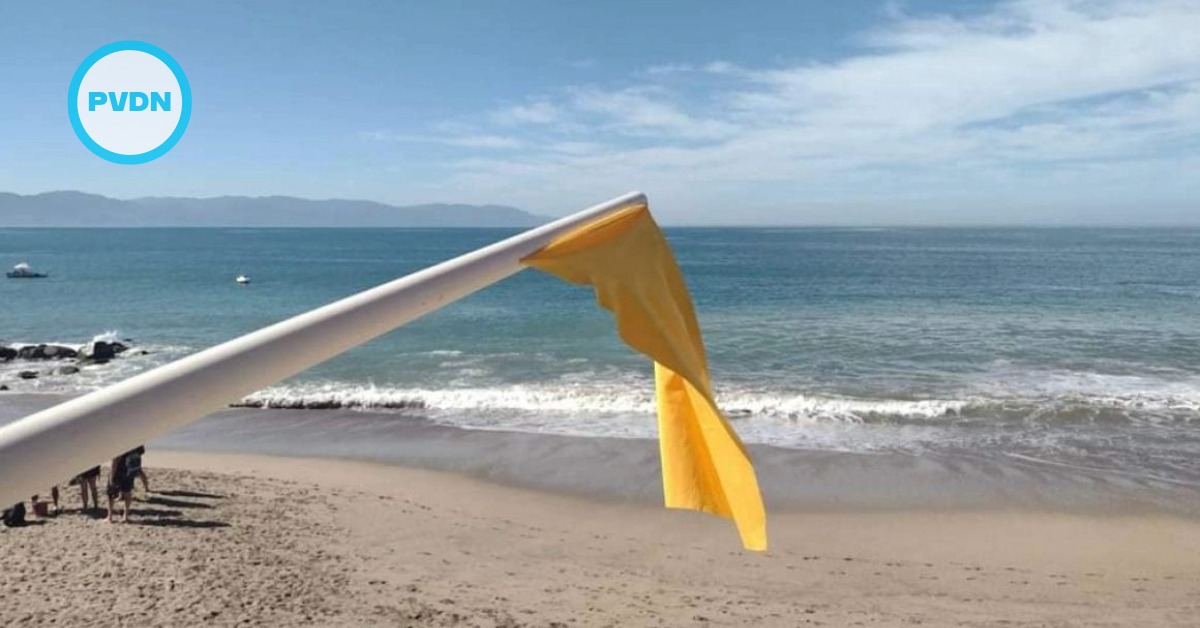
Puerto Vallarta yellow flags remain posted as a precaution. Calm water can still turn risky when beach drop-offs deepen suddenly.
The water in Puerto Vallarta has looked almost too perfect lately—light wind, gentle surf, and plenty of families wading in. So why are yellow flags still fluttering along most of the shoreline? Local aquatic rescue officials say the caution isn’t about rough seas. It’s about what happens under your feet, where a calm-looking beach can drop off fast. Here’s what lifeguards are watching, where crews are stationed, and the simple mistake that keeps causing rescues.
Puerto Vallarta’s beaches have felt unusually easy lately. The sea has stayed calm, the wind has been light, and the shoreline has looked inviting from morning to sunset. Yet if you’ve been walking the coast this week, you’ve likely noticed the same detail again and again: yellow flags posted across most beach access points.
Local aquatic rescue officials say that isn’t a contradiction. It’s a reminder that “safe-looking” water can still become a problem fast, especially for visitors who don’t know how the bottom drops away in certain stretches of Vallarta’s coastline.
Why the yellow flags are still up
According to the municipal aquatic rescue team, sea conditions have been steady in recent days, with gentle waves and no rip currents reported. In other words, this is not a “stay out of the water” situation.
The reason for the yellow flags is simpler, and it catches people off guard every year. Many beaches in the municipality have a natural slope at the shoreline. You can step in thinking you’re still in shallow water and suddenly hit a deeper pocket within a few paces. If you’re not a strong swimmer, if you’re distracted, or if you’re watching a child and misjudge the depth, that surprise drop can turn into panic.
That’s the point of the yellow flag. It’s not a warning that the beach is closed. It’s a warning to slow down, stay aware, and treat the water with respect even when it looks glassy.
A busy shoreline and a limited margin for error
This matters even more during the holiday stretch, when beaches fill up with families, first-time visitors, and people who underestimate how quickly conditions can change from ankle-deep to over-your-head.
Municipal authorities say lifeguard coverage is currently focused on 18 beaches, prioritizing the areas with the highest weekday traffic. That coverage includes 24 personnel spread across beachfront posts, plus staff assigned to aquatic and land-based units. In practice, that means eyes on the water, rapid response capacity, and prevention work that often goes unnoticed when nothing goes wrong.
Officials also say this is coordinated work, not a solo operation. Surveillance and prevention are carried out alongside state and federal partners, including maritime rescue efforts tied to the Navy’s seasonal lifeguard operation and Civil Protection personnel from Jalisco.
What “yellow” should mean for your day at the beach
For many expats and long-term visitors, the flags can fade into the background. You’ve seen them before, you’ve swum here for years, and the bay feels familiar. The problem is that familiarity can turn into shortcuts.
A yellow flag is your cue to keep the swim simple. Stay where you can comfortably stand. Pay attention to kids every second they’re near the waterline, because that sudden drop is exactly where small swimmers lose footing. If you’re not fully confident in open water, don’t test it just because the surface looks calm.
And if you do get pulled or feel yourself drifting, don’t waste energy fighting straight back toward shore in a panic. The safest move is to stay calm, signal for help, and move in a way that gets you out of the pull before you try to return to the beach.
The message from authorities is consistent: respect the signage, listen to lifeguards, and keep basic precautions in place. The ocean can look friendly and still punish a small mistake. The yellow flags are there to keep a good beach day from turning into an avoidable rescue.