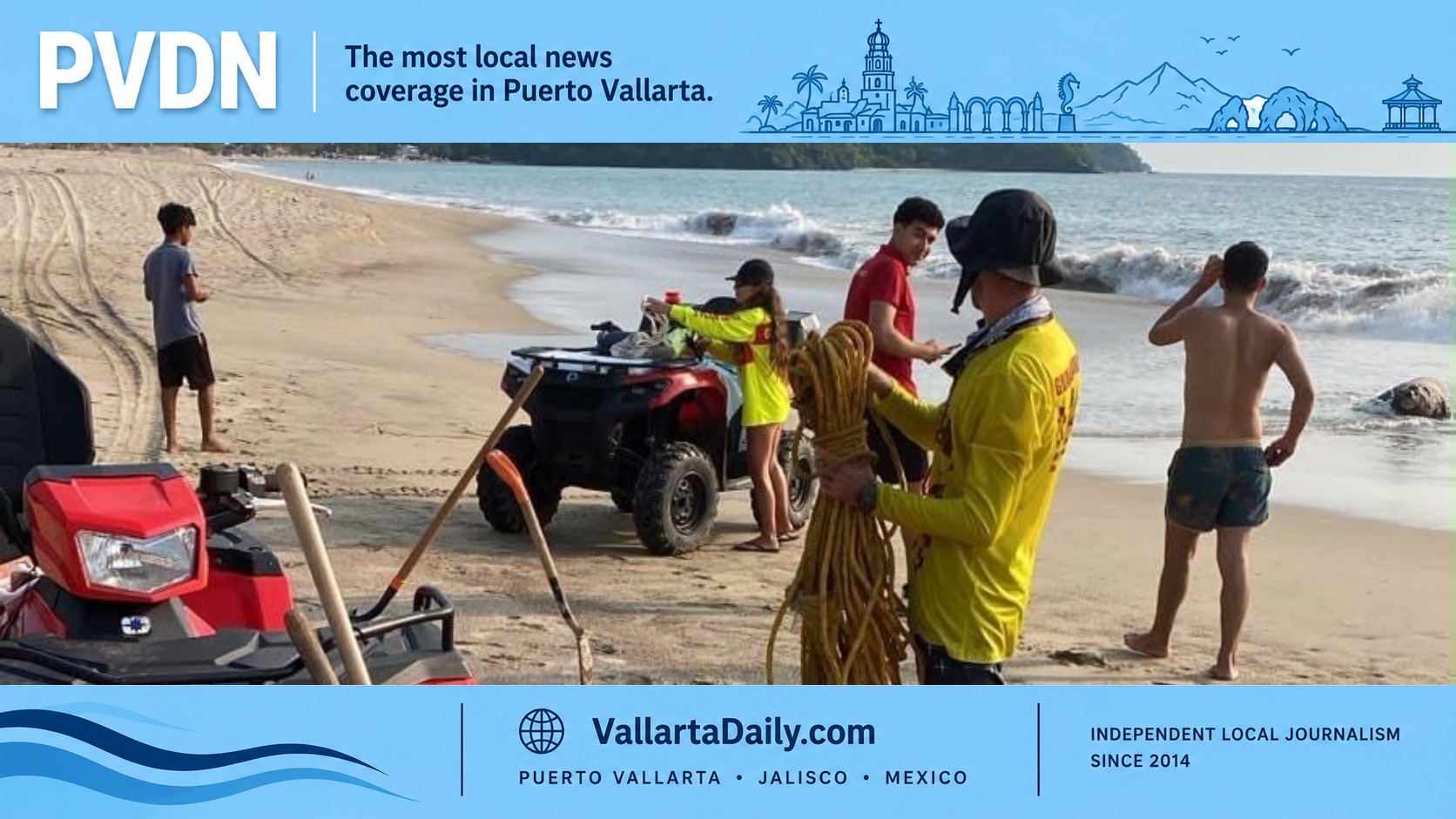
Higuera Blanca, Nayarit, June 28, 2026 – A California sea lion found dead at Playa Pascuaritos this weekend triggered Mexico’s wildlife response protocol in Bahía de Banderas, bringing municipal Civil Protection, Environment officials, and Profepa into a case that began with sightings earlier in the week.
The animal had been seen on June 24 at Playa Pascuaritos and again on June 25 in Lo de Marcos, a short distance up the Nayarit coast. By Saturday, June 27, officials said the carcass was in advanced decomposition, limiting what could be determined immediately.
Authorities described natural causes as the preliminary explanation and said there were no visible indications of harm caused by human activity. That finding remains preliminary unless Profepa or specialists release additional results.
Wildlife protocol activated in Higuera Blanca
Mexico’s marine mammal stranding protocol treats a dead sea lion as a wildlife case, not simply a beach cleanup. The protocol covers live and dead marine mammals and sets out steps for registration, coordination, review of possible causes, and safe handling.
Profepa is the federal agency responsible for applying the protocol and verifying compliance. The same framework allows local governments, specialists, and trained volunteers to support the response when equipment or local knowledge is needed.
That helps explain the presence of municipal crews and the involvement of Lo de Marcos volunteers, who assisted with jet skis during the operation. In coastal cases, the first hours often depend on whoever can safely reach the animal without disturbing evidence or putting people at risk.
Why the cause of death remains limited
The carcass condition is central to the case. Advanced decomposition can obscure wounds, signs of illness, and other clues that would be easier to evaluate in a fresh carcass.
Profepa’s Nayarit delegate, Roberto Medrano, told La Jornada that the sea lion had been seen alive on the beach in Lo de Marcos, appeared to have no visible injuries, and later returned to the sea. After the carcass was seen offshore, he said one possibility was that it “possibly sank.”
A species within Mexico’s Pacific range
California sea lions are native to the eastern North Pacific. Their range extends from southeast Alaska to the Pacific coast of central Mexico, and they use beaches, rocky coves, docks, buoys, and jetties as resting or haul-out sites.
The species Zalophus californianus is listed in Mexico under “special protection” in NOM-059-SEMARNAT-2010, a status that Profepa has cited in past rescue and response cases.
Their appearance on a Nayarit beach is unusual enough to draw attention, but it is not outside the species’ broader Pacific distribution. NOAA also lists entanglement, harmful algal blooms, vessel or human disturbance, and illegal feeding as known threats to California sea lions, though none has been identified as a cause in this case.
Another sea lion case in the same corridor
The Higuera Blanca and Lo de Marcos case follows another sea lion rescue in the same coastal corridor earlier this year. In late January, a sea lion later called “Marquitos” was found injured at Lo de Marcos with a severe jaw fracture and infection, then underwent specialized treatment.
The two cases are not the same. Marquitos was a live rescue with visible trauma and medical intervention. The Playa Pascuaritos case involved a carcass with preliminary indications of natural death.
Together, they show why this stretch of coast can quickly shift from beach curiosity to federal wildlife procedure. PVDN’s broader Beaches & Environment coverage has covered similar cases involving coastal wildlife, including a recent dead crocodile found on a beach at a Puerto Vallarta hotel.
The case now sits with Profepa
No necropsy result or final cause of death had been made public as of Sunday morning. The official line remains preliminary: natural causes are suspected, and no human-caused injury has been reported.
Any final determination would depend on what Profepa was able to document from the carcass, its condition, and any samples or field observations collected during the response.