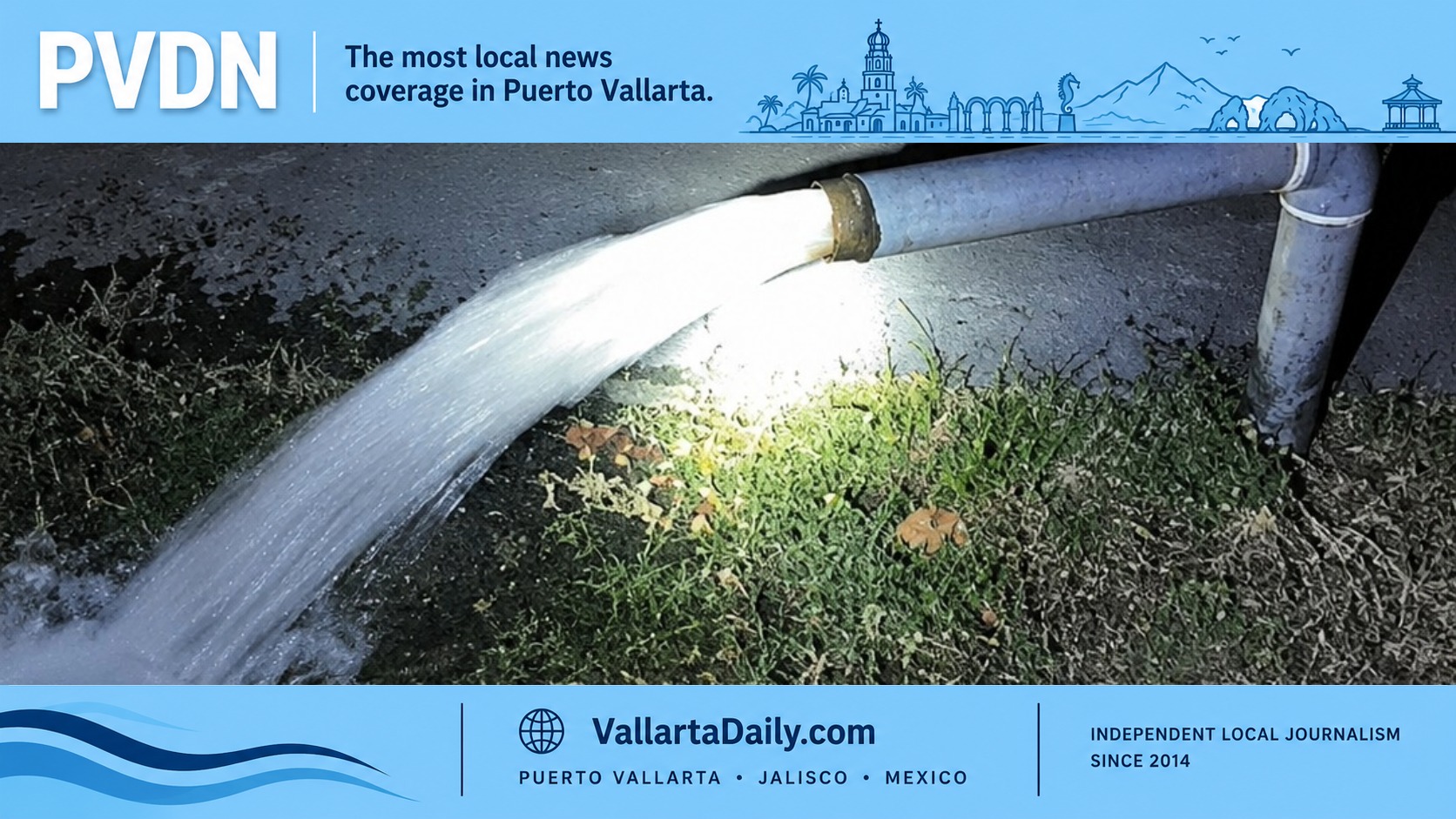
Puerto Vallarta, Jalisco, July 7, 2026 – Versalles may see additional water-line flushing after pressure changes in Puerto Vallarta’s distribution network stirred mineral buildup inside older pipes, SEAPAL Vallarta said in a public notice naming the neighborhood as one of the points where preventive work will be reinforced.
The notice does not describe a new water shutoff for Versalles. It describes controlled flushing, known locally as “desfogues,” which releases water from selected points in the network to clear turbidity before it reaches more homes and businesses.
That distinction matters in a neighborhood where short service interruptions, cloudy water, or street runoff can quickly raise questions about whether there is a break in the system. SEAPAL said the work is connected to higher pressure in the network, not to a reported emergency leak.
According to SEAPAL’s July 7 notice, the pressure increase has loosened material that forms over time within water lines due to naturally occurring iron and manganese. The agency said those minerals are present in deep wells in the northern part of Puerto Vallarta and can temporarily affect the color or appearance of water when pressure conditions change.
SEAPAL said it carried out one flushing maneuver Friday, July 3, at Prisciliano Sánchez and Universo, and that similar work would be carried out in Versalles and Arboledas. The agency did not publish a block-by-block schedule for those neighborhoods or specify how long each maneuver would last.
The utility said the controlled releases are part of a permanent preventive program and are generally done at night to reduce disruption. In practice, that means some residents may see water running from a controlled discharge point without it being a broken pipe or wasted water. Persistent runoff, pavement damage, low pressure, or discolored water that continues inside a home should still be reported.
SEAPAL’s explanation situates the Versalles work within a broader period of systemic adjustments. On July 3, the utility reported that June water coverage remained near 97 percent across the city, while acknowledging that a scheduled suspension tied to water-line relocation for the Puerto Vallarta–Las Varas highway project temporarily affected 136 neighborhoods in the northern zone and upper El Pitillal. PVDN previously reported on that large planned water cut, which was separate from the current flushing program.
The latest issue is not simply low supply. SEAPAL said recent rehabilitation work, new supply sources, pump replacements, and other infrastructure improvements have increased potable water production and strengthened service. Higher pressure can improve delivery, but it can also disturb deposits that had remained settled inside older lines.
The agency said the temporary color caused by iron and manganese does not represent a health risk and that the water it produces and distributes is certified for human use and consumption. Mexico’s NOM-127-SSA1-2021 sets national quality limits for water intended for human use and consumption.
SEAPAL did not publish new laboratory results in Tuesday’s notice, nor did it identify which streets in Versalles would be flushed first. That leaves the immediate impact likely to be uneven: one block may notice nothing, while another may briefly see cloudy water, lower pressure, or a controlled street discharge near a valve or line-cleaning point.
Reports can be made through SEAPAL’s leak, complaint, and report channels, including 073, (322) 226-9191, (322) 226-9190, and WhatsApp at (322) 105-8226.
For Versalles, the main thing to watch is whether the work remains a short, controlled flushing operation or whether specific streets begin reporting repeated discoloration, low pressure, or visible leaks after the maintenance crews move on.