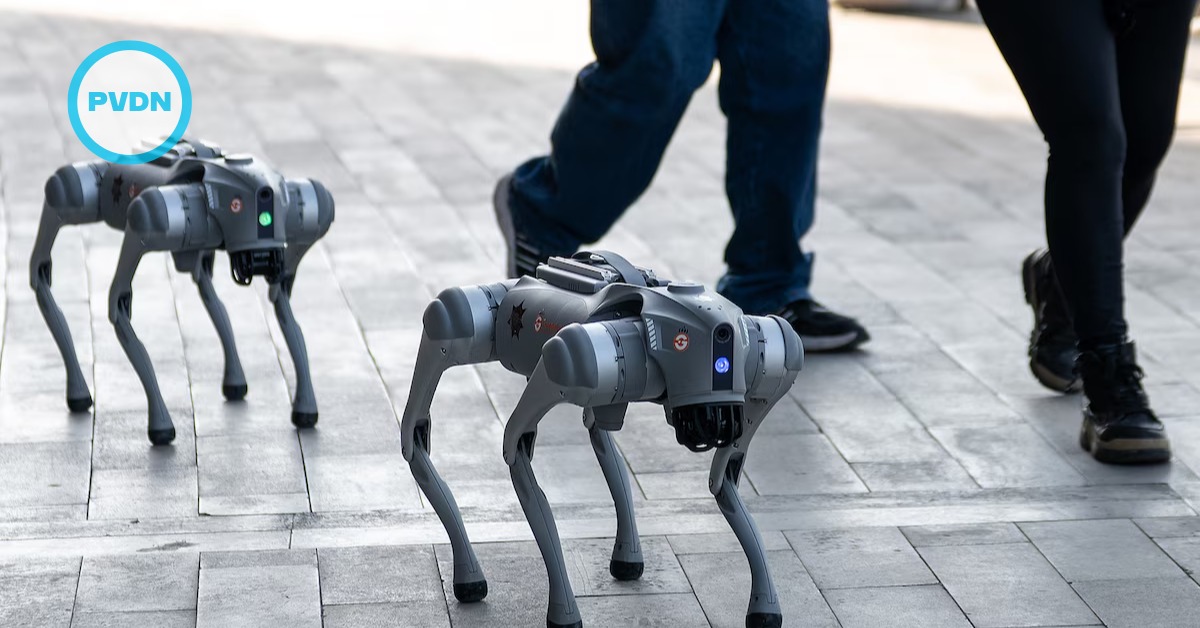
In Monterrey, World Cup 2026 preparations now include a surprising sight: robot “dogs” patrolling the stadium. The city of Guadalupe has deployed four mechanical canines as part of its security strategy for the tournament. Equipped with cameras and speakers, these robo-dogs will monitor crowds and alert police to any trouble. But what exactly can these futuristic pups do, and why are they being used? The answer lies in a push for advanced tech to keep fans safe when the world’s biggest soccer event comes to Mexico.
Robo-Dogs Join the World Cup Team
Officials in Guadalupe, a municipality in the Monterrey metro area, have introduced a new K9-X unit consisting of four robotic “dogs” to help secure Estadio BBVA. This stadium – officially named Estadio Monterrey for the tournament – is set to host several matches during the 2026 FIFA World Cup. The four yellow-and-black robots were presented to the public ahead of a recent CONCACAF Champions Cup match. The demonstration gave fans a glimpse of these high-tech sentries that will soon be on duty during World Cup games. City authorities invested about 2.5 million pesos (roughly US $140,000) in the robotic squad as a cutting-edge addition to their security arsenal.
The K9-X robots are intended to support police, serving as first responders in potentially dangerous zones. Guadalupe Mayor Héctor García explained that the robo-dogs will enter high-risk areas before human officers, transmitting live video back to command teams. “They will assist with initial interventions,” García noted. He described how a robot can be sent in if there’s a violent scuffle or an intoxicated person causing trouble. By scouting ahead, these mechanical canines help protect police officers’ physical safety and allow authorities to assess threats from a safe distance.
Unarmed Watchdogs with High-Tech Senses
Unlike attack dogs or armed drones, Monterrey’s robot dogs are unarmed and focus purely on surveillance and deterrence. Each K9-X unit carries an array of sensors and communication tools. They are fitted with HD video cameras and night-vision capabilities, enabling them to keep watch even in darkness or crowded conditions. The robots also come with two-way audio systems, including speakers that let operators issue warnings or instructions to people nearby. In a demonstration video released by the city, one robot confronted a mock suspect inside a building. It climbed stairs, streamed live footage, and ordered the individual to drop a weapon via its built-in loudspeaker. This kind of remote engagement can defuse dangers while keeping officers out of immediate harm’s way.
Though they resemble headless mechanical dogs trotting on four legs, the K9-X units do not make decisions or move on their own. Trained operators control them remotely, similar to piloting a drone or a video game character. The robots can traverse preset patrol routes or be directed manually, but a human is always in the loop to decide how to react. If the system flags something suspicious – say, an unattended bag or a sudden commotion – the operator can steer the robo-dog to investigate. The officer can then use the robot’s speaker to communicate or its camera to zoom in. Built with durable materials, the machines can handle rough terrain and stairs (albeit at a deliberate pace).
Part of a Larger Security Game Plan
The deployment of robot dogs is just one element of a broader safety strategy in Nuevo León ahead of the World Cup. Guadalupe’s police force is also integrating new surveillance drones to watch from above. It is likewise deploying anti-drone technology to prevent any unauthorized devices from disrupting events. Tens of thousands of international fans are expected to flood Monterrey for the matches. Authorities are bolstering their tech defenses to spot potential problems early. Estadio BBVA (Monterrey Stadium) will host three group-stage matches and a knockout-round match between June 11 and July 19, 2026. Before that, the venue is slated to co-host a special six-team playoff tournament in March 2026 to determine the final two World Cup berths. It will effectively serve as a test run for these security measures.
Local officials say the idea to deploy robot dogs was also driven by everyday policing challenges. Last year, two Guadalupe officers were killed in the line of duty during a routine patrol. The tragedy prompted city leaders to ask how technology might better protect their personnel. The answer they embraced was a robotic K-9 that can go in first. The K9-X unit will debut on the world stage at the World Cup. After the tournament, it will remain in service for other operations around the city. Officials emphasize that the robots won’t replace human police, but rather extend their capabilities. They act as extra eyes and ears, venturing into perilous situations and helping de-escalate incidents before officers intervene directly.
Robotic Companions in Context
The arrival of these mechanical K9s in Monterrey highlights a growing trend of law enforcement experimenting with robotic helpers. Police departments in several other countries have tested similar dog-like machines for tasks such as inspections and bomb disposal, though not without public debate. In Mexico, this isn’t the first appearance of robo-canines. In one northern state, Zacatecas, authorities unveiled a so-called “DogBot” last year, outfitted with a rifle for special security operations. And in Monterrey itself, a friendly robot dog nicknamed “Waldog” roams some neighborhoods. Its mission isn’t to fight crime, but to promote animal welfare and responsible pet ownership. By contrast, Guadalupe’s four K9-X units have a serious job to do, but they won’t go beyond surveillance tactics.
As World Cup excitement builds, fans visiting Monterrey can expect a futuristic twist to the usual security presence. The sight of four-legged robots ambling alongside police at the stadium may be novel. But officials believe it will ultimately make the event safer. “We have excellent police officers, and we are working hand in hand with cutting-edge technology for the safety of the people,” Mayor García said. For fans and residents alike, it’s a clear sign that Mexico will welcome the world in 2026 with innovation on patrol.
With information from El Financiero, WIRED, The Straits Times