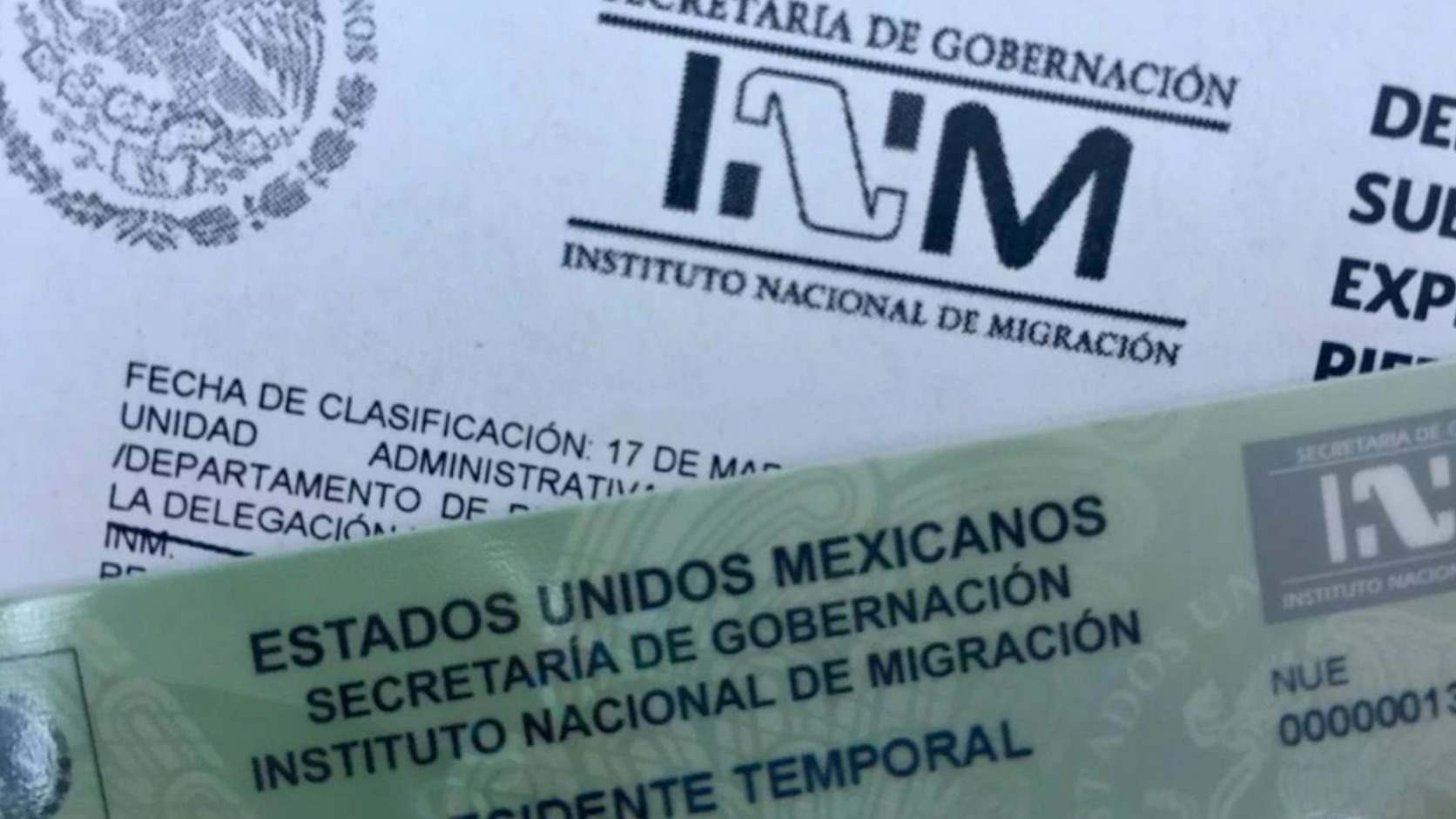
Mexico’s temporary and permanent residency cards differ in work authorization, renewals, and foreign-plated cars, though both establish legal residence and access to a CURP.
Temporary residence is capped at four years. Permanent status authorizes an indefinite stay for adults, but it does not confer citizenship, voting rights, or an INE credential.
For this explainer, PVDN reviewed Mexico’s current federal Migration Law and official procedures in force during 2026. The practical differences center on employment, identification, vehicles, family cases, travel, and naturalization.
How residency status affects life in Puerto Vallarta
Our review found that permanent residence removes two recurring limits: adult card renewal and separate work authorization.
Temporary status may carry one major advantage for some residents. It can preserve eligibility for a temporary import permit on a foreign-plated vehicle.
Both categories support daily government registration and access to a CURP. Neither changes coastal property restrictions, settles tax residence, or creates political rights.
| Issue | Temporary residence | Permanent residence |
|---|---|---|
| Authorized stay | Up to four years | Indefinite |
| Adult card validity | One to four years | Indefinite |
| Paid work | Requires authorization unless already included | Permission is implicit for adults |
| Foreign-plated vehicle | May qualify for temporary import | Does not qualify through the normal resident route |
| CURP | Available | Available |
| Tax residence | Determined separately | Determined separately |
| Voting and INE credential | Not available | Not available |
These distinctions can affect a retiree, employee, business owner or property owner in different ways. Eligibility also controls the choice. An applicant cannot select permanent residence without meeting a qualifying route.
A residence visa is not the residence card
A residence visa placed in a passport is not the final Mexican identification document. It allows the holder to enter Mexico under the approved residence category.
The INM card-exchange procedure gives the holder 30 calendar days after entering Mexico to request the resident card. This process is known as a canje.
Both temporary and permanent applicants who receive consular visas must complete this step. Until then, the visa and entry record do not serve as the final resident card.
A person with a pending residence procedure may need a separate exit-and-return permit before leaving Mexico. The INM permit procedure does not cover pending regularization cases.
Card duration and renewal obligations
Article 52 describes temporary residence as “no mayor a cuatro años,” or no more than four years. It describes permanent residence as authorization to remain “de manera indefinida,” or indefinitely.
The Migration Law regulations allow a temporary card to be issued for one, two, three, or four years. Renewals may be requested during the 30 calendar days before expiration.
Temporary residence cannot be renewed beyond the four-year limit. The holder must qualify for permanent residence, obtain another authorized status, or leave Mexico.
Permanent residence removes the regular renewal cycle for adults. Children younger than 3 must renew permanent cards annually. From age 3 until adulthood, their cards must be renewed every four years.
Permanent does not mean that the status can never be canceled. Article 64 lists grounds such as declaring a definitive departure, obtaining another status, or using fraudulent documents.
PVDN found no annual minimum-presence requirement for maintaining either residence category. Ordinary time outside Mexico is not listed as a cancellation ground.
That differs from naturalization, which has its own physical-presence rules.
If a renewable card expires while its holder is outside Mexico, the regulations provide a limited exception. The person may re-enter within 55 calendar days after expiration and must request renewal within five business days. A document expired for more than 55 days cannot be used for entry.
Work rights are different
An adult permanent resident has implicit permission to perform paid work in Mexico. A separate INM work permit is not required.
Temporary residents must check their cards. A temporary card issued through an employment case may already contain work authorization. A card issued through financial solvency, family, or another route may not.
The current INM work procedure allows temporary residents to seek authorization through an employer or through independent work.
An employer-based application requires an offer describing the position, location, and duration. An independent worker must describe the activity and provide proof of RFC registration.
Work permission and tax compliance remain separate issues. Permission from INM does not determine the person’s tax residence, reporting duties, or professional licensing requirements.
The resident card, CURP and passport do different jobs
Foreign residents often encounter several numbers and credentials during their first months in Puerto Vallarta. They are not interchangeable.
- Passport: Establishes identity and nationality and serves as the international travel document.
- Resident card: Proves the holder’s regular immigration status in Mexico. A temporary card performs that function only while it remains valid.
- CURP: Identifies a person within Mexico’s population registry. Both temporary and permanent residents have a right to obtain one.
- RFC: Identifies a person within the federal tax system. It does not prove immigration status or permission to work.
- Jalisco driver’s license: Authorizes driving and serves as a separate state-issued credential.
- INE credential: Serves electoral and identification functions for Mexican citizens. Foreign residents do not receive one based on residency.
The official CURP procedure for foreign residents says the CURP is assigned when INM issues the person’s foreigner identification number. The resulting CURP has permanent character.
That means a temporary resident does not receive a temporary CURP number. The number remains assigned even if a residence card expires, but it does not extend or replace immigration status.
The biometric CURP changes the identity system
A 2025 reform expanded the CURP’s legal role.
The General Population Law now defines the CURP as the unique identity source for Mexican nationals and foreigners with regular status.
A CURP containing fingerprints and a photograph is designated the “documento nacional de identificación obligatorio,” or mandatory national identification document. The law calls for universal acceptance in physical and digital form.
The same provision says biometric information must be integrated with the holder’s consent. Enrollment and implementation are separate from the INM resident-card process.
The reform applies to foreigners in regular status, regardless of whether their residence is temporary or permanent. A biometric CURP does not confer Mexican nationality, voting rights, or permanent immigration status.
Residents should continue using their resident cards to prove immigration status. They should use passports for international travel.
Permanent residence does not unlock every service
Many government and private procedures depend on legal stay, identity, and address. They do not always require permanent residence.
Jalisco’s current driver’s-license requirements ask foreign applicants for a passport or current immigration document. Applicants also need a CURP, proof of address, and the other documents required for the license class.
The state’s checklist does not reserve driver’s licenses for permanent residents.
The IMSS program for foreign independent workers requires legal stay and additional enrollment records. Its published guidance does not make permanent residence a general condition for participation.
Mexico’s Migration Law also allows foreigners to make bank deposits regardless of their immigration category. Banks may still request a resident card, passport, CURP, RFC, proof of address, and foreign tax information under their compliance rules.
Permanent residence may reduce problems caused by an expiring card. It does not prevent an institution from requesting other identification.
Immigration residence is not tax residence
Temporary and permanent are immigration categories. They do not decide whether a person is a Mexican tax resident.
Under Article 9 of the Federal Tax Code, an individual may be considered a Mexican tax resident after establishing a home in Mexico.
When the person also has a home elsewhere, the law examines the center of vital interests. Mexico may be treated as that center when more than 50% of annual income comes from Mexican sources. The location of the person’s main professional activities is another test.
A permanent card does not automatically make every holder a Mexican tax resident. A temporary card also does not exempt its holder from Mexican tax obligations.
Foreign pensions, rental income, local employment and remote work can raise separate tax questions. Those cases may also involve a tax treaty with the person’s other country.
Foreign-plated vehicles can change the decision
Vehicle rules create one of the clearest differences between the two residence categories.
Federal customs law allows visitors and temporary residents to seek a temporary import permit for one foreign-plated vehicle. Permanent residents are not included in that eligibility provision.
The customs authority’s vehicle guidance also ties the permit’s validity to the temporary immigration status. Renewing the residence card can extend the vehicle permit, but the holder must complete the required customs notice.
This matters in Jalisco because Puerto Vallarta is outside the northern border zones where different vehicle rules apply.
A person changing from temporary to permanent residence should resolve an existing temporary vehicle permit before the new status takes effect. Options may include taking the vehicle out of Mexico or completing a lawful permanent import when the vehicle qualifies.
The restriction does not affect a vehicle that already has a valid Mexican import record and Mexican plates.
Coastal property rules remain the same
Permanent residence does not give a foreign buyer direct constitutional ownership rights along the coast.
Article 27 of the Mexican Constitution bars foreigners from holding direct title within 50 kilometers of the coast. Puerto Vallarta falls within that restricted zone.
A foreign buyer purchasing in Marina Vallarta, the Hotel Zone, Centro, the Zona Romántica, Amapas, or Conchas Chinas generally uses a bank trust known as a fideicomiso. Residency status does not remove that structure.
Foreigners also do not need permanent residence before buying. PVDN’s guide to foreign property ownership in Puerto Vallarta explains the ownership structure and the role of the bank trustee.
Family cases follow different routes
Both residence categories protect family unity, but relatives do not always receive the same status.
A temporary resident may seek temporary residence for a spouse or qualifying partner, minor children, and parents. Their authorization generally follows the temporary resident’s permitted period.
Under the family-unity provisions of the Migration Law, certain close relatives of permanent residents may receive permanent status.
A spouse or qualifying partner of a permanent resident generally receives temporary residence for two years. Permanent residence may follow if the relationship continues.
Similar two-year provisions apply to a foreign spouse or qualifying partner of a Mexican citizen. Other close relationships, including parentage involving a Mexican child, can support a faster permanent-residence route.
The outcome depends on the exact relationship, the applicant’s age, and the documents proving the family link.
Permanent residence is not Mexican citizenship
Permanent residents remain foreign nationals unless they complete naturalization or have another claim to Mexican nationality.
The SRE naturalization requirements accept qualifying years held as either a temporary or permanent resident. The general residence route requires five years immediately before application.
Temporary student status does not count toward that five-year requirement. Shorter periods can apply through marriage, Mexican children, certain nationalities, and other statutory routes.
The Nationality Law also applies a separate absence test. Travel during the two years before filing cannot exceed six months in total under the general rule.
Until naturalization is completed, neither temporary nor permanent residence provides federal voting rights. The Constitution reserves voting to Mexican citizens.
Both residents must report changes to INM
Permanent residents avoid regular card renewal, but they do not avoid all INM obligations.
Temporary and permanent residents must report changes involving their name, nationality, civil status, address, or workplace. The legal deadline is 90 days after the change.
That includes a move within Puerto Vallarta. A resident moving from Emiliano Zapata to Marina Vallarta still has a new registered address.
The INM change-notification procedure applies to both categories. A permanent card’s indefinite validity does not cancel this reporting duty.
Residents should also keep names consistent across their passport, resident card, CURP, and RFC. A missing surname or reversed name can create mismatches across immigration, tax, health and banking records.
Changing from temporary to permanent
Permanent residence does not begin automatically when the fourth year ends.
The resident must file a change-of-status application while the temporary card remains valid. INM’s current conversion procedure recognizes four consecutive years of temporary residence as one qualifying route.
For that route, the applicant states that the request is based on completing four years. The published procedure does not require the person to repeat the original financial-solvency evidence.
Pensioners and retirees may have another conversion route if they meet the applicable requirements. Qualifying family cases may permit conversion before four years.
Before filing, a resident should account for a foreign-plated vehicle and any planned international travel. A pending procedure can require an exit-and-return permit.
Completing the process in Puerto Vallarta
The INM directory for Jalisco lists Puerto Vallarta’s immigration office at Boulevard Francisco Medina Ascencio No. 2755 in Zona Hotelera Norte.
Its published public hours are 9 a.m. to 3 p.m. Monday through Friday. Applicants should verify whether their procedure requires an appointment before attending.
The directory states that immigration offices at international airports review passenger documentation. They do not process residence applications.
Individual eligibility can depend on family history, prior status, employment, and supporting records. Applicants should confirm their route with INM or a qualified Mexican immigration lawyer before paying fees or changing status.