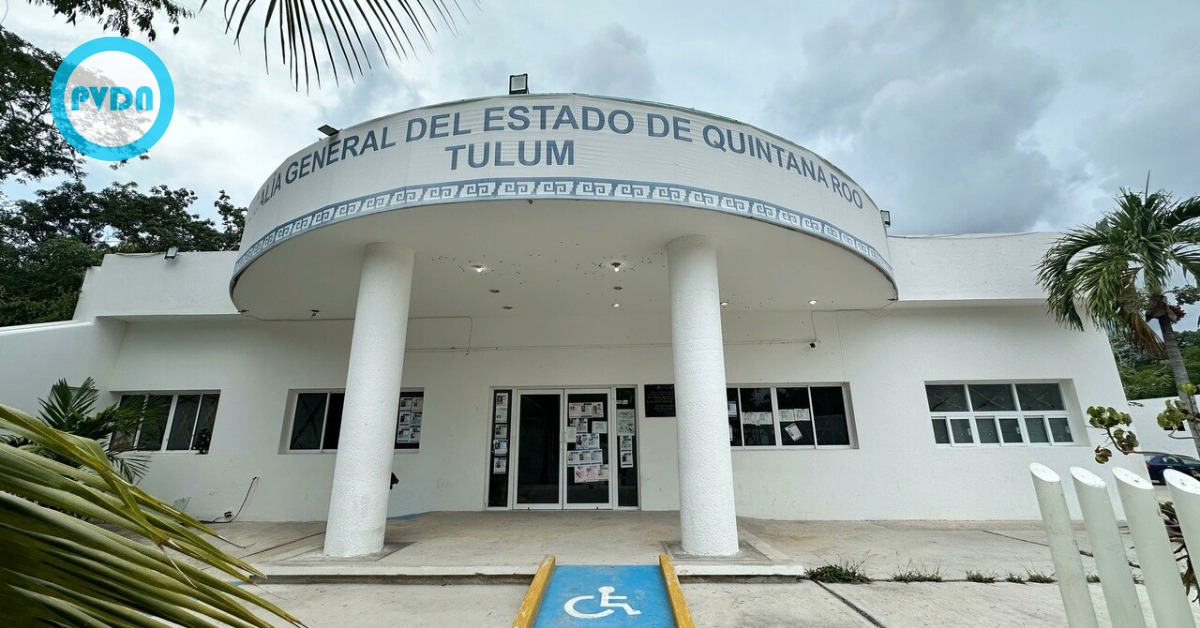
A municipal officer in Tulum has been detained and bound over to face prosecution after a U.S. woman reported he groped her while she was in administrative detention inside the city’s holding cells. Local authorities say the officer was separated from active duty, and the case was moved to the state prosecutor.
Quadratín Quintana Roo reports the incident occurred while the woman was under arrest in the municipal lockup. The outlet confirms the vinculación a proceso ruling—Mexico’s “bound over” threshold—based on a judge’s finding that there is enough evidence to open a formal case.
What happened, according to investigators
La Jornada Maya identifies the officer as Marco Alejandro N., 40, and says a judge ordered him held while the case proceeds on an attempted rape charge. A municipal official, quoted on the record, described the conduct as “inappropriate contact” inside the facility.
A separate report attributes additional chronology to the state prosecutor: the woman was allegedly taken from her cell to a restroom, where the officer made unwanted contact before returning her to the cell; she reported the incident the next day, and investigators sought an arrest warrant. We include these details to explain the allegations; the accused maintains the presumption of innocence.
Tulum police assault and what “bound over” means
Under Mexico’s criminal procedure, a judge is obligated to process when evidence suggests a crime likely occurred and the accused may be responsible. It is not a conviction. It triggers a formal investigation phase and precautionary measures, which can include custody. Courts and legal references make clear this is a threshold ruling based on probable cause standards set in the National Code of Criminal Procedure.
In this case, La Jornada Maya reports the officer remains in custody while prosecutors advance the case. The woman’s identity is withheld for privacy; we follow that standard and the legal practice of using initials for defendants until conviction.
What comes next for the case
After a vinculación a proceso, prosecutors work within a set period to complete the complementary investigation and decide whether to bring the case to trial. Defense counsel can challenge evidence and precautionary measures during this phase. The court maintains oversight over both sides, and the defendant retains the presumption of innocence throughout.
Authorities in Tulum have not released a public, detailed institutional statement beyond confirming separation from duty and the case handoff to state prosecutors. We will continue to monitor official filings and court bulletins.
A year of scrutiny over policing in Quintana Roo
The case lands as Quintana Roo confronts broader accountability issues. In nearby Cozumel, a soldier was recently bound over and held in pretrial detention in a high-profile abuse case against a nine-year-old; the state prosecutor publicly emphasized cooperation with federal authorities. That case underscored growing public pressure for transparent investigations.
Tulum’s security institutions have also seen turbulence this year, including the March killing of the municipality’s security chief and subsequent leadership changes. While unrelated to the present allegation, those events keep policing under a microscope and heighten demands for oversight inside detention facilities.
Why this matters for residents and visitors
People detained for administrative infractions are still under the state’s duty of care. Alleged abuse inside a lockup undermines trust and deters reporting. Clear protocols—supervision, cameras in common areas of detention, rapid complaint handling, and prompt medical and psychological support—are essential. The legal process underway will test whether those safeguards are working as promised in Tulum.
Editor’s note: We do not publish the complainant’s name. We also avoid publishing the full surname of the accused until a court issues a conviction, in line with Mexican legal norms and best practices for due process.