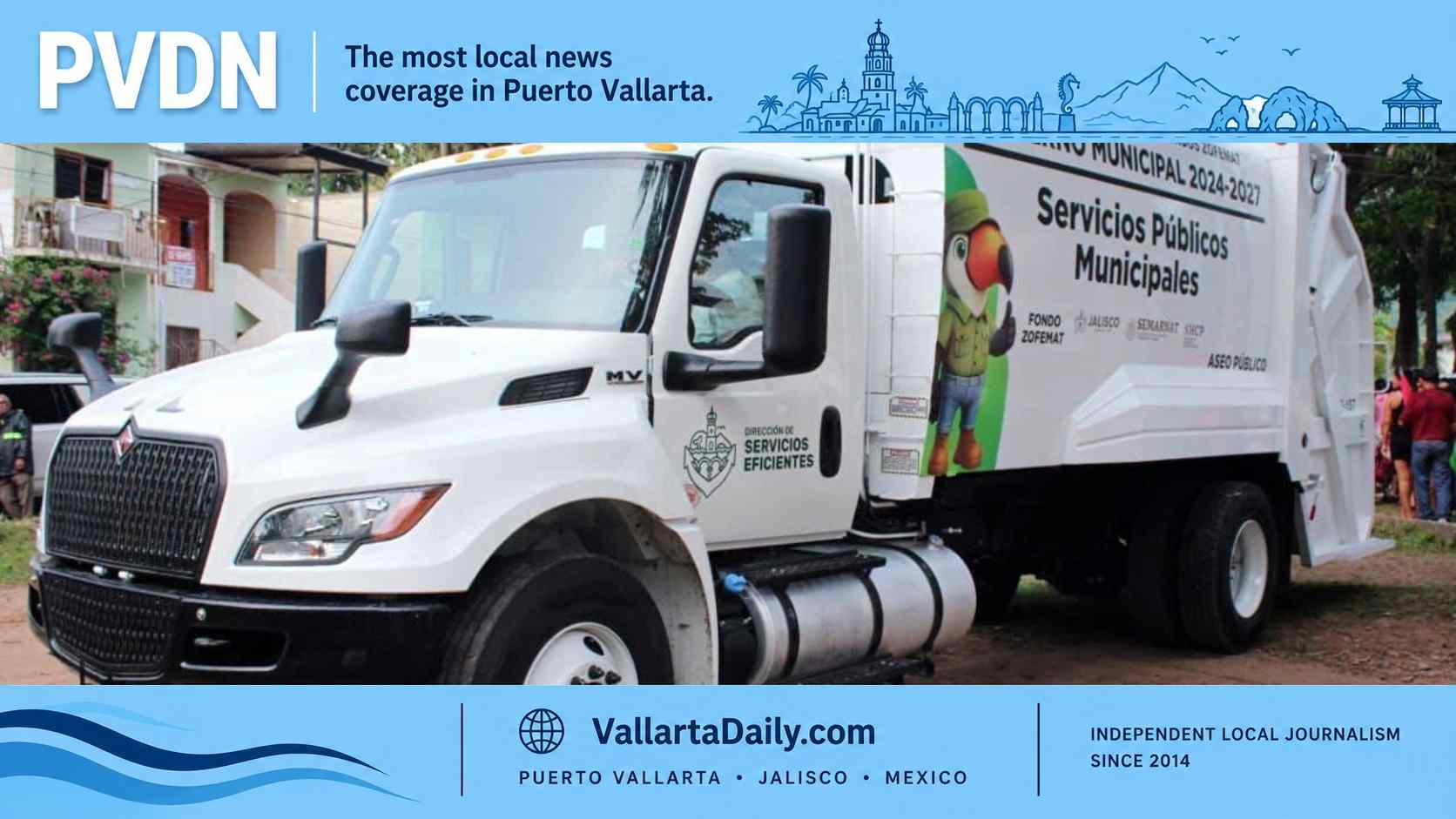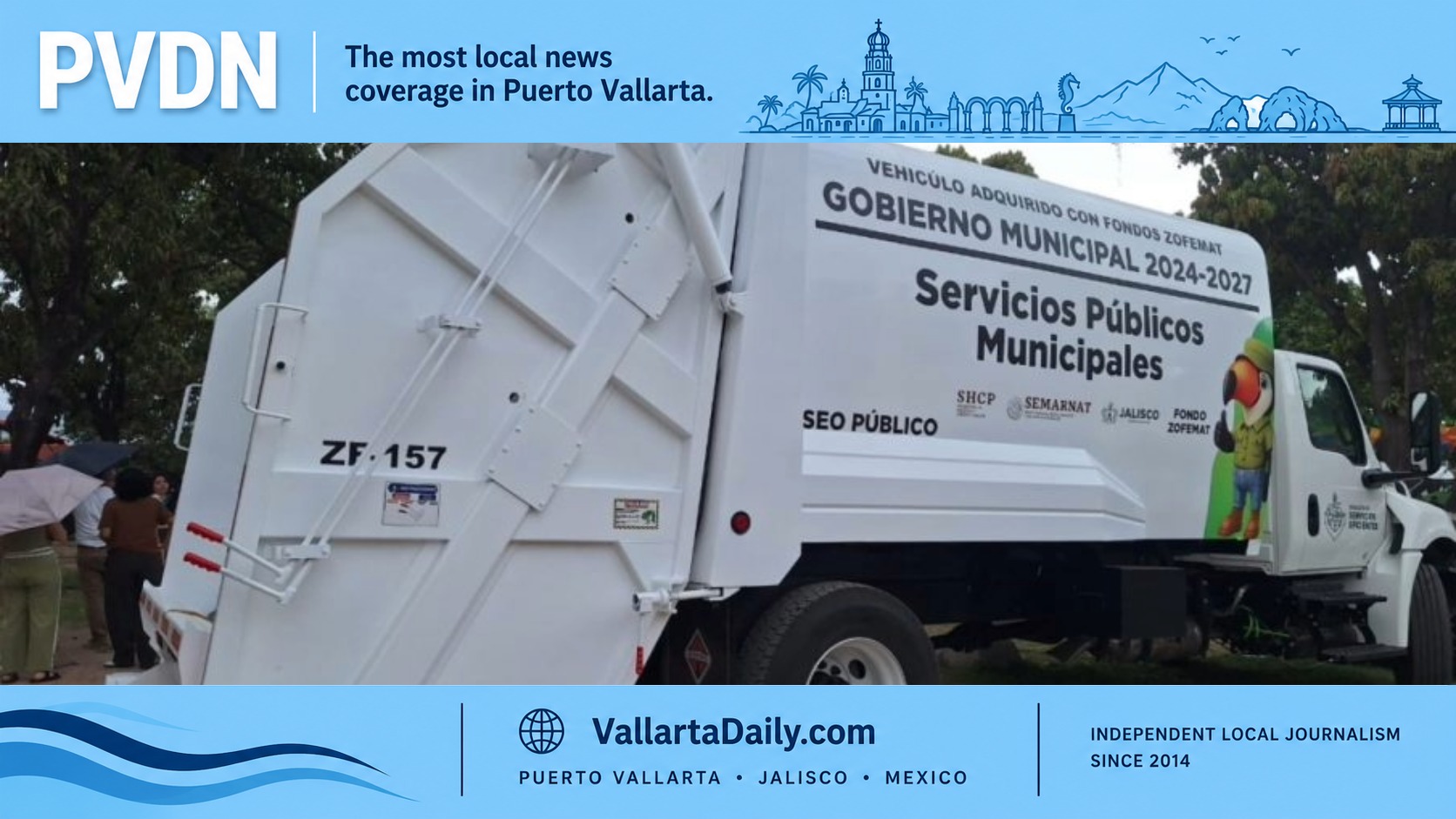
Puerto Vallarta, Jalisco, July 2, 2026 – Puerto Vallarta added nine waste-service vehicles this week, using federal beach-zone funds to buy four garbage trucks and five pickup trucks at a time when trash collection remains one of City Hall’s most visible service problems.
The units were delivered on Wednesday by Mayor Luis Munguía and are expected to support garbage collection associated with the Federal Maritime Terrestrial Zone, commonly referred to in Vallarta as ZOFEMAT. The purchase gives the city more equipment for beach-zone cleaning and collection work, but it also raises the practical question residents have been asking for months: whether new trucks will translate into completed routes, fewer missed pickups, and less waste left on streets during rainy season.
The four garbage trucks cost 3.712 million pesos each, while the five “estaquita” pickup trucks cost 527,000 pesos each. Those per-unit figures add up to about 17.5 million pesos; the public delivery was described as an investment of more than 18 million pesos. The city has not published a route-by-route deployment list showing where the new units will be assigned first.
The purchase is tied to municipal procurement records. On Puerto Vallarta’s public transparency page, the listed 2026 process describes the acquisition of rear-load garbage compactors and support vehicles, including pickup trucks, for cleaning service in the federal maritime-terrestrial zone. The record identifies the funding source as the 2026 ZOFEMAT fund and lists the requesting office as the Dirección de Servicios Eficientes.
ZOFEMAT funds are not simply general city money. They come from the federal beach-zone system and are normally tied to the administration, maintenance, preservation, and cleaning of the federal coastal zone. In practice, that means the new vehicles should be judged not only by the delivery event but also by whether beaches, access points, tourism corridors, and nearby neighborhoods experience more reliable waste removal.
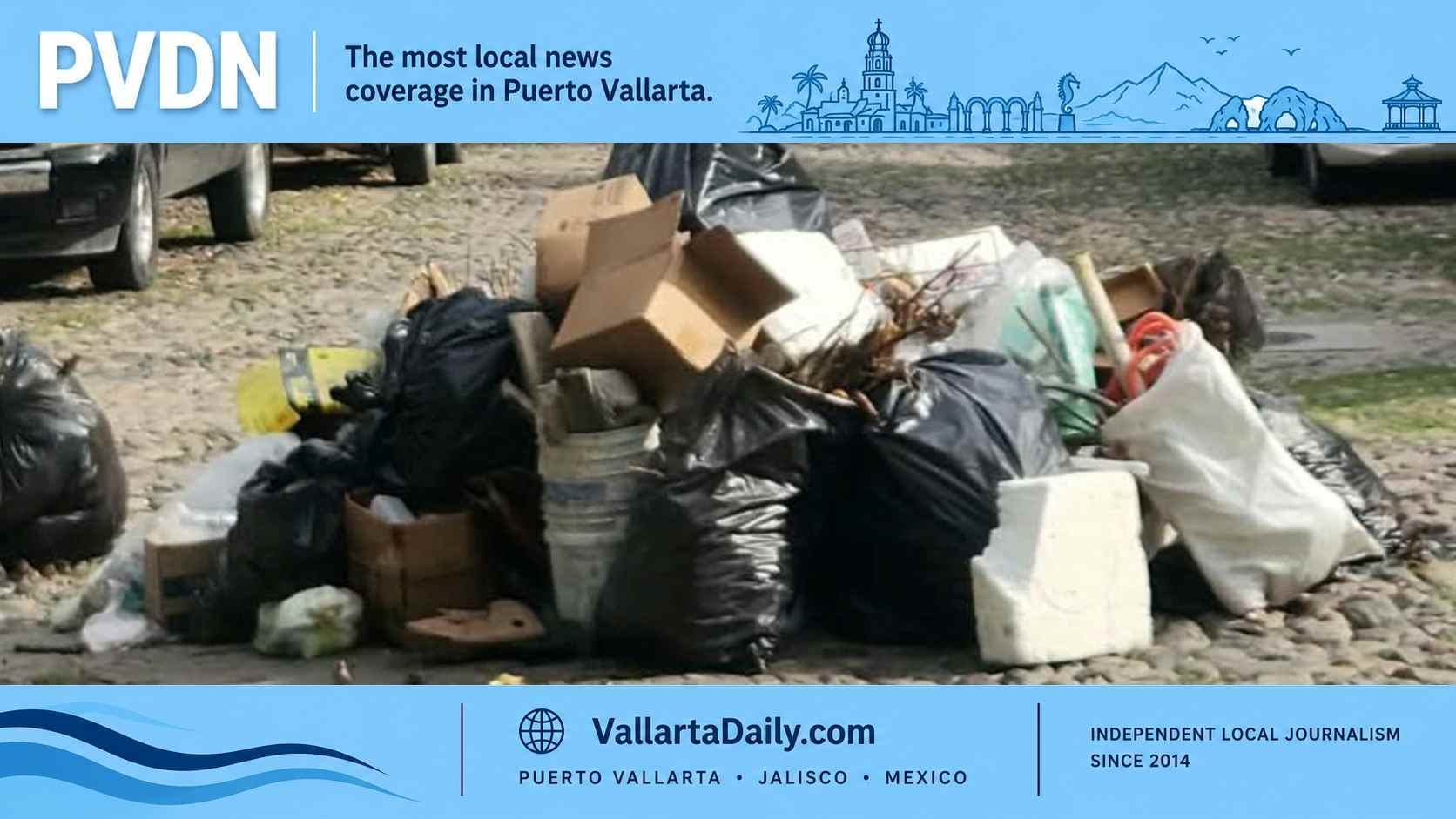
The delivery follows a rough stretch for Puerto Vallarta’s garbage system. City Hall took over garbage pickup in April after months of friction with the private contractor, Red Ambiental, and then faced ongoing complaints about irregular routes, labor pressure, and visible trash buildup in several colonias. Last month, neighborhood pickup was suspended on a Friday, adding to public frustration over a service that affects streets, businesses, beaches and household routines almost immediately when it fails.
The mayor also announced performance incentives for Aseo Público workers. Under the plan described at the delivery, crews that complete 100 percent of their routes and schedules would be eligible for bonuses of 10,000 pesos each, with a second-place team receiving 5,000 pesos each. The city did not immediately detail how route completion will be verified, whether the measurement will be public, or whether the bonuses are monthly, one-time, or tied to a broader tracking system.
Munguía has said the city needs roughly a month and a half to stabilize the collection problem. That gives the new equipment a clear public test through July: fewer skipped routes, cleaner transfer points, faster response in beach-zone areas and more predictable pickup schedules in colonias that have seen delays.
The delivery also comes one day after business concerns over Vallarta’s trash problem resurfaced in public discussion, with complaints that service failures were damaging the city’s image and daily life in affected neighborhoods.