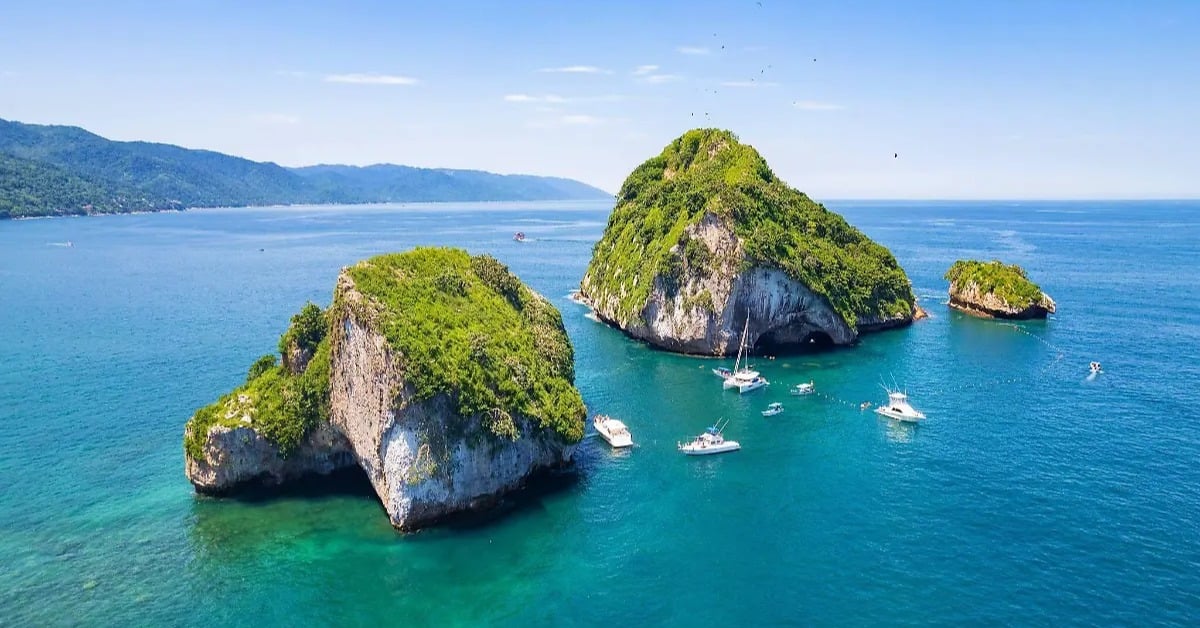
Los Arcos is the postcard image everyone recognizes, but locals say the rules that protect it still have many gaps. After a midweek highway protest over fencing and beach access, Puerto Vallarta’s city council moved fast with an official exhorto—a formal push for clearer answers and stronger protections. What exactly is the legal status of the site, who can authorize work nearby, and how do you keep a world-famous snorkel spot from being treated like private property? The next replies will matter.
A weekend vote after a tense week
Puerto Vallarta’s city council approved an exhorto calling for stronger preservation of Los Arcos de Mismaloya, a landmark marine site south of the city that’s as important to local identity as it is to tourism. The move came days after residents and activists staged a roadside protest on Highway 200, arguing that environmental rules and public access are enforced unevenly and that the area is vulnerable to private interests.
For many visitors, Los Arcos is simply “the place you take a boat to.” For locals, it’s also a pressure point: a small, heavily visited zone where enforcement, jurisdiction, and development pressures collide. The council’s action is meant to turn public frustration into a formal set of requests that state and federal authorities must answer.
What the council approved
The initiative was introduced by council member Magdalena Urbina and backed by Mayor Luis Ernesto Munguía González. At its core, the exhorto asks authorities to put clear, public information on the table about what Los Arcos is, legally speaking, and what that status actually prevents or allows.
The council is seeking clarity on the site’s legal framework, a faster path toward a more robust protected-area designation, and an explicit rejection of any private concession that could limit the public character of the coastline. The exhorto also calls for stronger environmental protection actions, not only in principle but in day-to-day oversight.
During the discussion, the council broadened the scope of the exhorto so it is not aimed only at federal authorities. At the suggestion of council member Melissa Madero, it was expanded to include state and municipal agencies as well, framing the issue as a shared responsibility rather than a paperwork problem for someone else to solve.
Why the legal status question keeps coming up
One reason this issue doesn’t die is that Los Arcos is widely understood to be protected, yet residents still see actions near the site that feel incompatible with that idea. The area has been federally recognized for decades as a refuge zone intended to protect marine flora and fauna in the waters around Los Arcos. Even so, activists argue that the current framework leaves too much room for interpretation, slow enforcement, or the kind of “it’s not my jurisdiction” stalemate that can last long enough for damage to become permanent.
That’s why the exhorto emphasizes “clear and public” information. It’s not just about winning a declaration on paper. It’s about knowing which authority is responsible for what, which boundaries apply, and which activities can be permitted or prohibited.
Beach access is the emotional core of the dispute
Alongside environmental concerns, the council’s message leans hard into public access. Beaches in Mexico are public, but anyone who has lived in a coastal town long enough knows the practical reality can be messier—especially when the most convenient routes to the sand run through areas dominated by private property.
Residents involved in the recent mobilization have pointed to signs and fencing placed in the federal maritime zone near the area as a symbol of where this could be heading. Even when barriers are later removed or disputed, the underlying fear remains: that a beloved public place can be gradually reshaped into something that feels controlled, restricted, or reserved for a few.
For expats who chose Puerto Vallarta because the coastline is part of daily life, this is not a niche debate. It speaks to what kind of city Vallarta wants to be as growth accelerates—one where natural icons remain shared, or one where access becomes a privilege negotiated on a case-by-case basis.
What happens next
An exhorto does not, by itself, create a protected area or shut down activity. What it does is put the city’s position on record and formally ask other levels of government to respond. The next phase will be measured in two ways: whether agencies provide a clear explanation of Los Arcos’ current legal protections, and whether there is visible movement toward a stronger designation with real enforcement capacity.
The pressure is unlikely to fade. The protest that pushed this issue back into the spotlight was organized quickly and drew support from locals who have watched similar debates simmer for years. If authorities answer slowly—or vaguely—expect the public to keep the spotlight fixed on Los Arcos and on any sign that the public character of the coastline is being tested.