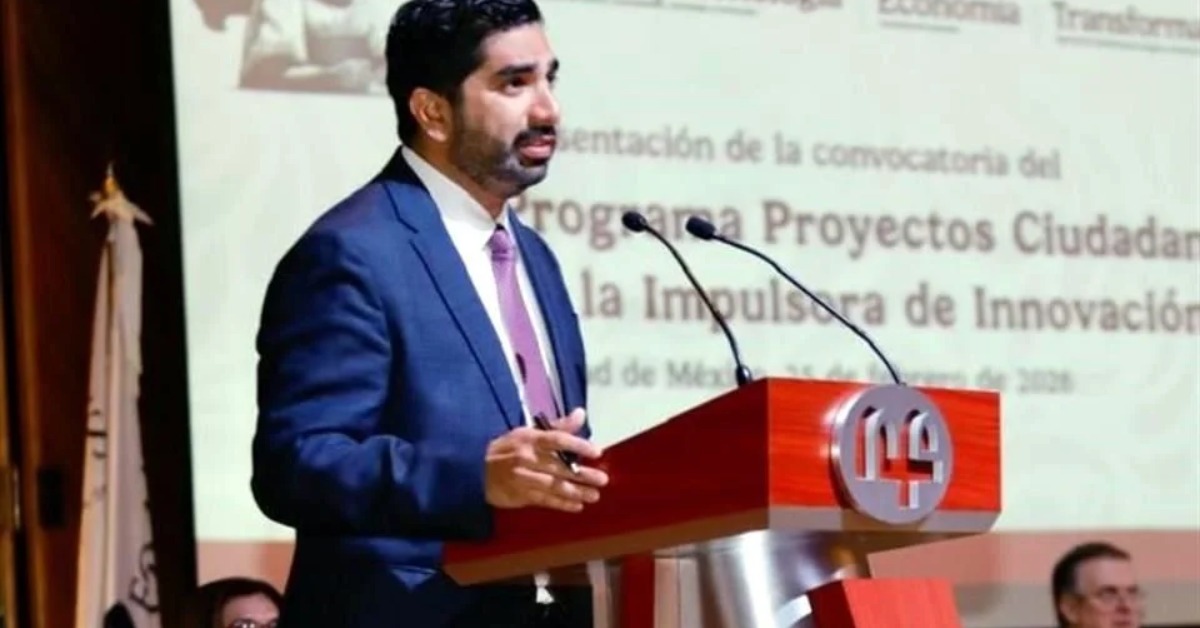
President Claudia Sheinbaum confirmed that her government will propose Roberto Lazzeri to replace Esteban Moctezuma as Mexico’s ambassador to the United States. Lazzeri currently leads Nafin and Bancomext, two of Mexico’s main development banks. On the surface, the move may look like a standard diplomatic reshuffle. It is not. The timing points to a narrower and more urgent goal. Mexico is heading into a period when trade policy, not ceremony, may define much of its relationship with Washington.
That matters because the job in Washington now sits at the crossing point of several pressures. Mexico and the United States are already in talks ahead of the 2026 T-MEC review. Tariff disputes remain active. Security cooperation continues to strain politics on both sides of the border. Migration still shapes the broader bilateral agenda. In that setting, the ambassador is not just a symbolic representative. The post becomes one more channel for political coordination, economic messaging, and direct contact with U.S. officials who will shape the next phase of the relationship.
Why Lazzeri fits this moment
Roberto Lazzeri does not come from the usual political script for a high-profile embassy post. His background is rooted in public finance. He is an economist trained at CIDE, with a career that has included work in Mexico City’s finance administration, Banobras, and the federal Finance Ministry. He has also overseen public debt and, since August 2025, has led Nafin and Bancomext. That record gives him a technical profile at a time when technical issues may carry more weight than public rhetoric.
Sheinbaum has described Lazzeri as someone with strong working ties across the Mexican government and with U.S. counterparts. That detail matters. Mexico is not only trying to defend its position in formal trade talks. It is also trying to maintain steady communication as disputes over tariffs, industrial policy, and supply chains continue. A diplomat with deep economic experience can be useful in that environment. He may be better placed to speak the language of markets, financing, rules of origin, and investment risk than a more traditional political envoy.
Why the timing matters now
The timing is difficult to ignore. On March 5, U.S. and Mexican officials announced the launch of bilateral discussions in preparation for the joint review of the USMCA, known in Mexico as T-MEC. On March 18, both sides said technical teams had already begun work and were moving toward the July 1 joint review. That means the nomination comes with less than three months before a major checkpoint in North American trade relations. This is not a background issue. It is one of the main policy tests Mexico faces this year.
At the same time, Mexico is still dealing with tariff pressure in key sectors. Economy Secretary Marcelo Ebrard has indicated that tariffs affecting industries such as autos, steel, and aluminum may not disappear quickly. That adds another layer to the embassy change. Mexico appears to want a representative in Washington who can support a more economic form of diplomacy. The goal is not only to defend Mexico’s position in a treaty review. It is also to reduce uncertainty at a moment when business confidence can be shaken by mixed signals from either capital.
For many readers, especially foreigners living in Mexico, that may sound distant. It is not. The tone of the U.S.-Mexico relationship often filters into issues that affect daily life more directly. Investor sentiment can affect jobs, construction, supply chains, and the peso. Political friction can shape border procedures, migration policy, and even how quickly disputes escalate in public. The embassy in Washington also matters for consular coordination and crisis management. A technically focused ambassador will not solve those issues alone, but he can influence how Mexico presents its case when the stakes are high.
What happens next
The change is still a proposal, not a completed handover. Sheinbaum said the nomination must go through a formal process, including acceptance by the United States. Under Mexico’s constitutional framework, ambassadorial appointments also require Senate approval. That means Esteban Moctezuma remains Mexico’s ambassador in Washington for now. Sheinbaum has also signaled that Moctezuma could move to another government role, though she has not announced what that would be.
The larger point is that this is not just about one official replacing another. It is about the kind of representation Mexico wants in Washington during a year shaped by trade talks, tariffs, and strategic economic negotiation. If Lazzeri takes the post, he is likely to arrive with a narrower but very clear mission. Mexico seems to be betting that the next phase of the bilateral relationship will require less political theater and more command of finance, trade, and cross-border economic leverage.