Four residents connected to protests at Playa Las Cocinas in Punta de Mita are facing arrest warrants after demonstrations against work tied to a luxury coastal development project.
The case stems from protests held on April 27 and 28 in Bahía de Banderas, Nayarit, where residents, fishermen, service providers, and other local people objected to construction near the beach. The dispute centers on Playa Las Cocinas, a coastal area where opponents say public access and federal beach protections are at risk.
According to the legal representative for four of the protesters, the arrest warrants are connected to allegations of threats, property damage, criminal association, and apología del delito, a charge generally tied to public justification or praise of a crime. The warrants were issued in criminal case 359/2026 by a first-instance judge based in Bucerías.
The complaint was filed by Cantiles de Mita S.A. de C.V., linked to Grupo Dine, the company behind the works. The complaint was reportedly filed the same day as the April 27 protest.
The conflict is not only about the protest itself. It is about what the protesters say is happening on public coastal land.
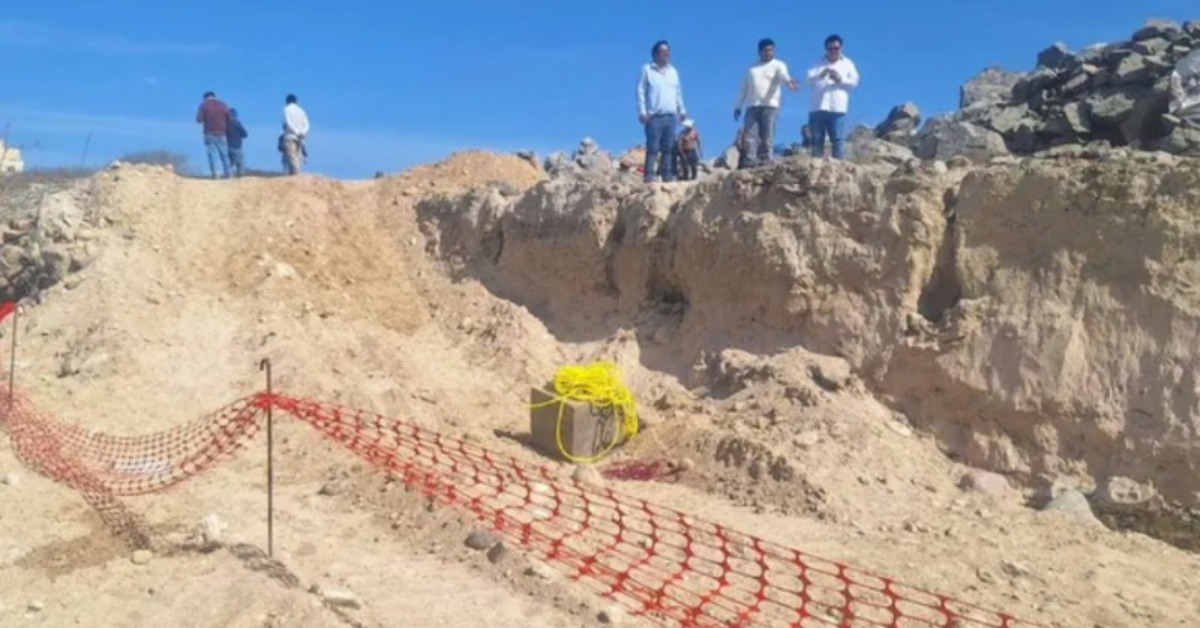
In Mexico, the Zona Federal Marítimo Terrestre, commonly known as Zofemat, includes a 20-meter strip next to the beach. It is federal public property and cannot be privatized or fenced off as private land. Protesters have argued that work on a breakwater at Playa Las Cocinas was taking place too close to the area where the waves reach.
Images and videos shared by witnesses showed state police at the site while heavy machinery worked near the beach. Protesters accused authorities of prioritizing private construction over public access.
After the April protest, three people were detained by state police for about 24 hours and later released after pressure from community members who went to demand their release.
Nayarit’s attorney general, Ludmila Heredia Verdugo, later said in local media that the detained protesters had been caught in the act, that they had intimidated police officers, and that one officer suffered a fractured arm. She said the case remained open unless there was a settlement and forgiveness from the complainant.
The company has said the beach remains public and that its Zofemat concession does not make it the owner of the beach. In a statement dated May 13, Grupo Dine said the concession is a responsibility, not ownership, and said it is responsible for caring for the area.
Residents and defenders of the beach have continued to oppose the project since April. Their position is that construction has moved ahead while they are being asked to wait, creating the impression that public authorities are responding faster to the company’s complaint than to community concerns.
For readers following coastal development in Mexico, the Punta de Mita case shows how quickly beach-access disputes can move from public protest to criminal proceedings. It also shows why Zofemat boundaries, concessions, and construction near the shoreline often become flashpoints in areas where luxury development meets long-standing local use of the beach.
The arrest warrants do not settle the underlying dispute over Playa Las Cocinas. They mark a new legal stage in a conflict that began with opposition to construction and has now expanded into a criminal case against residents who took part in the protests.