A Sunday that should have been quiet on the south shore of Banderas Bay turned into an hours-long sea search. Calls first pointed crews to Majahuitas. Nothing. Then, near midday, volunteers spotted a body drifting off Yelapa. Officials held position offshore until the prosecutor’s office gave the go-ahead. The man remains unidentified. What follows is a clear timeline of who responded, how the recovery unfolded, and why this part of the bay—with boat-only villages and long runs to the pier—complicates rescues and investigations.
Yelapa body recovery began with a call from Majahuitas
The first alert hit at 9:20 a.m. on Sunday, September 7, with a report of a body near Majahuitas on the south side of Puerto Vallarta. State civil protection crews mobilized and searched for more than two hours without success before standing down.
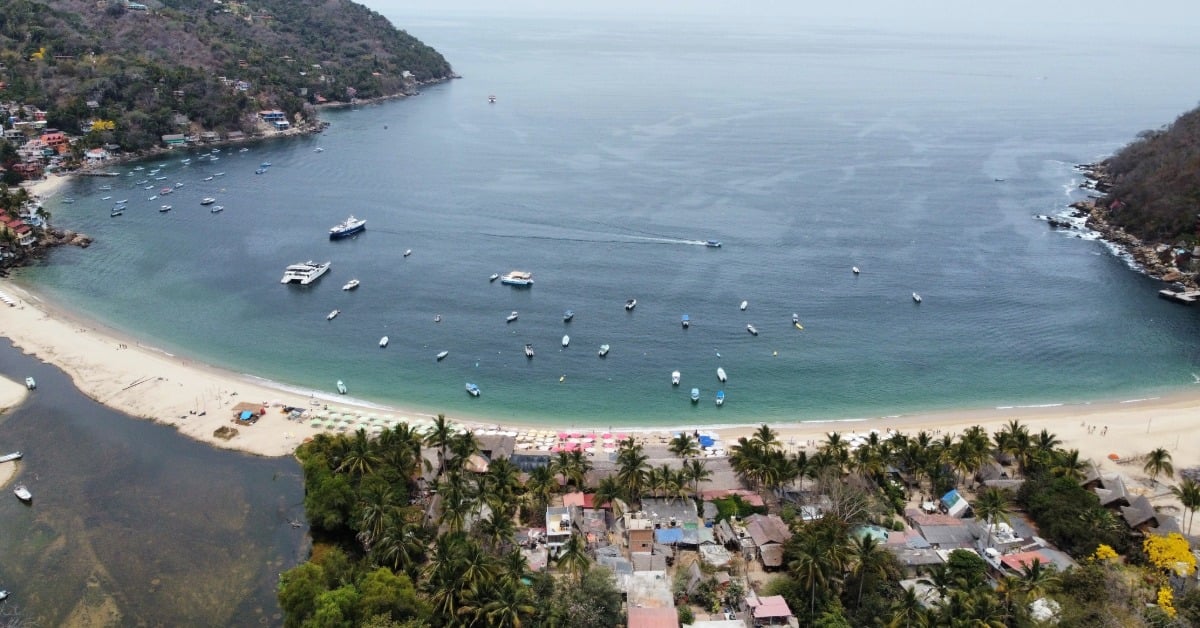
Around 12:20 p.m., volunteers with the nonprofit Limpia tu Mar spotted a man’s body floating off Yelapa, a boat-access village in the municipality of Cabo Corrientes. They notified authorities and kept visual contact until help arrived.
Volunteers, rescuers, and the Navy converged off Yelapa
State civil protection returned to the area, coordinating on the water with municipal responders and naval support. Local reporting also describes earlier confusion over the exact location, and notes that a private vessel reported the sighting; subsequent updates identified the man only as a male adult with dark clothing and a backpack.
Mexico’s Navy runs the national maritime search-and-rescue system through coastal stations known as ENSAR; Puerto Vallarta hosts one of these units, which routinely supports recoveries and medical evacuations in the bay. That framework helps explain the joint posture seen on Sunday.
A long afternoon holding pattern on the water
Responders secured the body aboard a boat offshore and waited hours for prosecutors to authorize the recovery and chain-of-custody steps. After 5:30 p.m., the on-duty agent of the Public Ministry gave the order. Forensic teams took charge and transferred the remains for identification. The handoff to investigative police occurred near 8:00 p.m.
Local outlets further report the body was landed at the Boca de Tomatlán pier, the closest road-connected port for south-shore villages like Yelapa, before transfer to the Jalisco forensic service. That is standard practice in this part of the bay.
Geography made the operation slower and more complex
Yelapa and neighboring coves are reached by boat—typically water taxis from Boca de Tomatlán or the Los Muertos pier—which stretches travel and response times. Even on calm days, a sortie from town, an open-water hold, and a return to Boca lengthen any emergency or recovery.
Once ashore, cases move to the Jalisco Institute of Forensic Sciences, which maintains a regional office for the Costa Norte in Puerto Vallarta. Identification procedures and any legal autopsy follow state protocols under prosecutorial direction.
What authorities have and haven’t said
As of publication, authorities have not released the man’s identity or the cause of death. Reporting from the scene indicates he was an adult male; investigators opened a case file and took custody as required. Those steps match the legal process for deaths in public waters in Jalisco.
The location details—first Majahuitas, then Yelapa—match the known drift patterns and the search-and-report reality on this stretch of coast, where sighting accuracy varies with distance, sea state, and cell coverage. The presence of an ENSAR station in Puerto Vallarta also aligns with the naval assistance reported.
Why this matters for south-bay safety
Each season, the south shore draws boatloads of day-trippers and residents moving between villages. The bay’s beauty hides the logistical truth: when emergencies happen, every minute to locate, authorize, and transport counts. Sunday’s recovery shows the system at work—volunteers flagging a sighting, civil protection coordinating, the Navy providing maritime capacity, and forensics taking legal custody.
For the people of Yelapa and nearby communities, clear lanes from sea to pier to morgue are not abstractions. They are the difference between confusion and closure when the water turns tragic.