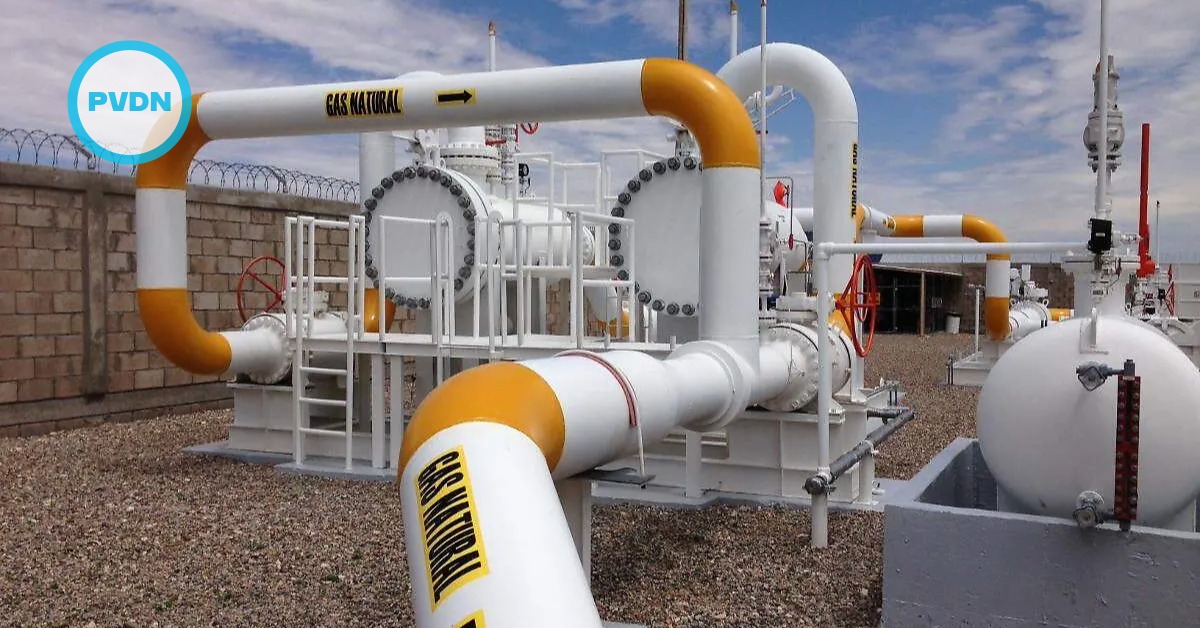
The Los Cabos gas pipeline is no small project. Its promoters plan more than 150 kilometers of buried pipe between Cabo San Lucas and San José del Cabo, designed to operate for 30 years under a federal permit. The system, formally titled “Sistema de Distribución de Gas Natural por medio de Ductos en la Zona Geográfica Única: Los Cabos,” is under review by Mexico’s Agency for Safety, Energy and Environment (ASEA), which opened a public consultation on its environmental impact statement this fall.
For many residents and specialists, the problem is not only the project’s scale but the way it is being handled. Key documents submitted to ASEA, including detailed route maps and information on investment and safety criteria, were classified as reserved information. Regulators invoked a federal transparency law to justify withholding them, even as they invited the public to comment on the same documents.
Local reporting in Baja California Sur added that state authorities have also failed to release the full route and risk analyses, despite Mexico’s commitments under the Escazú Agreement to disclose environmental information on projects with potential impacts proactively. Another national report noted that the project, led by Gas Natural del Noroeste S.A. de C.V., has not only kept route options out of public view but also left unanswered questions about possible ecological damage along the corridor.
The environmental impact assessment for Los Cabos was filed in its regional modality and placed in consultation between 18 September and 16 October 2025. After complaints about the short window and lack of accessible data, the deadline for public comments was extended into early November, giving citizen groups a little more time to analyze the technical annexes that were available.
What is planned for the Los Cabos gas pipeline
What can be reconstructed from those annexes gives a clearer picture of the stakes. Project documents describe a distribution system spanning more than 150 kilometers between the two main cities in the municipality, with branches extending into neighborhoods and resort areas.
Because ASEA reserved the official route maps, environmental groups turned to the geographic coordinates scattered through the project’s own risk studies. By plotting those points, organizations such as BCSicletos and local environmental collectives concluded that the pipeline would cross dense urban zones and several conservation areas, including the San José del Cabo estuary and the Cabo San Lucas Flora and Fauna Protection Area.
These are not marginal sites. The Estero San José del Cabo is a state ecological reserve and has been listed as a Ramsar wetland of international importance since 2008. Federal and local documents describe it as the most important wetland in Baja California Sur, critical for aquifer recharge and home to more than 200 species of aquatic and migratory birds, some of them at risk.
Environmental studies also highlight that this estuary is one of the few freshwater coastal wetlands on the peninsula and a key part of Los Cabos’ image as a destination where desert, sea, and wetlands converge. For local communities, it is a daily landscape, a bird-watching site, a buffer against storms, and a natural filter for the aquifer that supplies a rapidly growing tourist city.
The coordinates traced by civil society groups suggest the gas pipeline’s alignment would remove more than 150 kilometers of surface with filtration capacity, which they argue would aggravate an existing water crisis in Los Cabos. They also warn that burying a gas line near the estuary and coastal developments introduces new accident risks in a municipality already struggling to balance hotel growth, traffic, and fragile ecosystems.
On the legal side, organizations contend that the proposed route conflicts with several layers of regulation. Their filings to ASEA cite provisions of Mexico’s main environmental law, hydrocarbon sector rules, and a technical norm on gas infrastructure safety. They also argue that the project contradicts the Los Cabos 2040 urban development plan, which prohibits installing ducts in urban areas.
The environmental impact study was prepared by Asesoría en Aprovechamiento de Recursos Naturales en Zonas Áridas S.C., a consultancy based in Durango. Activists say the firm has little visible track record in hydrocarbon projects, which, combined with the classification of core data, fuels doubts about the depth and independence of the analysis submitted to ASEA.
Escazú and a test for Mexico’s energy transparency
Mexico ratified the Escazú Agreement in 2021, committing to guarantee three access rights in environmental matters: information, public participation, and justice. Official guidance and academic reviews stress that the treaty requires governments not only to answer information requests, but to generate, systematize, and proactively publish environmental data on projects that may affect ecosystems or communities.
In environmental justice rulings, Mexico’s Supreme Court has linked these rights to the constitutional guarantee of a healthy environment. Courts have emphasized that decisions on high-impact works must be based on the best available science and transparent risk evaluations, applying principles such as prevention and precaution.
For critics of the Los Cabos project, the way information has been managed does the opposite. When ASEA withholds the exact route, the identity of key technical staff, and even details of the investment and safety criteria, residents are left to comment on a project they cannot fully see.
Civil society groups have responded by reconstructing the pipeline’s path themselves and filing lengthy technical objections. They are also asking ASEA to deny the permit outright, arguing that the combination of route secrecy, potential impacts on Ramsar wetlands, and apparent clashes with urban planning rules could render the project legally and environmentally unviable.
Their concerns are not happening in isolation. Other gas mega-projects linked to the Gulf of California and Baja California Sur, such as the Sierra Madre pipeline and the planned Saguaro LNG plant, have already drawn warnings about risks to whales, fisheries, and coastal ecosystems. For many environmental advocates, the Los Cabos case is another sign that energy infrastructure decisions are being taken with limited public scrutiny in some of the country’s most sensitive seascapes.
Los Cabos, meanwhile, markets itself as a global example of sustainable tourism, noting that a large share of Baja California Sur’s territory is officially protected. Residents who live off that tourism, from hotel workers to kayak guides on the estuary, now watch closely to see whether the gas project will be forced to meet that rhetoric.
Gas Natural del Noroeste maintains in its filings that the pipeline’s impacts would be minimal and that construction would create temporary jobs. But the company has not publicly detailed the total investment or the full safety measures it plans to apply, information that remains under the same seal as the route maps.
What happens next rests with ASEA. The agency must decide whether to approve, condition, or reject the project. Its ruling will show how far Mexico is willing to go in turning Escazú from an international promise into a daily practice, especially when powerful energy interests are involved.
For people living along the corridor between Cabo San Lucas and San José del Cabo, the demand is simple. Before a trench is opened or a pipe is welded, they want to know exactly where that line will run, what it could mean for their water, and why those answers were hidden in the first place.