Mexico’s latest recovery of heritage objects is a national story, but it also carries a clear Western Mexico angle. Among the returned pieces are artifacts identified with the San Sebastián style, which are linked to the border region between Jalisco and Nayarit. That detail gives the case a stronger local meaning for readers in Jalisco. It shows that when Mexico talks about recovering its past, it is also recovering part of the cultural record of specific states, regions, and communities.
A national recovery with a clear Jalisco connection
Mexico’s recovery of 160 archaeological and historical objects from abroad is being presented as a national act of cultural restitution. For readers in Jalisco, though, the story has a more direct regional dimension. Among the pieces returned are artifacts identified as part of the San Sebastián style, a ceramic tradition associated with the border area between Jalisco and Nayarit. That makes this case more than a broad heritage update from Mexico City. It connects the recovery effort to western Mexico and to a region whose past often receives less public attention than central Mexico’s most famous archaeological zones.
The returned lot includes 157 archaeological objects and three historical items. Federal authorities said the objects were recovered in the United States, Canada, France, and Argentina. Most were made of ceramic. Their chronology stretches from the Mesoamerican Preclassic period to the viceregal era. Officials also described this as the first formal repatriation of 2026, giving the announcement symbolic weight beyond the number of objects involved.
Why the San Sebastián pieces matter in Jalisco
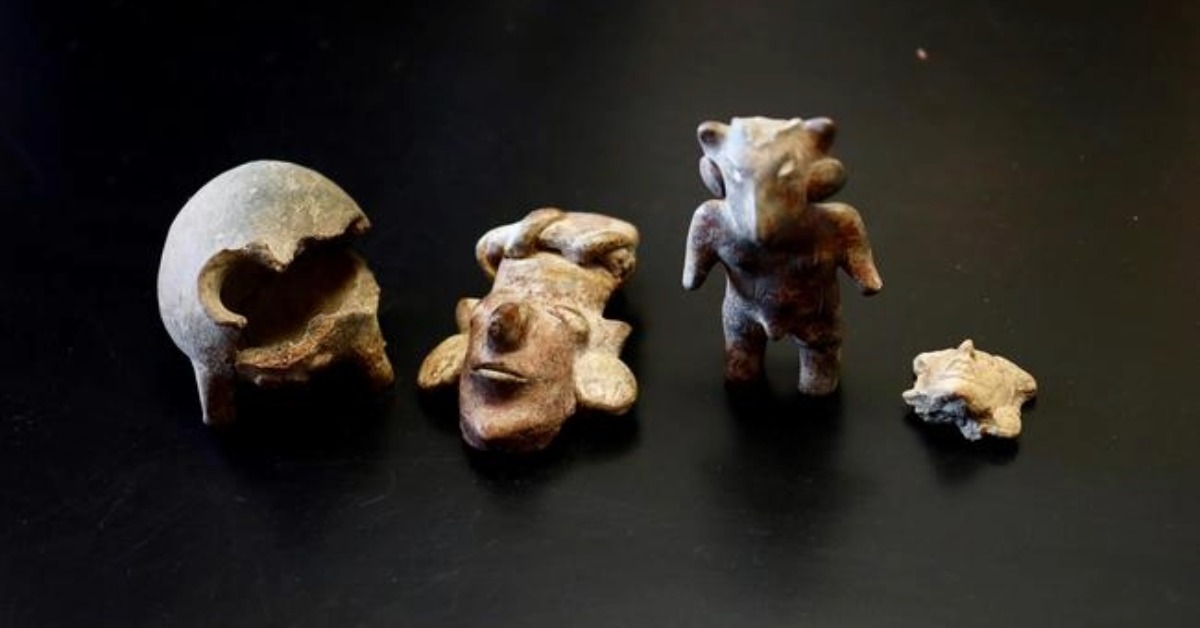
The strongest Jalisco connection comes from three pieces returned from France. Authorities said they include two anthropomorphic figurines and one zoomorphic effigy vessel from western Mexico, specifically linked to the San Sebastián style. The style is associated with the area between Jalisco and Nayarit, and the pieces were dated to roughly 300 to 600 CE.
That detail matters because objects like these help anchor the ancient history of western Mexico in something concrete. For many readers, the word archaeology still brings to mind the Maya region or central Mexico. Jalisco’s deep past is less visible in popular discussion, even though the region formed part of important cultural traditions with its own artistic forms, ceremonial practices, and settlement patterns. When pieces tied to the San Sebastián style return to Mexico, the recovery helps restore a part of that regional record.
It also matters because ceramics are not minor evidence. Archaeologists use them to identify styles, trace cultural exchange, estimate chronology, and understand ritual and domestic life. In simple terms, a ceramic figurine is not just an old object. It can help explain how people in western Mexico lived, what they valued, and how communities in the region expressed identity long before the modern state of Jalisco existed.
A reminder that Jalisco’s heritage reaches beyond tourist identity
Jalisco is often presented through modern symbols. The state is linked to tequila, mariachi, beach tourism, and colonial towns. Those images are real, but they can flatten the older historical landscape. The return of objects tied to the Jalisco-Nayarit border region is a reminder that the state’s identity did not begin in the colonial period or in modern cultural branding.
Western Mexico has long produced distinctive material culture. That includes ceramic traditions, funerary practices, and regional artistic styles that differ from what many international readers know from better-publicized sites elsewhere in the country. Recoveries like this one matter because they broaden the public idea of what Mexican heritage actually includes. They draw attention to regions that are important but sometimes underrepresented in mainstream heritage coverage.
For readers in Puerto Vallarta and elsewhere in Jalisco, that is especially relevant. The state is not only a tourism destination or an economic hub. It is also part of a much older cultural geography whose objects still surface in private collections, foreign sales, and restitution cases. When those items return, the state regains more than physical artifacts. It regains part of its historical visibility.
How the pieces were recovered
Officials said the recovered objects came back through several channels. One hundred forty pieces were voluntarily handed over to the Mexican consulate in Seattle. Another 12 pieces were returned voluntarily in Raleigh. One additional object was secured after an action linked to U.S. customs authorities. The pieces from France were recovered separately. Other items came from Canada and Argentina, including historical material from the colonial period.
That matters because repatriation is often imagined as a dramatic seizure. In reality, many returns happen through paperwork, diplomacy, expert review, and voluntary surrender. Mexico has spent years pressing foreign governments, collectors, and auction houses over objects considered part of its cultural patrimony. Some cases involve legal action. Others rely on negotiation and proof of origin. This case appears to include both official cooperation and voluntary return.
That slower process is important to understand. Cultural restitution is rarely a single event. It is usually the final stage of identification, authentication, and government-to-government coordination. In that sense, the return of the San Sebastián-style pieces is not just about where they were found. It is also about the long institutional effort required to bring them back.
What happens after the return
Once these objects are back in Mexico, they do not go straight into public display. Authorities said they will be entered into the public registry of INAH, where specialists can evaluate their condition, confirm their classification, and determine whether restoration is needed. Over time, some may be assigned to museums or collections where they can be studied and interpreted in a broader archaeological context.
That is an important part of the story for Jalisco readers. A returned object has greater public value when it can be studied alongside related material from the same region. That helps researchers place it within a clearer cultural and geographic frame. In the case of the San Sebastián style, that means the pieces can contribute to the understanding of western Mexico rather than remaining isolated objects in a private or foreign setting.
The return also fits within Mexico’s larger push to combat the illicit trafficking of cultural property. That effort has involved cooperation with UNESCO and continued emphasis on the idea that heritage is not just collectible property. It is part of the identity and historical memory of communities and nations.
Why this story matters in Jalisco
The national headline is simple. Mexico recovered 160 heritage objects from abroad. The Jalisco reading of the story is more specific. Part of what returned belongs to a cultural tradition tied to the Jalisco-Nayarit region. That gives the announcement a local edge that can otherwise get lost inside a broad federal message.
For readers in Jalisco, that is the real story angle. This was not only a recovery for Mexico as a whole. It was also a reminder that the state’s ancient cultural footprint extends well beyond its modern image. The return of the San Sebastián-style pieces places Jalisco back inside that conversation, where it belongs.
With information from Secretaría de Relaciones Exteriores / Secretaría de Cultura, Instituto Nacional de Antropología e Historia