Mexico’s new tourism law requires providers to check adults traveling with minors. Here’s what families visiting Puerto Vallarta should know.
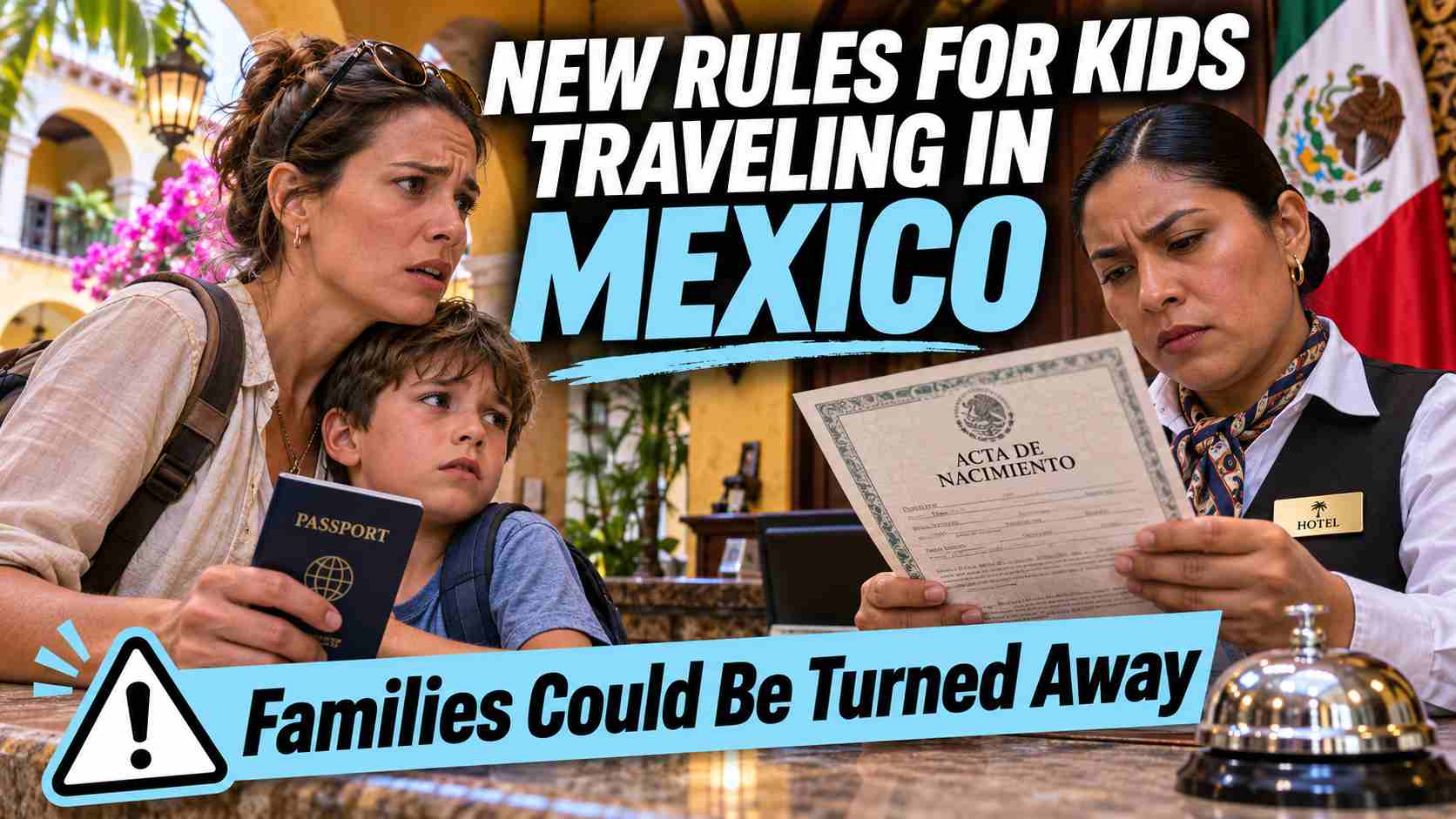
Puerto Vallarta, Jalisco, November 17, 2026 – Hotels and other tourism providers across Mexico must now verify the relationship between adults and the children traveling with them under a new federal law that took effect November 14. Businesses that cannot establish the required relationship must deny service and notify investigative authorities about the possible commission of a crime.
The change affects Mexican families as well as Americans, Canadians, and other foreign visitors traveling with children or grandchildren. It also applies to adults who have legal custody or guardianship of a child.
The requirements were established through a federal decree published November 13 in the Diario Oficial de la Federación, which added two provisions to Article 58 of Mexico’s Ley General de Turismo.
The law places responsibility on tourism businesses to check documentation before providing services, whether those services are offered in person or through electronic means.
For families accustomed to checking into a hotel with little more than a passport and reservation confirmation, the additional verification could mean bringing documents they previously left at home.
What the new law requires
The decree introduces two new obligations for tourism providers.
First, businesses must follow prevention protocols established by the appropriate authorities to help identify possible crimes against children and adolescents.
Second, providers must take steps to protect minors before providing tourism services. That includes asking accompanying adults to establish their relationship to the child or show that they hold parental authority, legal guardianship, or custody.
The law also calls for official documentation establishing a person’s age when applicable.
If the required relationship or legal responsibility cannot be established, the business must refuse service and notify the appropriate investigative authorities about a possible crime.
That last provision carries the greatest consequence for families. A missing document isn’t proof that someone has harmed a child, but the law requires businesses to take action when the necessary verification cannot be completed.
The decree does not establish a waiting period for businesses to prepare. Its effective date was November 14, one day after publication.
What documents should families carry?
One of the biggest unanswered questions is exactly which documents tourism businesses will accept.
The decree requires verification but does not provide a standardized list of acceptable documents or explain how every business must handle the process.
For parents traveling with their children, a birth certificate showing the parental relationship, together with the adult’s identification, would be a reasonable starting point.
Families traveling with grandchildren, nieces, nephews, or children under a legal guardianship arrangement may need additional records establishing their relationship or legal responsibility.
The situation could become more complicated when adults and children have different last names, when a child travels with only one parent, or when grandparents take children on vacation without their parents.
A child’s passport establishes identity and nationality, but generally doesn’t establish the relationship between the child and the accompanying adult.
Court orders or other legal records may be relevant when custody or guardianship is involved.
What remains unclear is whether a letter signed by a parent, including a notarized travel authorization, would be sufficient by itself when the accompanying adult has no family relationship or legally recognized custody.
The decree does not expressly identify parental permission letters as an alternative to the listed family and legal relationships.
For now, families traveling with minors would be wise to contact their hotel or accommodation provider before departure and ask which documents will be accepted. Carrying supporting records may prevent a dispute at check-in, although the decree does not guarantee that any particular combination will be accepted.
Why Puerto Vallarta is part of the story
The new requirements weren’t developed solely to address routine family travel. Their main purpose is to make tourism businesses more responsible for detecting possible child exploitation and trafficking.
Puerto Vallarta has figured prominently in that debate.
The original congressional proposal introduced in October 2024 by federal deputy Rocío Adriana Abreu Artiñano discussed cases of sexual exploitation involving minors in Puerto Vallarta and raised concerns about hotels and short-term rental properties being used to facilitate crimes.
The proposal described previous investigations in the city and argued that the growth of online accommodation platforms created challenges for preventing exploitation.
Those concerns weren’t new. PVDN has previously reported on child trafficking and exploitation in Puerto Vallarta and examined the difficulties surrounding local efforts to combat trafficking.
There have also been more recent efforts to involve the hospitality industry.
In August 2026, representatives of hotels in Puerto Vallarta and Bahía de Banderas participated in child protection training delivered by Homeland Security Investigations, an agency within the U.S. Department of Homeland Security.
That training focused on recognizing online grooming, sexual extortion, trafficking, and other risks affecting children. Hotel employees were encouraged to recognize warning signs and report suspected exploitation through established procedures.
The new federal legislation goes beyond voluntary training and individual company policies by putting verification and reporting duties directly into Mexico’s tourism law.
Congress approved the legislation after a process that began in 2024. The Chamber of Deputies approved the measure in April 2025, and the Senate gave its final approval on October 7, 2026, with 104 votes in favor.
President Claudia Sheinbaum signed the decree on November 10, ahead of its publication three days later.
Does this change the rules for entering or leaving Mexico?
Not directly.
The November decree changes obligations placed on tourism providers. It does not, by itself, establish a new immigration requirement for every child entering Mexico or traveling domestically.
Mexico already has a separate system governing certain minors who leave the country without a parent or legal guardian.
Under the Instituto Nacional de Migración’s Formato de Salida de Menores, commonly called SAM, Mexican minors and qualifying foreign minors who hold Mexican residency generally need authorization when leaving Mexico alone or accompanied by an adult who is not their parent or legal guardian.
The Secretaría de Gobernación explained those existing requirements in December 2025. Foreign children visiting Mexico as tourists are not subject to the SAM requirement simply because they are departing the country.
Those immigration rules are separate from the new tourism verification requirements.
A family might meet all the requirements for entering Mexico or boarding an international flight but still be asked to establish the adult-child relationship when obtaining tourism services.
How the rules will work in hotels and vacation rentals
The wording of the new law applies broadly to tourism service providers rather than naming hotels alone.
Hotels are an obvious point of contact because they already collect guest identification at check-in. Vacation rentals and online accommodation arrangements also raise questions about how providers will carry out the verification.
The decree expressly covers services provided through electronic means, but it does not spell out a separate verification procedure for vacation rental hosts, booking platforms, or individual tour operators.
For example, it doesn’t specify whether accommodation providers must collect the documents during an online reservation, before a guest arrives, or through a particular electronic verification system. What it does establish is the obligation to complete the required checks before providing the service.
That leaves businesses with decisions to make about their procedures, including how employees will review documentation, handle disputed relationships, and contact authorities when verification fails.
It also leaves families needing clear instructions before they arrive.
The law is already in force nationwide. For anyone planning a hotel stay in Puerto Vallarta with children or grandchildren, the safest approach is to confirm the property’s documentation requirements before traveling. Under the new Article 58 provisions, arriving with a confirmed reservation but without acceptable proof of the adult-child relationship can now result in denied service and a report to investigative authorities.