
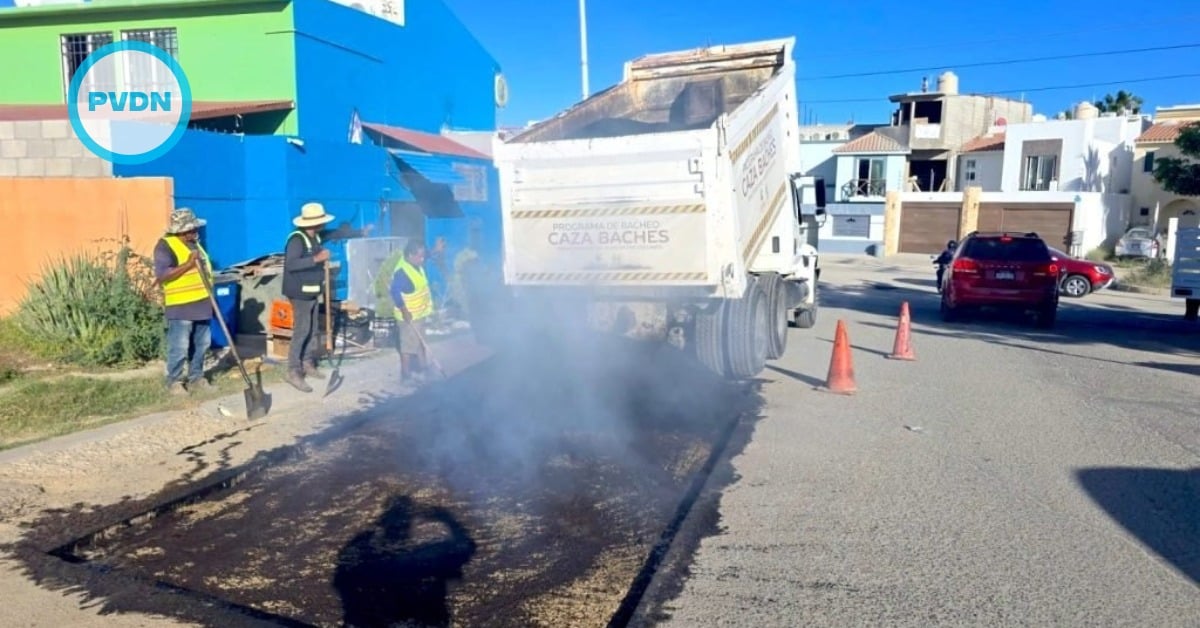
Los Cabos is racing the clock—and the tourist season—to fix battered streets. City crews say they’ve already patched more than 1,000 potholes from San José del Cabo to Cabo San Lucas, working day and night with flaggers and beacons to keep drivers safe. The push reaches the Transpeninsular as pressure mounts on federal authorities to speed up highway work. What’s getting fixed first, who’s responsible for what, and how long will this hold once the next storm hits? Here’s the picture on the ground.
Los Cabos pothole repairs
The number is eye-catching: more than 1,000 potholes repaired across San José del Cabo, Cabo San Lucas, and stretches of the Transpeninsular. That’s the update from the municipal public works department, which says crews are working during daytime and overnight windows, with traffic control, to reduce the risk to drivers and workers. The effort, branded “Caza Baches,” reflects a fundamental reality after a rainy season that punished pavement and complicated travel for residents, commuters, and visitors. The municipality frames it as ongoing work, not a one-off sweep, and emphasizes coordinated crews from public works, water, and sanitation to avoid tearing the same street twice.
City bulletins describe a roving schedule that prioritizes the worst corridors, with teams pouring mix through the night to catch low-traffic windows. Municipal statements also reference flaggers, flashing bars, and cones to keep work zones visible, especially on fast segments where a sudden lane closure can trigger hard braking. The Ayuntamiento has promoted this as a mobility program as much as a repair drive—less time swerving, more predictable flow—an approach outlined in a recent update on the city’s official site. That note confirms day-night work by the “Caza Baches” teams and identifies public works leadership directing the response.
What still needs fixing and who owns the highway piece
Street repair is one part of a larger puzzle. Residents and business leaders have spent weeks pressing for faster work on the Transpeninsular, the federal highway that carries most traffic between the two cities and into the airport. Calls grew louder after storm-driven damage widened holes and chewed edges along popular segments of the corridor. Local media reported the state saying federal crews would intensify work on the corridor, starting near the airport and expanding toward the tourist zone. That commitment—tied to the federal Secretariat of Infrastructure, Communications and Transport (SICT)—has been echoed in several updates as pressure built to move faster on the federally controlled lanes. One such report noted that the state confirmed SICT’s reinforcement of the corridor this week, citing the governor’s remarks.
Even with the city’s 1,000-plus patches, frustration lingers. A recent field story gathered mixed reviews from Cabo San Lucas residents: many welcome the fixes, others say some patches look shallow or won’t last through the next big storm. That skepticism isn’t unique to Los Cabos; asphalt patches are a stopgap when base layers are saturated or fatigued. Still, effectively placed patches can buy time and reduce tire and rim damage while longer projects line up. The resident feedback—and the city’s admission that this will be permanent work rather than a quick campaign—was captured by a regional outlet tracking the repair calendar and public complaints.
There’s also the jurisdiction question. City crews can move quickly on municipal streets, especially after water repairs are complete and trenches must be closed. But the Transpeninsular sits with the federal government. In mid-October, local press quoted SICT’s Baja California Sur director saying brigades were deployed along the corridor after the most recent rains, with work to continue through the year. That message helps explain the mixed experience drivers report: fresh patches on some city avenues, while federal lanes look uneven until a new wave of crews arrives.
City workers are tackling city streets and reporting thousands of fills. Federal crews are expected to scale up activity on the corridor that moves tourists, service workers, and freight. The following tests are seasonal: if another round of heavy rain hits before deeper resurfacing and drainage fixes are completed, the same weak spots can reappear. For now, Los Cabos pothole repairs are buying time, keeping traffic moving, and signaling to residents that someone is out there working while most of the city sleeps.