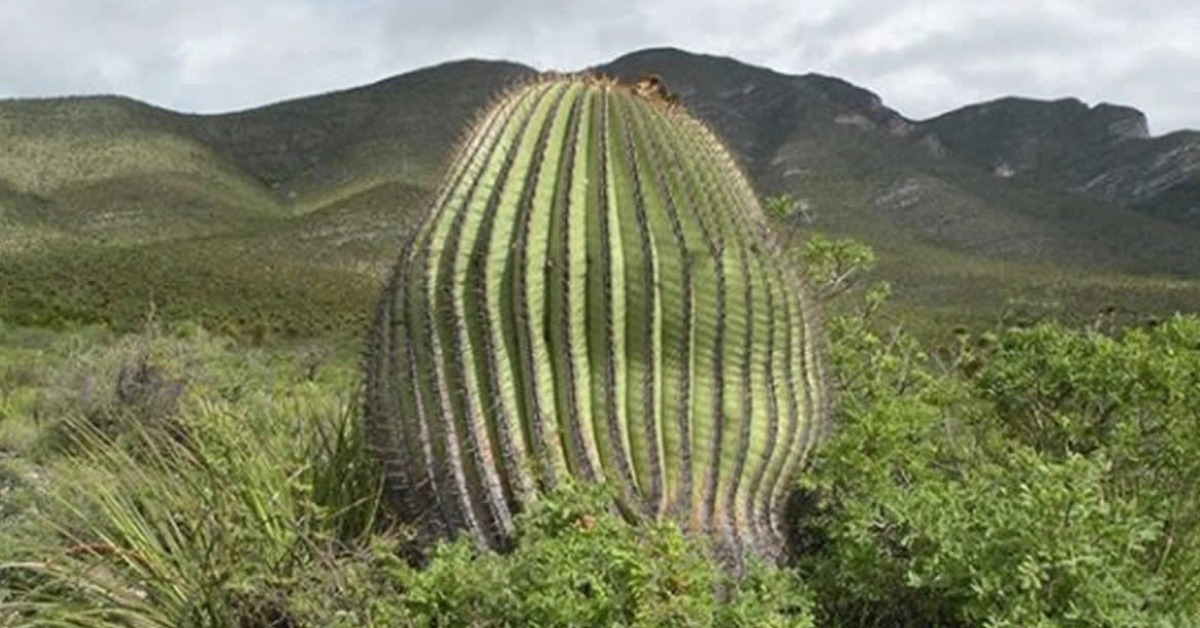
Mexico’s biznaga burra, a large barrel cactus known to science as Echinocactus platyacanthus, is again at the center of a difficult national question. Specialists are warning that if harvesters keep removing adult reproductive plants to make acitrón, the species could disappear from affected areas within about 40 years.
That warning matters because acitrón is not an obscure ingredient. It has long been linked to festive foods that many people in Mexico recognize immediately, including Rosca de Reyes and chiles en nogada. For international readers, acitrón is a crystallized candy traditionally made from the inner tissue of certain cacti. It is small on the plate, but the ecological cost behind it can be very large.
The issue also feels more urgent because enforcement cases continue to surface. In Hidalgo this month, environmental authorities reported the seizure of 33 illegally extracted specimens. Officials estimated the plants were roughly 60 to 70 years old. That detail helps explain the scale of the problem. When a plant takes decades to reach maturity, each removal matters far more than it would in a fast-growing crop.
Why the loss of adult plants matters so much
The warning is centered on adult seed-producing specimens, not just on total plant numbers. That distinction is important. In slow-growing cactus populations, large mature plants do most of the reproductive work. Remove them, and the next generation shrinks with them.
Researchers have warned for years that this species does not recover quickly. Biznaga burra grows very slowly, often only a few centimeters a year. That means a plant taken from the wild is not replaced in one season or even a few years. In practical terms, a harvest that lasts days can erase decades of biological growth.
This is why scientists treat the species as more than a symbol of overharvesting. It is a case study in how traditional demand, illegal extraction, and slow regeneration can combine into a long-term conservation crisis. Reports tied to the population study behind the new warning found that some local populations had already disappeared in the areas examined. That moves the issue beyond theory. It shows that decline is not only possible. It has already happened.
Mexico tightened protections, but pressure did not disappear
Mexico’s legal framework has become stricter. The species appears in NOM-059, the federal standard that classifies at-risk flora and fauna. The listing was later modified, and the species is now classified as the highest risk category under Mexican wildlife protection. In simple terms, that means the state recognizes the cactus as facing a serious conservation threat.
That change had practical consequences. Authorized extraction of wild plants for making acitrón was shut down. Legal use is now limited to tightly regulated channels such as seeds for cultivation in registered management units. Consumers who want live specimens for decoration should buy only from authorized sources that can prove the legal origin.
But stricter rules do not eliminate market demand on their own. The attraction of acitrón comes from culture, memory, and cooking. Some buyers still want the traditional ingredient, especially around major food seasons. That keeps pressure on wild populations, especially when extraction can happen far from the final point of sale. By the time the ingredient reaches a market or kitchen, the environmental damage is already hidden.
The real story is not tradition versus conservation
It is easy to frame this as a choice between protecting biodiversity and defending Mexican food traditions. The reality is more complicated. Acitrón is part of a culinary history that many people value. At the same time, a tradition cannot remain intact if it depends on taking a protected species from the wild faster than it can replace itself.
That is why the debate is shifting away from nostalgia and toward substitution, traceability, and public awareness. Many buyers, especially outside Mexico, do not know that the ingredient’s original form is linked to the removal of an endangered cactus. Some may assume that if a product is being sold, it must be legal. That assumption is exactly what makes wildlife trade hard to stop.
For expats and foreign residents, the lesson is straightforward. Mexico’s cuisine often carries deep ecological histories alongside its cultural ones. A festive ingredient can also be a conservation issue. Understanding that link is part of understanding modern Mexico itself, where food, law, commerce, and biodiversity often meet in the same story.
What happens next
The warning about biznaga burra is not a prediction of an inevitable nationwide disappearance on a fixed date. It is a warning about what continued extraction can do if present patterns hold. That distinction matters because it means the outcome is still changeable.
Protection will depend on several things happening at once. Enforcement has to continue. Sellers have to be pushed out of illegal supply chains. Consumers have to understand what they are buying. And the cultural prestige of traditional dishes has to make room for ingredients that do not strip wild landscapes of plants that took half a century or more to mature.
For now, the cactus remains a vivid example of how a small piece of candy can reveal a much larger national story. Mexico is not only trying to save a species. It is also trying to answer a harder question: how do you protect a living culinary heritage without exhausting the living world that helped create it?