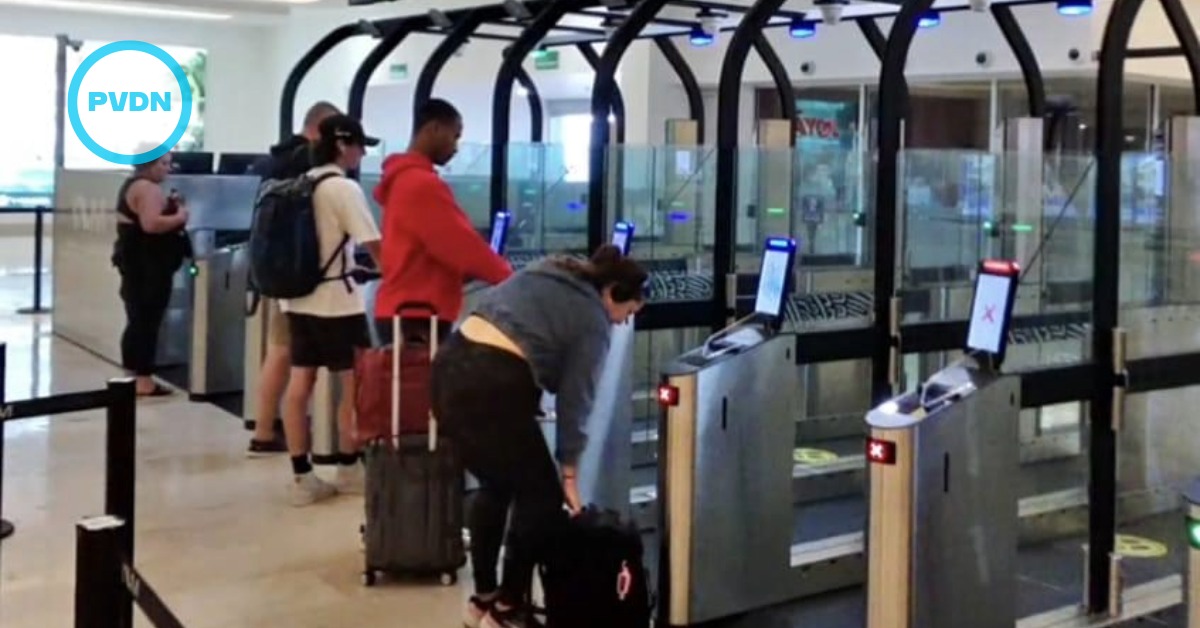
Officials say migration waits at Cancún are down to 24 minutes, with new e-gates and clearer transport rules planned to cut delays in 2026.
Cancún International Airport is Mexico’s front door for a lot of the world, and it often feels that way when several flights land close together. Officials from Quintana Roo and the federal government met this week with the airport’s operator, ASUR, and tourism leaders to push a simple goal: get people through migration and customs faster, then move them out of the terminal in a safer, calmer way.
The meeting was described as the eighth working session focused on airport operations. That detail matters because it signals this isn’t a one-off photo opportunity. It’s a continuing set of talks aimed at smoothing out problems that have been dragging on for years, especially during peak travel weeks.
For expats, this is not just a “tourist story.” Cancún is the airport many residents use for work trips, family visits, and regional flights. It’s also where plenty of people end up when relatives fly in to see them. When processing breaks down, it hits everyone: missed transfers, long lines with tired kids, and a stressful welcome that nobody wants.
Cancún airport processing and the 24-minute claim
The headline figure coming out of the talks is this: officials say the maximum wait for migration has dropped to 24 minutes. They also set a public expectation for the season ahead, saying waits in high season should stay at or under 30 minutes.
It’s a bold promise, and it comes with two explanations. The first is staffing. Officials say more personnel have been hired, which is the quickest lever to pull when lines are backed up.
The second is automation. Officials say they plan to install 20 additional “e-gates” next year. In plain terms, these are automated passport control lanes that can process eligible travelers without a full, one-on-one booth interaction.
Here’s the nuance that matters if you live in Mexico or travel in and out often. Automated migration lanes are typically designed for adults traveling as tourists with electronic passports and may include eligibility rules. That means your visiting family may breeze through while you, as a resident, are directed to a staffed line. The airport can still feel crowded, even if the overall average improves.
Still, more automated lanes can help the whole room. Every traveler who clears an e-gate is one less person in the manual queue. When several flights land at once, that difference adds up.
Customs changes target the “gotcha” moments
Customs is where a smooth arrival can suddenly turn tense. Officials said they reached agreements with customs authorities to stop charging passengers simply for arriving with more than one electronic device. They also said they are working to standardize how customs handles the import of cigarettes.
That electronics issue has been a sore spot because it has felt unpredictable. Some travelers have walked through without a second glance, while others have been stopped and told they owe money. When rules are unclear or applied unevenly, the result is not just frustration. It also slows down the process for everyone behind the person being questioned.
Mexican customs guidance already spells out what travelers can bring as personal luggage, including everyday electronics. The problem has been consistency on the ground. The new message from officials is that they want the practice at Cancún to match clearer criteria, so passengers aren’t learning “the rules” only after they land.
If this is enforced the way it’s being described, it could reduce two things at once: surprise fees and the time lost in long, stressful back-and-forth conversations at inspection points.
Transport and encourages and the safety piece after baggage claim
For many travelers, the most chaotic part of Cancún is not migration or customs. It’s what happens after. The airport’s ground transport scene has a long history of confusion, hard sells, and outright scams that target tired arrivals.
Officials said they resolved issues tied to transport companies operating outside the airport by formalizing contracts with ASUR. They also said they are developing a proposal to establish clear, orderly transport rates from the airport to destinations across Benito Juárez municipality, around Quintana Roo, and even to other states. More details are expected in upcoming working sessions.
If you’ve lived in Mexico long enough, you know why this matters. When rates and rules aren’t clear, the vacuum gets filled by aggressive intermediaries and inflated “last price” offers. Clear tariffs and better enforcement don’t just protect visitors. They make the airport less stressful for everyone, including residents who are simply trying to get home.
Security was also part of the agenda. Officials emphasized coordination among federal forces and agencies, along with state authorities and tourism bodies, to keep the airport experience safer and more orderly during the holiday period and as the region prepares for major international events in 2026.
What to watch for next year
This set of agreements sounds promising, but travelers will judge it the same way they judge every airport claim: by what happens on the worst day, not the best day.
If you’re flying through Cancún in the coming months, the practical sign to watch for is whether staffing stays strong when arrivals spike. The next big test will be whether those additional e-gates are installed on schedule and actually kept functioning at full capacity. Automation only helps when it’s available, clearly marked, and properly staffed on the support side.
On customs, the real shift will be consistency. Travelers don’t need special treatment. They need predictable treatment. If officials follow through on clearer standards for electronics and tobacco, it could cut down on delays that feel arbitrary and, in some cases, intimidating.
On ground transport, the moment of truth will be visibility. Clear fares only help if travelers can actually see them and if the airport environment pushes people toward authorized options instead of letting confusion reign.
For expats, the best outcome is simple: your visitors arrive less rattled, your own arrivals feel less like a gamble, and Cancún becomes an airport that works like the world-class gateway it claims to be. The agreements are a start. The follow-through is the story.