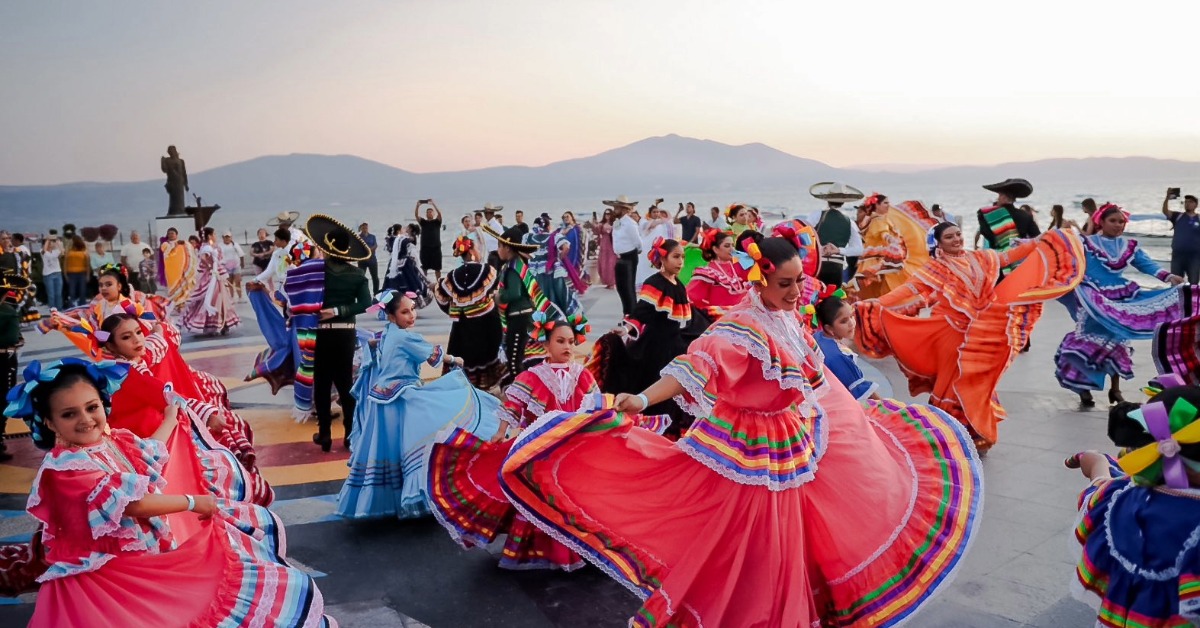
More than 2,000 folkloric dancers filled the Chapala lakefront on Sunday, April 26, turning the town’s malecón into the main stage for one of the region’s largest recent cultural events.
The gathering was part of “La Fiesta al Estilo Jalisco,” a festival built around Mexican folkloric dance, regional identity, and public celebration along Lake Chapala. Organizers reported participation from 100 dance groups across Mexico.
The event also included cultural activities in Ajijic, giving the festival a wider reach across the lakeside municipality. For Chapala and Ajijic, where tourism, local traditions, and foreign residents often share the same public spaces, the gathering was more than a performance. It was also a statement about how culture remains central to community life.
A lakefront stage for Mexican folkloric dance
The main event took place on Chapala’s malecón, the waterfront promenade that serves as one of the town’s most visible public spaces. Dancers performed in front of Lake Chapala, creating a large open-air scene tied closely to the town’s identity.
The day’s program began with dance exhibitions before the main presentation. A parade later moved along Francisco I. Madero Avenue, one of Chapala’s central streets, ends near the lakefront.
The closing performance brought together thousands of dancers moving in unison. Among the pieces performed was “Son de la Negra,” one of the best-known works linked to Jalisco’s musical and dance tradition.
For international residents, the event’s size may stand out. But in Mexico, folkloric dance is not simply staged entertainment. It is often used to teach regional identity, preserve costume traditions, and pass local history between generations.
Why the festival matters in Chapala and Ajijic
Chapala sits on the shore of Lake Chapala, widely known as Mexico’s largest lake. The town and nearby Ajijic have long attracted visitors, retirees, and foreign residents, especially from the United States and Canada.
That mix gives local cultural events a second role. They are not only for tourism. They also help newcomers understand the place where they live.
Ajijic, now a Pueblo Mágico, has become known for art, murals, galleries, and a strong foreign community. Chapala remains the municipal seat and the traditional center for many public events along the lake.
Holding a large folkloric dance festival across these communities gives residents and visitors a direct view of Jalisco’s cultural roots. It also shows how local governments are using arts programming to strengthen the lakeside economy.
A festival tied to Jalisco identity
The name “La Fiesta al Estilo Jalisco” points directly to state identity. Jalisco is strongly associated with mariachi, charro culture, traditional dress, and dances that are widely recognized across Mexico.
Folkloric dance in Jalisco often features colorful dresses, charro-style costumes, structured footwork, and music associated with sones and jarabes. For many foreigners, these images are familiar through tourism advertising. In local communities, however, they remain part of school programs, civic events, and family celebrations.
The Chapala gathering also came days before International Dance Day, which is marked each year on April 29. The timing gave the event a wider cultural frame, connecting a local celebration with a global date focused on dance as an art form.
Growth from a local event to a major gathering
The Chapala festival has grown quickly since its first edition. Local officials said the event began in 2024 with around 200 participants. Last year, participation rose to roughly 1,400. This year, the number passed 2,000.
That growth matters for a lakeside municipality that depends heavily on visitors, restaurants, public events, and weekend tourism. Large cultural gatherings can bring foot traffic to the waterfront and nearby businesses.
They also help diversify Chapala’s public image. The town is often described through its climate, lake views, and retiree community. Events like this place more focus on local culture, youth participation, and Mexican identity.
What international residents should understand
For foreign residents in the Lake Chapala area, events like this are a useful reminder that local culture is not background decoration. It is part of daily civic life.
Many towns in Mexico use plazas, streets, and malecones as shared cultural spaces. Dance groups, school bands, religious processions, and public festivals often move through the same areas used by residents for errands, meals, and evening walks.
That can mean traffic changes, crowds, and noise. It can also mean a chance to see community traditions up close without treating them as tourist products.
The best way to attend these events is simple. Arrive early, respect blocked streets, avoid stepping into performance areas, and remember that many dancers are students or community members rather than paid entertainers.
A public event with tourism value
Chapala’s large dance gathering fits into a broader pattern in Mexico. Municipalities are increasingly using cultural events to support local tourism while also reinforcing identity.
For Chapala and Ajijic, that balance is important. The area already has international visibility because of its foreign resident population. But cultural programming gives the region a stronger local voice.
The festival also helps connect visitors to the lakefront beyond restaurants and sightseeing. It turns the malecón into a civic stage, where residents can gather around a shared event.
That is especially relevant in a community where public space carries economic and social weight. The lakefront is not only a place to walk. It is where the town presents itself.
What comes next for the festival
The size of this year’s turnout suggests the festival could continue growing. More groups, larger crowds, and wider regional attention may also bring new planning demands.
Future editions may need stronger crowd management, clearer public information, traffic coordination, and support for dancers traveling from other parts of Mexico. Those details matter when a community event becomes a major attraction.
For now, the 2026 edition serves as Chapala’s clear cultural marker. More than 2,000 dancers gathered at the lakefront, and the event placed Mexican folkloric dance at the center of public life in one of Jalisco’s best-known lakeside towns.