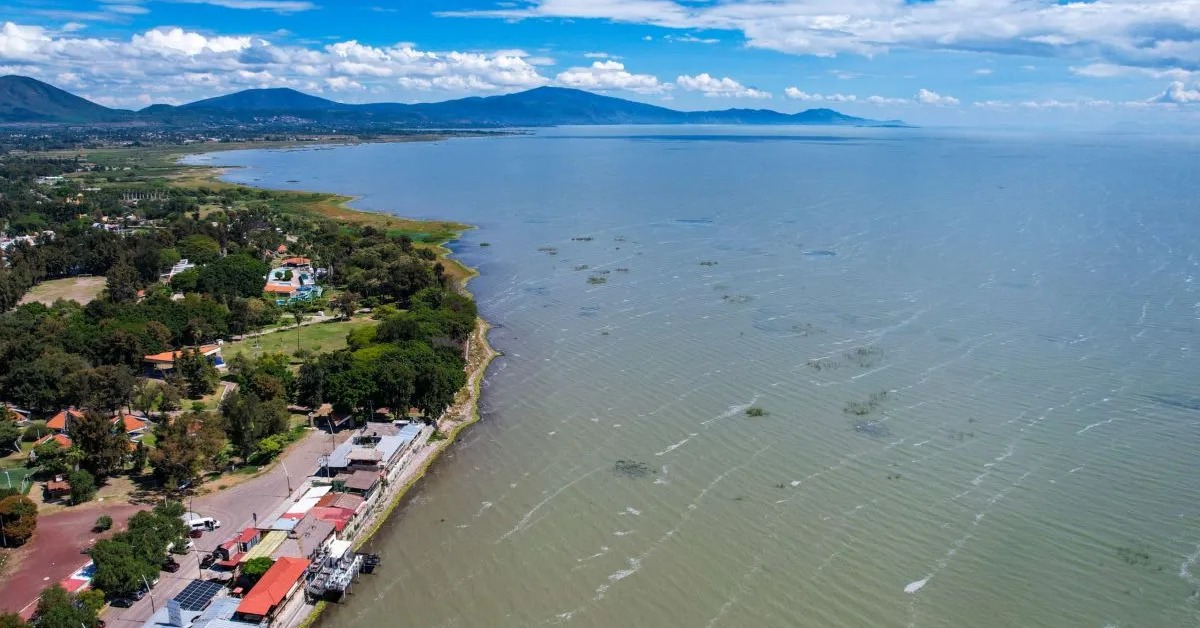
Lake Chapala is again at the center of a fight over water, but this time the pressure comes from two directions. One project would replace the aging aqueduct that sends water to Guadalajara. Another would move water from the Presa Solís area in Guanajuato, part of the Lerma system that feeds Chapala. Together, the plans have raised legal challenges, local opposition, and new questions about who gets a say in the lake’s future.
Chapala water projects raise new concerns over the lake’s future
Two major water projects are putting Lake Chapala back at the center of a regional dispute over supply, infrastructure, and control of the Lerma basin.
One project would replace the aging Chapala-Guadalajara aqueduct, which carries water from the lake to the Guadalajara metropolitan area. The other is the federal Solís-León aqueduct, planned from the Presa Solís area in Guanajuato to several cities in that state.
The projects are different, but the concern is shared. Local leaders and environmental groups say both could affect the long-term balance of Mexico’s largest lake, which is also a key water source for Guadalajara.
Two projects tied to the same water system
The Jalisco project focuses on replacing infrastructure that has moved Chapala water toward Guadalajara for decades. State officials have argued that the current system loses water and uses too much energy.
The proposed replacement aqueduct would connect Lake Chapala with Guadalajara’s water system. It is also tied to plans to expand the Planta Potabilizadora Número 1 in Miravalle.
Officials have said the existing aqueduct loses about 30 percent of the water during transport. They have also presented the new line as a way to lower energy costs and reduce waste before the water reaches the city.
But critics argue that the larger problem is not only the aqueduct. They point to leaks and losses inside Guadalajara’s distribution network. Their position is that repairing the city’s pipes should come before more pressure is placed on Chapala.
The project has also raised transparency concerns. The Jalisco water agency has said project documents are available through official channels. Opponents say the technical information has not been shared in a way that allows affected communities to fully evaluate the work.
The Solís project raises a larger basin dispute
The second project involves the Presa Solís, located on the Lerma system in Guanajuato. That system is closely tied to the water that eventually reaches Lake Chapala.
The federal project would carry water toward León, Celaya, Irapuato, Salamanca, and Silao. Official project information lists a planned capacity of about 3,802 liters per second, equal to 119.91 million cubic meters a year.
Authorities in Guanajuato say the water would come from savings created by modernizing irrigation in District 011. They have said the project would not take additional water from farmers or reduce agricultural allocations.
That explanation has not ended the opposition. Lakeside communities, environmental groups, and municipal leaders fear that water retained upstream could reduce flows toward Chapala over time.
The concern is not only about the lake’s level in one season. The larger question is whether the Lerma-Chapala system can support new transfers while also serving existing communities, agriculture, and ecosystems.
Legal resistance has already begun
The Solís project is already in court. Thousands of amparo filings have been promoted by people from the Lake Chapala region who want the project reviewed or stopped.
A regional court ruling has clarified that federal courts in Guanajuato should handle the cases, because the work would be carried out there. That removed one procedural barrier, but it did not settle the substance of the dispute.
Municipal leaders around the lake have also formed a common front against the project. Their argument is that decisions about the basin should include the communities that depend on the lake.
Those communities include fishing, farming, tourism, and service areas along the lakeshore. They also include towns where daily life is closely tied to the lake’s condition.
Local voices have limited power
There are regional bodies that deal with the lake and the wider basin. These include municipal and basin-level groups created to coordinate environmental and water policy.
Their power is limited. They can issue positions, apply political pressure, and make recommendations. They do not control federal permits or major infrastructure approvals.
That leaves final decisions largely with federal water authorities and the governments promoting the projects. For lakeside towns, that has become part of the dispute.
The issue is not only whether new infrastructure is needed. It is also whether the public has enough information to judge the effects before construction moves forward.
The lake remains central to Guadalajara’s water supply, while the Lerma basin faces competing demands from cities, farms, and industry.
The two projects now moving through the system show how those pressures are converging. One is presented as modernization. The other is presented as a future supply for Guanajuato. Both are forcing new questions about how much more can be asked of the basin that feeds Chapala.