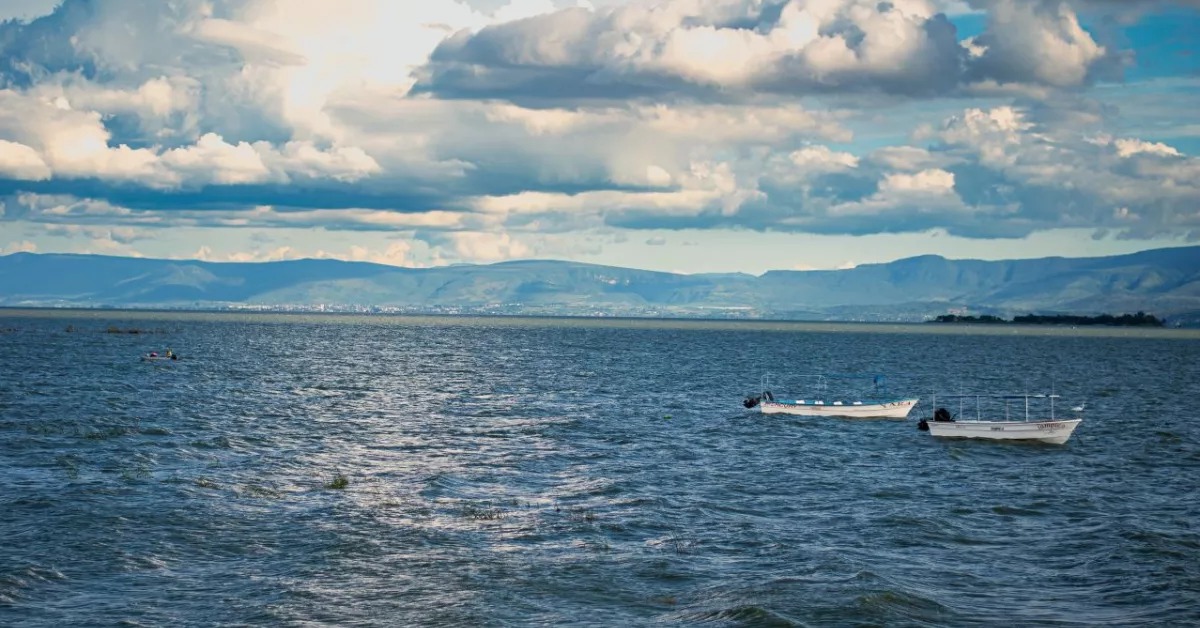
Lake Chapala remains in a stronger position than during recent low-water years, but the dry season is taking its share. State water data show the lake has slipped from its early-April cushion as heat bears down on Jalisco. For lakeside residents, visitors, and Guadalajara water users, the question now is not whether Chapala is in crisis. It is how much water the lake can hold until summer rains begin to refill the basin.
Lake Chapala slips from its April cushion
Lake Chapala remains close to two-thirds of its capacity after weeks of dry-season pressure, heat, and limited rainfall across western Mexico.
State water data reviewed May 6 placed the lake at 65.56% of capacity, with a volume of 5,177.03 million cubic meters. A same-day local report cited 66.56%, while the official state dashboard showed 65.56% when checked. Either figure keeps the lake near the two-thirds mark.
The lake was reported at 68.91% in early April, indicating the level had dropped during the hottest stretch before the summer rains. The drop is not unusual for this time of year. May is part of the dry season, when evaporation, heat, and water demand usually take their toll on the lake.
The current reading remains stronger than during recent low-water periods. In 2024, Chapala fell below 50%, raising concern across the region. In 2025, heavier rains helped the lake recover, with storage later reaching one of its better levels in years.
A few points can mean a lot of water
For many readers, a move from about 69% to about 66% may sound small. Lake Chapala represents a large amount of water.
The lake’s total storage capacity is listed at 7,897 million cubic meters. On that scale, one percentage point equals nearly 79 million cubic meters of water. A decline of just over 3 percentage points can amount to more than 260 million cubic meters.
That does not mean the lake is in an emergency condition. It does show why weekly changes matter. Chapala is not only a scenic lake for visitors and retirees. It is a working water source, an ecological system, and a major part of daily life in Jalisco.
The lake covers parts of Jalisco and Michoacán. State water officials describe it as Mexico’s largest lake and a key source of water for the Guadalajara metro area. The lake is also tied to fishing, tourism, local businesses, and the identity of the lakeside communities.
Heat is the immediate pressure
The latest decline comes as Jalisco faces another period of high temperatures. Mexico’s weather service forecast a heat wave across much of the country on May 6, including parts of Jalisco.
Heat affects a lake in direct and indirect ways. Higher temperatures increase evaporation from the surface. They also raise water demand in nearby cities and towns, especially when households, businesses, and farms use more water.
The current situation is not the same as a statewide severe drought. The national drought monitor for mid-April showed most of Jalisco without drought conditions, with a smaller share classified as abnormally dry. Still, dry-season pressure can reduce lake levels even when the wider drought picture is not severe.
That distinction matters. Chapala’s level is shaped by rainfall, inflows from the basin, evaporation, extraction, and seasonal weather patterns. One strong rainy season can improve the lake. A long dry stretch can quickly take back part of that gain.
The rainy season will decide the next turn
The next important period for Lake Chapala will be the start and strength of the summer rains. A steady rainy season can slow the decline and begin refilling the lake. A delayed or weak start would keep pressure on storage levels longer.
For now, the lake remains in better shape than it was during recent low-water years. That gives Jalisco a cushion, but not a guarantee. The level is strong enough to avoid crisis language, yet low enough to warrant close monitoring.
For lakeside residents, the issue is practical. Lake level affects the shoreline, tourism, water quality, fishing conditions, and the region’s image. For Guadalajara, it also remains part of the larger water-supply picture.