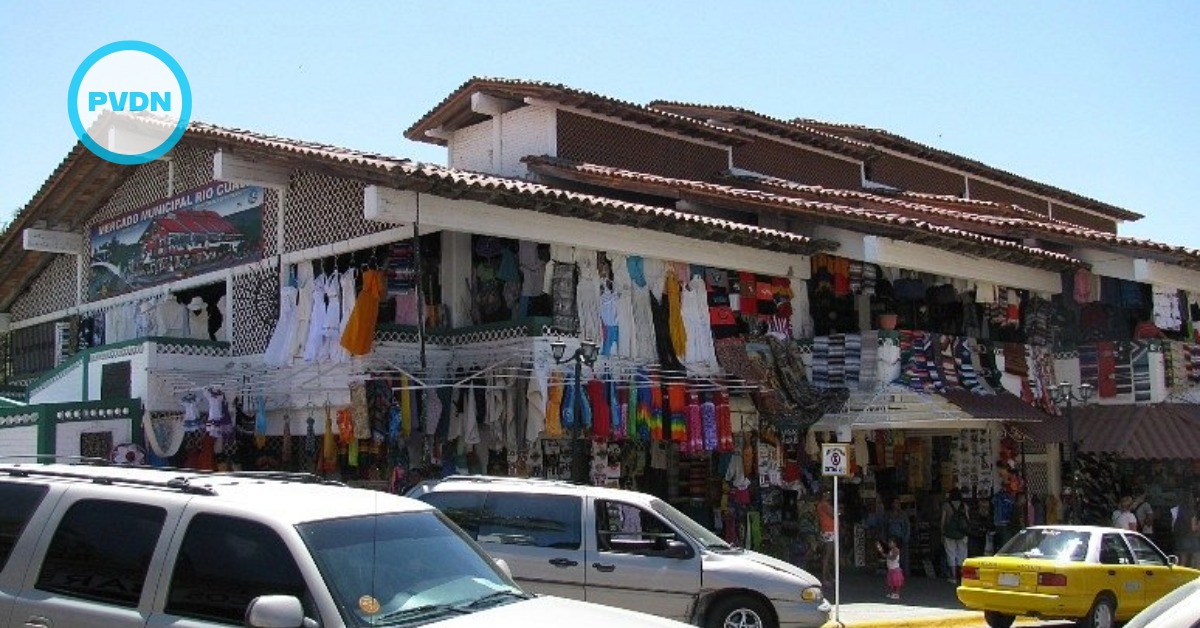
A familiar concrete and tile landmark on the banks of the Cuale River has just been pushed into the national spotlight. Mercado Río Cuale now carries the designation of “edificio vigilado” on the Architectural Observatory of the Federation of Colleges of Architects of the Mexican Republic, a distinction reserved for significant twentieth-century buildings across Mexico.
The recognition was made official during a ceremony on 17 November, when architects and city officials gathered inside the market to unveil a metal plaque at the main entrance. The act folded an everyday working market into a national catalogue that, until now, has focused mainly on civic buildings, schools, and landmark public works.
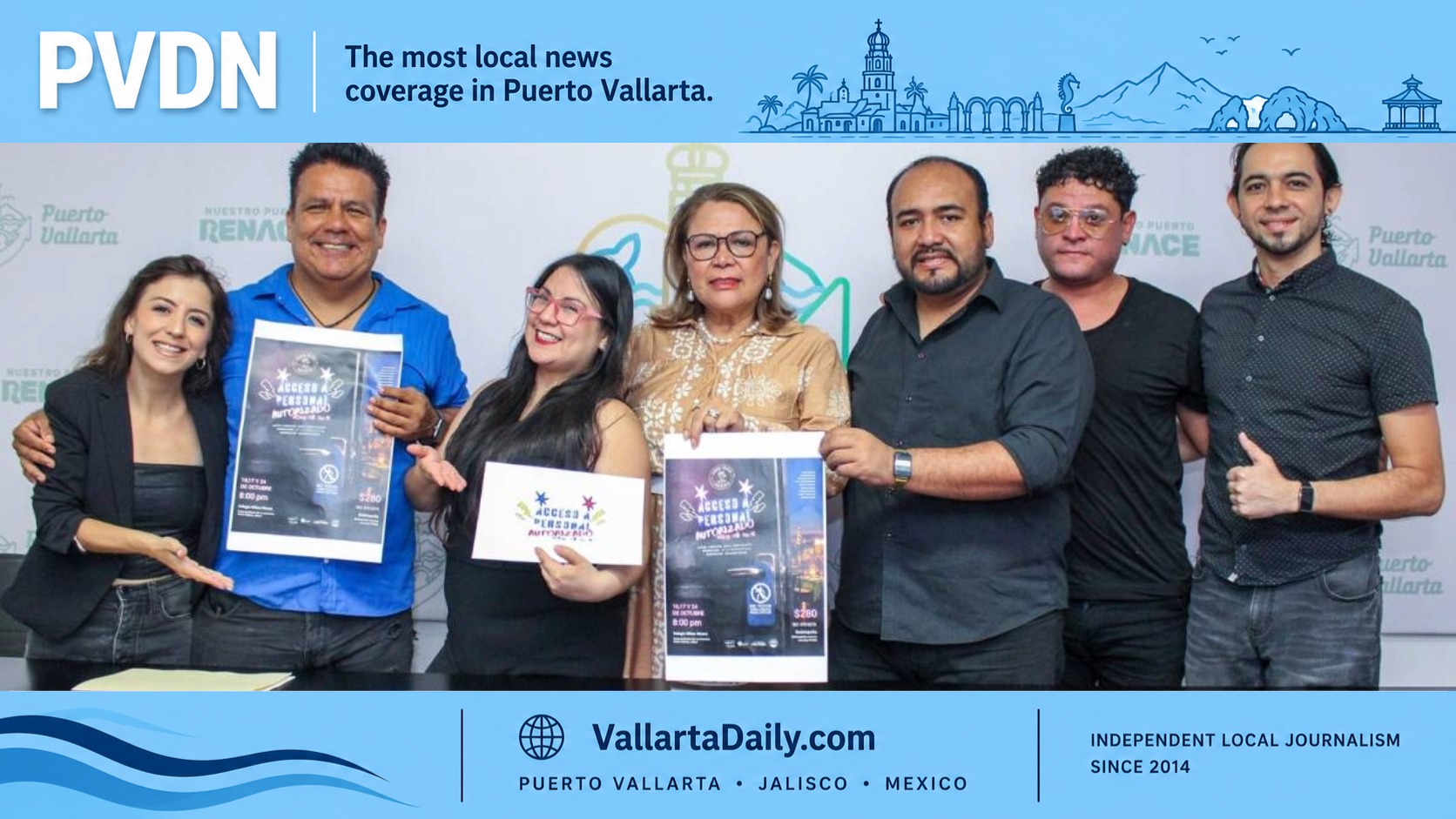
At the event, the president of the national architects’ federation, Miguel Sosa Correa, joined Puerto Vallarta mayor Luis Ernesto Munguía González, local architects, and academics from the National Autonomous University of Mexico. Under the motto “Protegiendo los saberes arquitectónicos del siglo XX”, they framed the market as part of a broader effort to document and protect postwar Mexican architecture before it is lost to neglect or speculative redevelopment.
Ramón Valdez López, who heads the local architects’ college, told vendors and officials that “it fills us with pride that Puerto Vallarta is part of the FCARM Architectural Observatory,” calling the distinction a shared achievement between designers and the community that has kept the market alive for decades.
Mercado Río Cuale and its origins
The building honored this week is relatively young by Mexican heritage standards. The municipal market on the Cuale grew out of early twentieth-century trading along the riverbank, where food vendors and small merchants operated in the open air. In the 1960s that informal tianguis expanded with Puerto Vallarta’s first tourism boom, creating pressure for a permanent structure.
Between 1977 and 1979, the city built the current concrete market as part of a state program to modernize popular food markets. Architect Alejandro Zohn drew the project, and architect Carlos Manzano Zepeda oversaw construction on site. The building was inaugurated on 28 November 1979 by Jalisco governor Flavio Romero de Velasco and mayor Eugenio Torres Ramírez, giving vendors a covered place to work and visitors a new civic space bridging downtown and the river.
Zohn, a Holocaust survivor who settled in Mexico, is widely regarded as one of Jalisco’s most important twentieth-century architects. His portfolio includes Guadalajara’s vast Mercado Libertad, sports complexes, housing projects, and public buildings that helped define the region’s modern urban landscape. The Río Cuale market, built on a far smaller scale, brought that same structural discipline and interest in public life to a coastal town that was beginning to grow.
Architecturally, the market is modest but carefully composed. It has two levels and 159 commercial spaces, arranged around interior corridors that stay shaded and ventilated in the tropical heat. The structure combines reinforced concrete with pitched roofs covered in clay tile, exposed brick walls, ceramic lattice screens, and arcaded columns, echoing mountain towns in western Jalisco while remaining firmly modern in its layout and engineering.
The mix of uses inside has shifted over time. Where the focus once sat on fresh produce, meat, and household staples, today many stalls sell handicrafts, silver jewelry, embroidered clothing, and souvenirs, alongside traditional fondas that still serve pozole, seafood, and daily specials upstairs. National tourists share the aisles with visitors from abroad, and the building is woven into the larger circuit that includes the island’s artisan stalls and the nearby Malecón.
With its new designation, the market joins a national list of 23 buildings whose architecture and history will now be monitored, documented, and promoted as part of Mexico’s twentieth-century built heritage. For Puerto Vallarta, that means an everyday place of work and trade now carries the same label used for more conventional monuments.
Restoring Mercado Río Cuale for 2026
The ceremony was not only symbolic. During his remarks, Mayor Munguía announced that the city plans to carry out a rehabilitation of Mercado Río Cuale in 2026. He tied the commitment to the market’s new national status and to the building’s role in feeding families, generating income, and anchoring tourism along the river.
City officials did not present a detailed project at the event, but the pledge comes after a series of smaller efforts aimed at cleaning and upgrading the municipal markets. In April, the administration organized the first “deep cleaning” of the Río Cuale building, mobilizing more than one hundred people, including merchants and volunteers, to remove around 350 kilograms of waste and clear vegetation along the riverbank.
Those efforts carry extra weight in a place that still lives with the memory of disaster. In August 2021, a sudden rise in the Cuale River destroyed the vehicle bridge next to the market and sent water and debris sweeping through the building, leaving many vendors with nothing. Even after river reinforcement works, merchants interviewed this year say the fear of another flood has never fully gone away.
Beyond physical risk, locatarios have also voiced concerns in recent years about promotion, security, and the presence of people sleeping in the surrounding area, arguing that these issues affect both sales and the market’s image. At the same time, many families have maintained stalls there for generations, pushing for improvements while trying to keep prices accessible for local shoppers as well as visitors.
The planned rehabilitation now sits at the crossroads of those pressures. Any upgrade will need to respect the structure that architects have just singled out for protection, while also addressing day-to-day needs such as maintenance, drainage, and accessibility. For merchants, the hope is that investment in the building will translate into safer, cleaner, and more attractive working conditions rather than a makeover that prices them out.
For Puerto Vallarta, the new plaque on the market wall sends a simple but important message: the city’s heritage is not only its beaches, churches, or hillside views, but also the concrete, brick, and tile spaces where people meet, eat, and make a living. How the promised 2026 works unfold will show whether that message can be turned into practical decisions that keep Mercado Río Cuale both protected and alive.