A burned convenience store in Jalisco became the setting for a theater project that looks directly at spaces many people avoid after violence. Richard Viqueira and a group of artists entered one of the damaged sites with lights, cameras, and a performance idea shaped by recent cartel-related attacks. The project asks what happens after violence leaves a public mark, and whether art can help people look again at places they have learned to ignore.
Performance enters a burned commercial space
Richard Viqueira has started a performance project inside commercial spaces damaged by cartel-related violence in Jalisco.
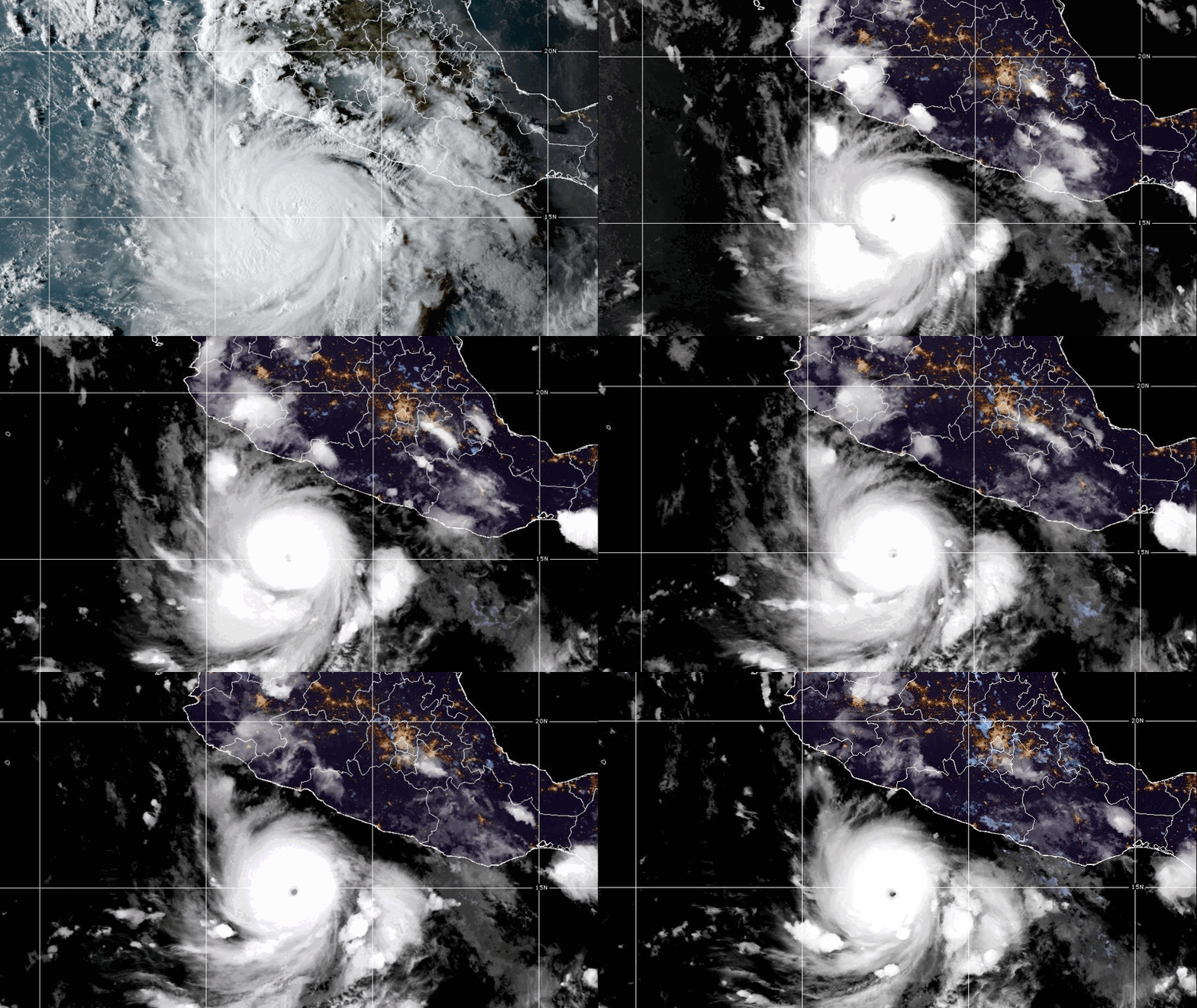
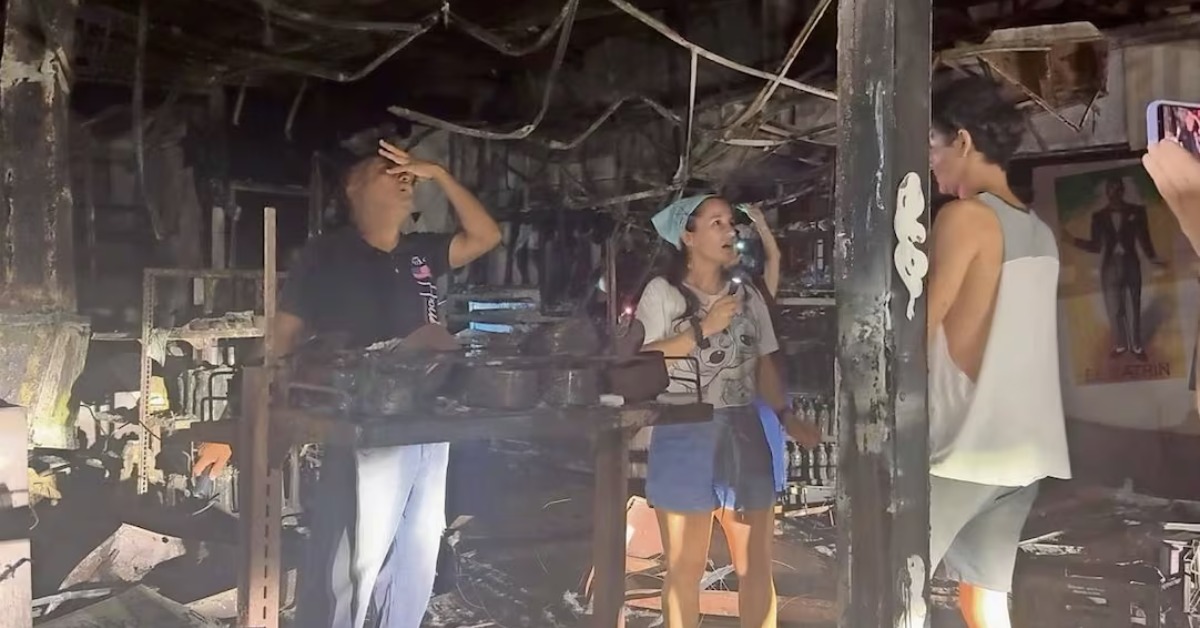
The actor, director, and playwright worked with a group of artists in a burned convenience store. The site was one of the damaged businesses left after the February violence linked to a federal operation involving Nemesio Oseguera Cervantes, known as El Mencho.
The project uses theater and performance to address places that many people no longer want to enter, pass by, or discuss. Viqueira has framed the work as an attempt to challenge the silence that often follows public violence.
The intervention was not presented as a normal stage production. It was created inside a damaged site, among ash, broken glass, and unstable remains of a commercial space.
A project that began in Puerto Vallarta
The idea developed after Viqueira traveled to Puerto Vallarta for a theater workshop held from March 17 to 21.
The workshop was part of the city’s first theater showcase. It brought together local creators and visiting theater professionals during a period when the city was still dealing with the aftermath of February’s violence.
While in Puerto Vallarta, Viqueira saw burned commercial spaces more than once. The damaged stores became part of a larger question for the artists: what happens when violence changes how people move through their own city?
The group decided to create a performance in one of those spaces. The work was recorded as a video installation, which is expected to be edited for public viewing later.
Art as a response to silence
The project focuses on public memory, not tourism or recovery messaging.
For Viqueira, the damaged store was not only a crime scene or a business loss. It was also a place where daily life had been interrupted. People use convenience stores for basic needs, including water, food, and household items.
That made the setting important to the performance. The artists considered what it means when ordinary spaces become places people avoid.
The intervention also raised legal and safety questions. Entering a damaged private property carries risk. The group understood that police could arrive or that participants could be accused of trespassing.
Even so, the project was built around a direct question: whether people should leave these spaces defined only by the violence that damaged them.
A pilot for wider interventions
The Jalisco performance is planned as the first step in a broader project.
Viqueira has described the intervention as a pilot for future work in other states. The plan calls for three interventions each year in places affected by social violence.
The project does not claim to repair the damage left by organized crime. Its purpose is narrower. It uses performance to make visible what many communities are pressured to leave unspoken.
The story offers a view of how local artists are responding to violence beyond headlines, security alerts, and official statements. In this case, the response is not a march, a report, or a public forum. It is a performance staged in a place where ordinary life was disrupted.