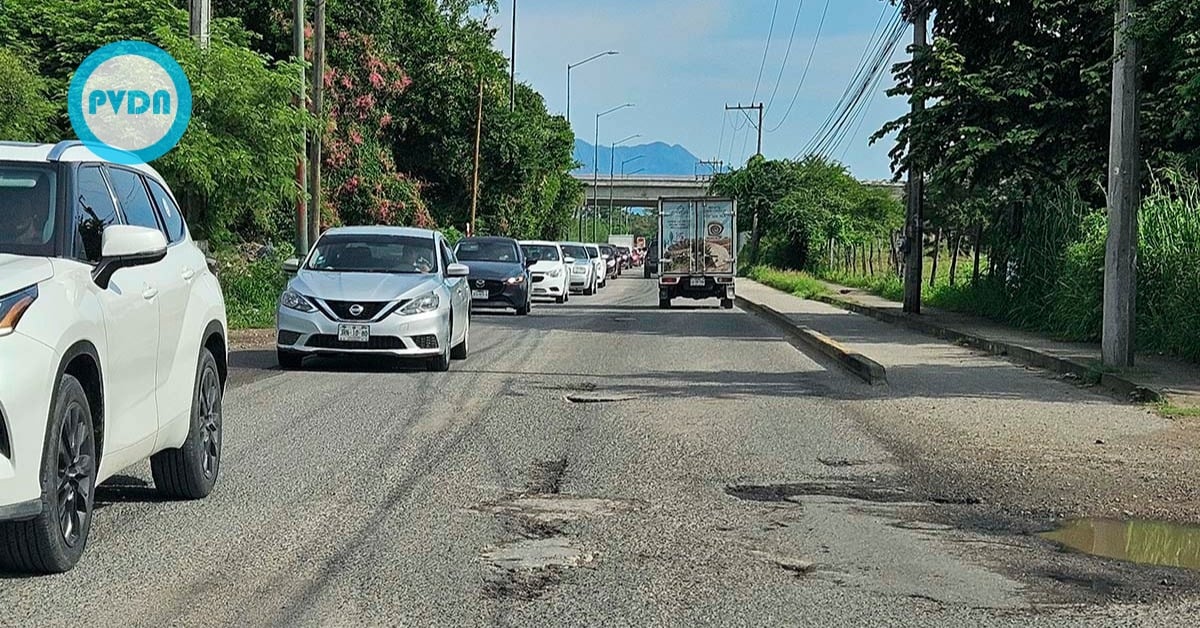
If you drove Avenida México this week, you probably felt it. Rims thudded, tempers flared, and traffic crawled as deep potholes opened near Mojoneras. Drivers told us they’ve blown tires and lost time, especially by the Vía Corta bridge. After days of heavy rain and a steady stream of trucks, the asphalt gave way. This is a quick, human update on what’s happening, what officials say, and how to get through it without another trip to the vulcanizadora.
Avenida México potholes
The stretch of Avenida México between the Mojoneras delegation and the bridge over the new Vía Corta corridor has developed potholes large enough to bend rims and shred tires. Local drivers describe “craters,” not just cracks. They point to a short zone where the worst damage sits, and where traffic slows to a crawl as people swerve to save their wheels. The road surface there is asphalt, not hydraulic concrete, which makes it more vulnerable to rain and heavy loads.
These holes did not appear overnight. Warnings about deep baches near Mojoneras have circulated since early September, with photos and videos framing the risk as “enorme” for anyone who takes that route daily. That early chatter matches what we saw again this week: wider holes, sharper edges, longer delays.
Recent storms exacerbated the existing surface issues. On September 15, a strong cell dumped rain over the north side of Puerto Vallarta and flooded parts of Ixtapa. When water infiltrates an already cracked asphalt base, it weakens the layers below; add the weight of trucks, and the surface collapses into cavities. That is the exact recipe engineers warn about during the wet season.
The location matters. Avenida México links neighborhoods such as Mojoneras and Ixtapa with the city’s main corridors and the airport area. It also sits under the footprint of the short-route toll road project commonly called the Vía Corta, whose branch crosses this avenue near Mojoneras. Construction traffic and routine freight both funnel through the zone, which raises the daily load on the asphalt. Heavy vehicles are known to accelerate pavement fatigue when the base is saturated
What the city is saying and doing
City Hall has promoted a “permanent bacheo” push this year. Officials have posted updates and videos about crews patching streets across Puerto Vallarta since the summer. That sets an expectation: holes like these should draw a quick response. At the time of writing, the city had not posted a fresh, specific schedule for repairs on this exact stretch, but the program exists, and residents will hold the government to it.
The pressure isn’t only coming from motorists. In the run-up to Independence Day, local groups planned demonstrations calling for better transport and bacheo across the city. The message is consistent: fix the basics so daily life works. Avenida México now sits squarely in that debate because the impact is immediate—blown tires, late arrivals, and money out of pocket.
On the ground, drivers are adapting. You see hazard lights flick on as cars approach the worst section. You see people straddle lanes to dodge the edges. That behavior slows everyone, but it’s a rational response to the risk. If you must use the corridor before repairs land, reduce speed sufficiently before the zone, keep distance, and avoid last-second swerves that could trigger a collision. Mechanics we spoke with off-record say they’ve seen a steady trickle of bent rims this week, which tracks with what motorists describe publicly. (We’ll update if the city publishes a work window for this segment.)
What to watch next
Three things will tell you if relief is coming—first, the weather. A couple of dry days help any patch hold; another storm will chew the edges again. Secondly, whether bacheo crews show up with hot mix and compactors rather than cold patch, which often fails under truck traffic. Third, the status of nearby construction. If heavy vehicles continue to pound the same lane line, expect recurring failures until a more durable fix arrives.
This is a local story about a short piece of pavement, but the stakes are broader. When a key connector fails, small businesses lose hours, delivery routes slip, and residents pay for tires instead of groceries. That is why potholes trigger protests and why governments now tout fast-response programs. The city says it has one. Avenida México is the test.