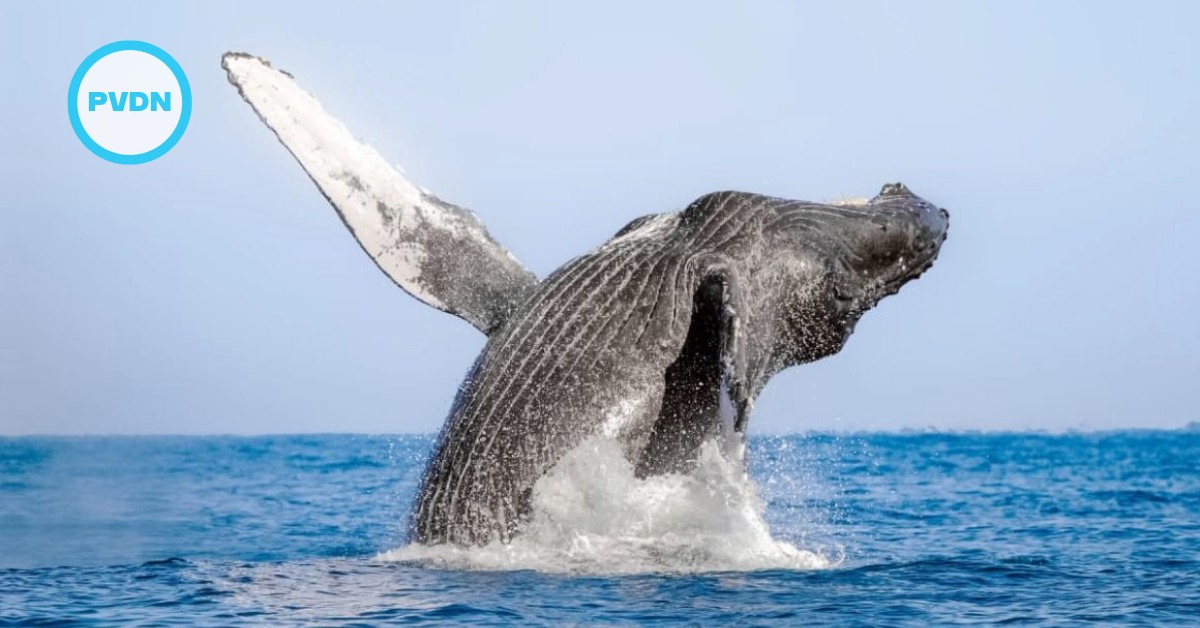
Banderas Bay whale season opens with strong humpback numbers, as researchers track up to ten whales an hour despite unusually warm seas.
Humpback whales have already begun surfacing off the coasts of Jalisco and Nayarit, and this Monday, December 8, marks the official start of whale watching season in Bahía de Banderas and across Mexico’s central Pacific. Federal environmental rules authorize tours through March 23, 2025, creating a defined window that protects the animals during their breeding and calving months while still allowing one of the region’s most important tourism activities to operate.
Marine biologist Astrid Frisch Jordan, president of the nonprofit Whale Ecology and Conservation, said early monitoring trips point to another busy year on the bay. For the past seven seasons, her team has run research surveys beginning in November to track when humpback whales arrive and how many use the area. The first outings of the new cycle are showing numbers similar to last season, which researchers and tour operators recall as one of the strongest in decades for sightings.
Banderas Bay, shared by Jalisco and Nayarit, is considered one of the most important congregation sites for humpback whales in the Mexican Pacific. Long-term photo-identification work coordinated by Whale Ecology and Conservation has catalogued more than 3,600 individual whales in the bay. It indicates that roughly 500 humpbacks may use these waters during a typical winter. Many of those animals travel thousands of kilometres from cold feeding grounds off North America to mate, give birth and nurse calves in the relatively calm, warm waters of this natural amphitheatre.
Banderas Bay whale season
For visitors and tour crews, the most tangible question is how often whales will appear during a trip. Based on the first weeks of field work, Frisch expects most licensed tour operators in Banderas Bay to see at least two or three whales per hour of navigation. Her research team, which spends more time offshore and follows fixed survey routes, is already recording more frequent encounters and estimates they could see between six and ten whales per hour as the season peaks. By the end of March, she says, between 500 and 700 humpbacks could have entered the bay over the course of the season.
Those numbers are striking, given how the season began. Sea surface temperatures in November remained unusually high for the time of year, a pattern that often raises concern that whales could alter their timing or shift to other breeding areas. Instead, observers have logged a steady stream of humpbacks arriving off Puerto Vallarta, Punta de Mita and the Nayarit coast, with adults breaching, tail-slapping and travelling alongside calves. So far, the behaviour suggests that, at least this year, the bay remains attractive even under warmer conditions.
Frisch notes that cooler La Niña years have traditionally favoured the presence of whales in the region, while warmer conditions, often linked to El Niño, can alter how marine species use the Pacific. This season’s strong early whale counts, despite the heat, have surprised researchers and raised questions about whether humpbacks are adjusting to new temperature patterns or simply taking advantage of local conditions in Banderas Bay. Scientists involved in long-term monitoring say they will need to compare several more seasons before they can tell whether this year is an anomaly or part of a broader shift.
Warm seas, high expectations
Even without firm answers, the combination of high whale numbers and warmer water is shaping how scientists and tour companies approach the season. For researchers, each outing is a chance to photograph tail flukes for identification catalogues, document behaviour and follow mother–calf pairs that help refine migration models for the central Pacific humpback population. Those records also feed into the national whale disentanglement network coordinated by Whale Ecology and Conservation, which has freed more than 100 whales of several species along the Mexican Pacific up to the 2025 season.
For local captains and guides, the priority is delivering close-range encounters without stressing the animals. Mexico’s official whale watching rules set minimum distances between boats and whales, cap how many vessels may approach a group and reduce navigation speeds inside observation zones, all to keep the activity non-intrusive. In Banderas Bay, federal regulations also establish no-go areas around the Marietas Islands and along a coastal strip from Punta de Mita to the mouth of the Ameca River, where mothers with young calves tend to concentrate and need extra space.
As the first officially authorized tours head out under the new season, expectations on shore and at sea are cautiously high. If early trends hold, visitors could once again find themselves watching several whales in a single hour, while the scientists sharing those decks gain a clearer picture of how these animals are living through a warmer ocean. In Banderas Bay, where tourism and conservation share the same waters, the outcome of this whale season will be measured not only in photos and memories, but in the long-term health of one of Mexico’s most emblematic marine visitors.