A beloved turtle camp on Puerto Vallarta’s north shore took a beating from Priscilla’s powerful surf. Now, after days of mud, splinters, and sore backs, volunteers say the key nesting pen is back in action. The fix matters: it’s the difference between thousands of eggs developing safely or washing out with the tide. Here’s what changed at the beach, what the storm actually did, and how officials and locals are shoring up protection during peak nesting—plus the one simple behavior that residents and visitors get wrong at night.
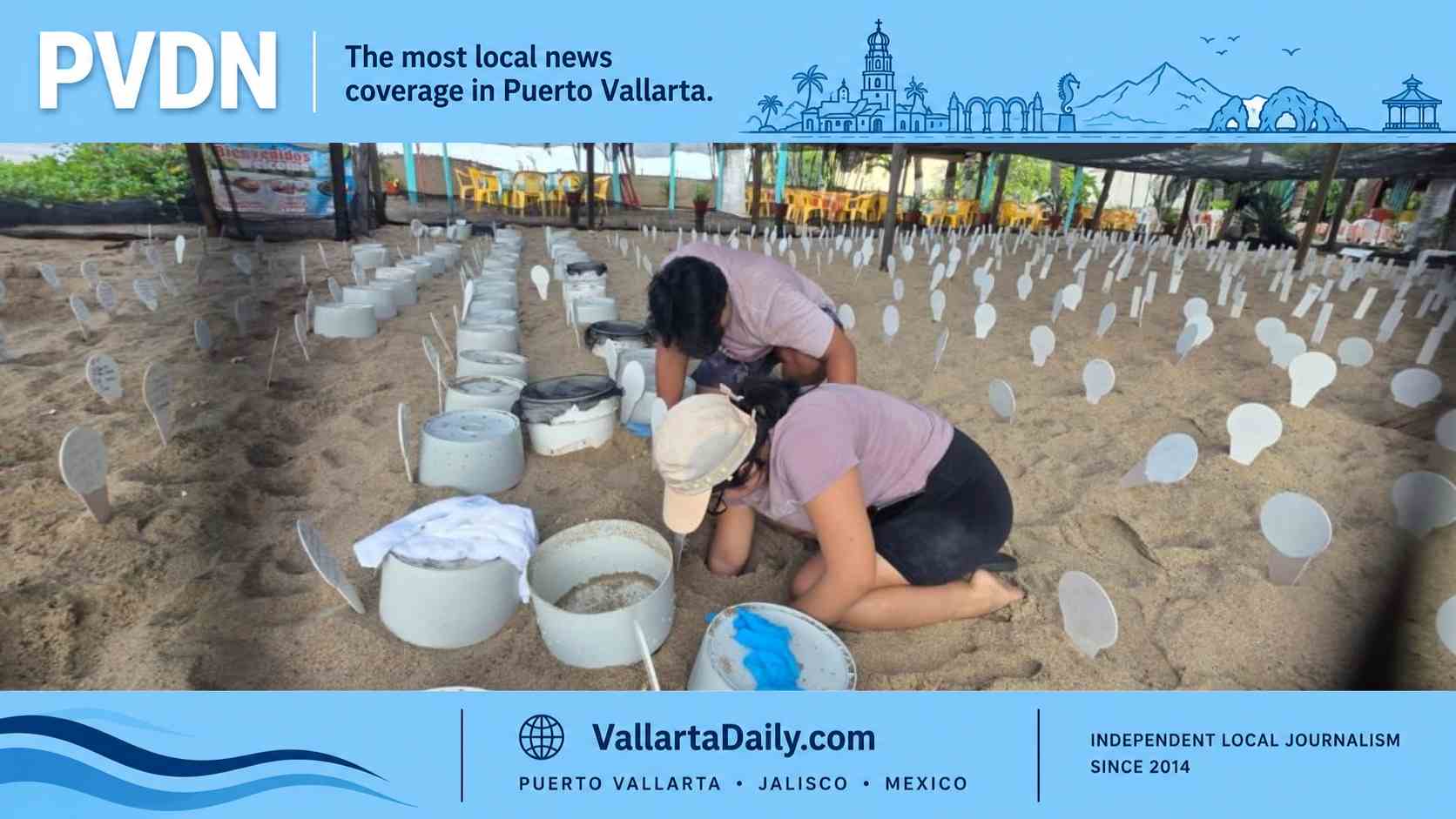
The Boca de Tomates turtle camp says it has finished rehabilitating one of its main nesting pens after Priscilla’s storm surge wrecked incubation corrals earlier in October. In a message to supporters, the camp described losing corrals and starting restoration work immediately once the seas calmed.
Priscilla did more than churn the bay. The system hovered off Jalisco and Baja California Sur, driving high surf and coastal flooding along Mexico’s Pacific side. Forecasts and reporting at the time warned of dangerous seas, squalls, and localized flooding as the storm weakened but continued pushing water ashore. Locally, Vallarta’s waterfront and low-lying areas saw waves riding over seawalls and into streets.
The camp at Boca de Tomates—an undeveloped stretch just north of the airport—was hit especially hard. Local outlets and the camp’s partners estimated roughly 300 nests lost as surf collapsed the hatchery structures, translating to about 30,000 eggs. That loss figure is consistent across municipal briefings and multiple independent newsrooms that toured the site days after the storm.
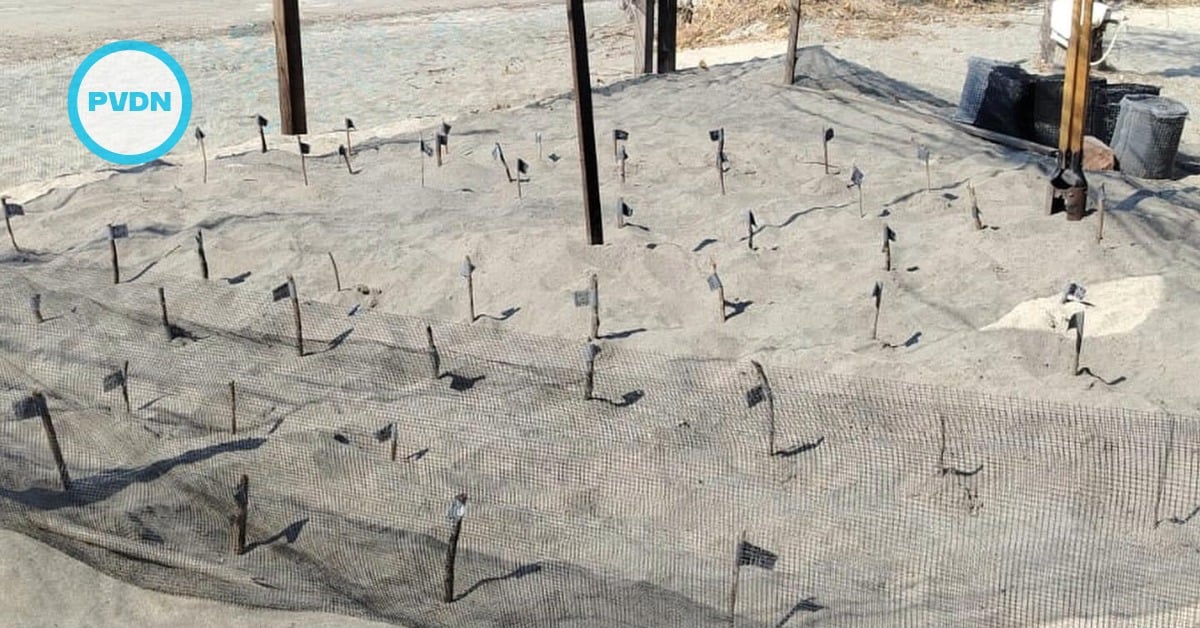
According to the camp, the refurbished pen uses natural materials and tight protective netting to stabilize temperature and humidity during incubation and to block predators and wind-blown debris. That approach mirrors standard Mexican conservation practice for managed hatcheries, which prioritize a controlled microclimate in fenced sandpens during the peak season.
Boca de Tomates turtle
Boca de Tomates hosts some of the bay’s most active nesting, precisely because it’s a rare piece of shoreline without hotel towers or heavy nightlife spillover. That quieter profile—less light, less noise—has long made it a magnet for olive ridleys and occasional hawksbills during the annual nesting season. Official and tourism boards alike place the core window from August through December, with outlier arrivals in mid-July during some years.
Even before Priscilla, conservationists were juggling storm-era setbacks. Just two seasons ago, Hurricane Lidia disrupted nesting and releases across the bay; the Boca team still managed meaningful protections despite the weather hits. This year, after Priscilla’s clean-up, the rebuilt pen gives workers and volunteers a fighting chance to salvage the remainder of the season.
Municipal and federal authorities have been visible on the sand as well. PROFEPA, the federal environmental attorney’s office, reported stepped-up patrols at Boca de Tomates and adjacent beaches after the storm, a standard move when poaching risk rises and fencing is damaged. Those rounds aim to deter nest theft, beach driving, and other violations while hatcheries get back on their feet.
Inside the camp, the rhythm is familiar again: night patrols for fresh tracks, careful relocation when needed, and steady checks on substrate moisture so eggs neither overheat nor suffocate. The new netting and re-leveled sand beds matter most on hot, still nights, when a few degrees in the pen can make or break development. Conservation norms documented by national programs stress exactly this—consistent heat and humidity shield embryonic turtles from swings that storms and heatwaves can amplify.
What you can do on the beach tonight
The camp’s ask to residents and visitors is simple: let the beach be dark. Mexico’s conservation manuals and academic reviews are blunt about artificial light: bright beams on nesting beaches disorient adults, scramble hatchling navigation, and can drop survival odds, especially after storms strip natural cover. If you’re on the sand at night, skip white flashlights and smartphone LEDs, and never aim light at a turtle. If you spot a turtle or an unmarked nest, call authorized personnel rather than approaching.
There’s a human piece to all this. After a week when volunteers were hauling driftwood and rebuilding shade structures, the first repaired pen is a morale boost as much as a technical fix. The camp has also asked the community for donations and hands—materials, labor, and funds to help stabilize pens while new nests come in. In the days after Priscilla, those calls brought fresh fencing, posts, and enough help to get one incubator area back online.
Puerto Vallarta’s turtle season still has weeks to run. With the pen back and patrols active, the odds improve for the late nests now arriving on Boca de Tomates and nearby beaches. It won’t replace the eggs the storm took, but it gives the rest a fair shot—exactly what a community hatchery is meant to do.