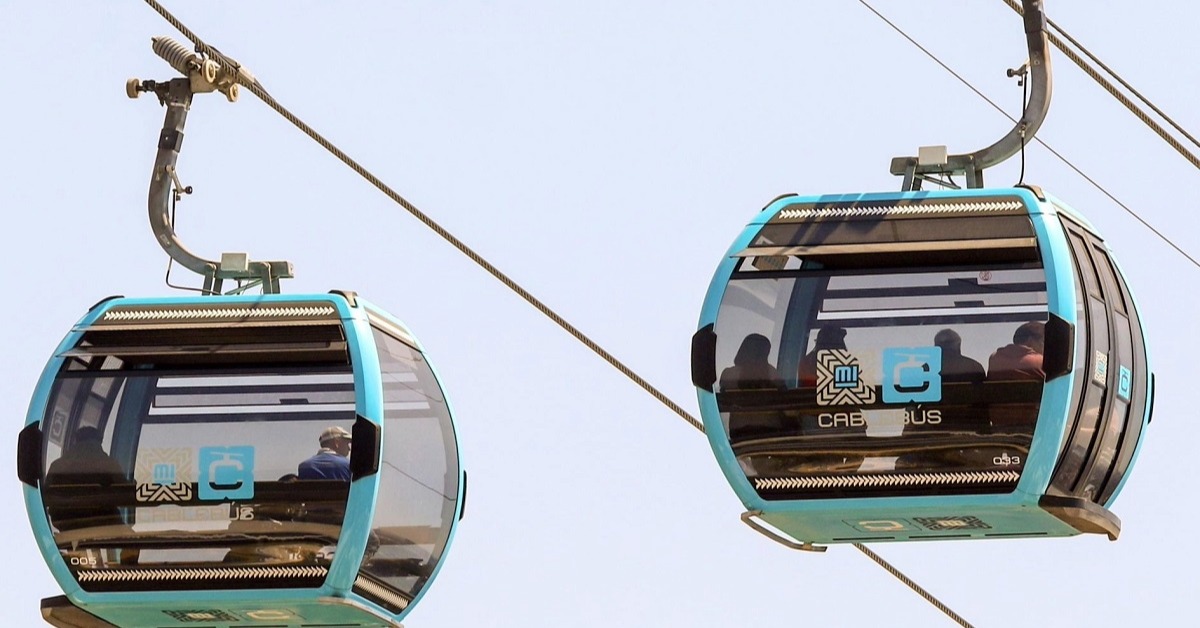
The governor of Puebla, Alejandro Armenta, confirmed that the city’s aerial cable system will be built with four lines, not three, and said work is set to start in September with a groundbreaking in Bosques de San Sebastián. He framed the project as everyday transport, not a tourist ride, and linked it to a broader effort to cut travel times across the capital.
Cablebús in Puebla
Armenta’s weekend announcement came with a few concrete details. The first station will rise in Bosques de San Sebastián. The initial alignment runs from La Resurrección through the stadiums and Los Fuertes to the Parque Ecológico. A second leg would connect the park to the Centro Escolar Niños Héroes de Chapultepec (CENHCH). A third would link CENHCH to the state government’s CIS complex in Angelópolis. The fourth route has not yet been disclosed.
He also said each cabin will hold ten people and include a panic button and onboard internet, modeled on Mexico City’s Line 3. The tender that wins construction would also take responsibility for the city’s Los Fuertes cable car, which the state describes as a prototype and due for maintenance.
Groundbreaking and early alignment
The state says the “first stone” will be laid in September at Bosques de San Sebastián. That site will anchor the first station and form the bridge to Angelópolis, Puebla’s leading business and retail district. Officials have signaled that the call for bids will be published shortly.
Armenta argued the four-line scheme is possible thanks to tighter finances and outside support, and he promised to finish paying for the system during his term. He contrasted the project with past big-ticket works, saying this one will prioritize mobility benefits over showpiece architecture.
Heritage and oversight
One of the most sensitive questions has been the station near CENHCH, a campus that sits by protected historic zones. INAH’s Puebla office said the planned infrastructure does not cross the federal monuments polygon or the UNESCO-listed area and will run outside the protected perimeter. The agency is awaiting final tower and gondola plans before issuing the last clearances.
That clearance matters. It reduces the risk of delays in archaeological work and guarantees that any construction near the historic core will proceed under supervision. It also helps explain why the government has emphasized route design and interchanges, and why it keeps pointing to Mexico City’s experience as a template.
Money, maintenance, and accountability
The cable system’s contractor will also be tasked with fixing the Los Fuertes cable car. Armenta called that installation a one-off prototype, which makes replacement parts and upkeep costlier, and said the state has faced multimillion-peso maintenance bills. Tying maintenance to the new tender creates leverage: the city gets a serviceable tourist cable car while building a complete commuter system.
That bargain also anchors the message from the statehouse: this is not a vanity project. Sheinbaum’s support came with the reminder that demand, interchanges, and speed gains must drive the final trace. If those basics hold, Cablebús in Puebla can shorten trips that today sprawl across the city’s north-south axis.
Watch for the bid call and technical sheets that will lock station footprints, clearances, and construction phasing. Local outlets report a projected start this year and target operations after the build-out, with one paper citing 2027 as an indicative window for full service. As the paperwork lands, the big questions for riders are simple: how fast the ride will be, how safely it connects to RUTA and key bus corridors, and whether the state can keep cabins moving through the rainy season without long downtimes.