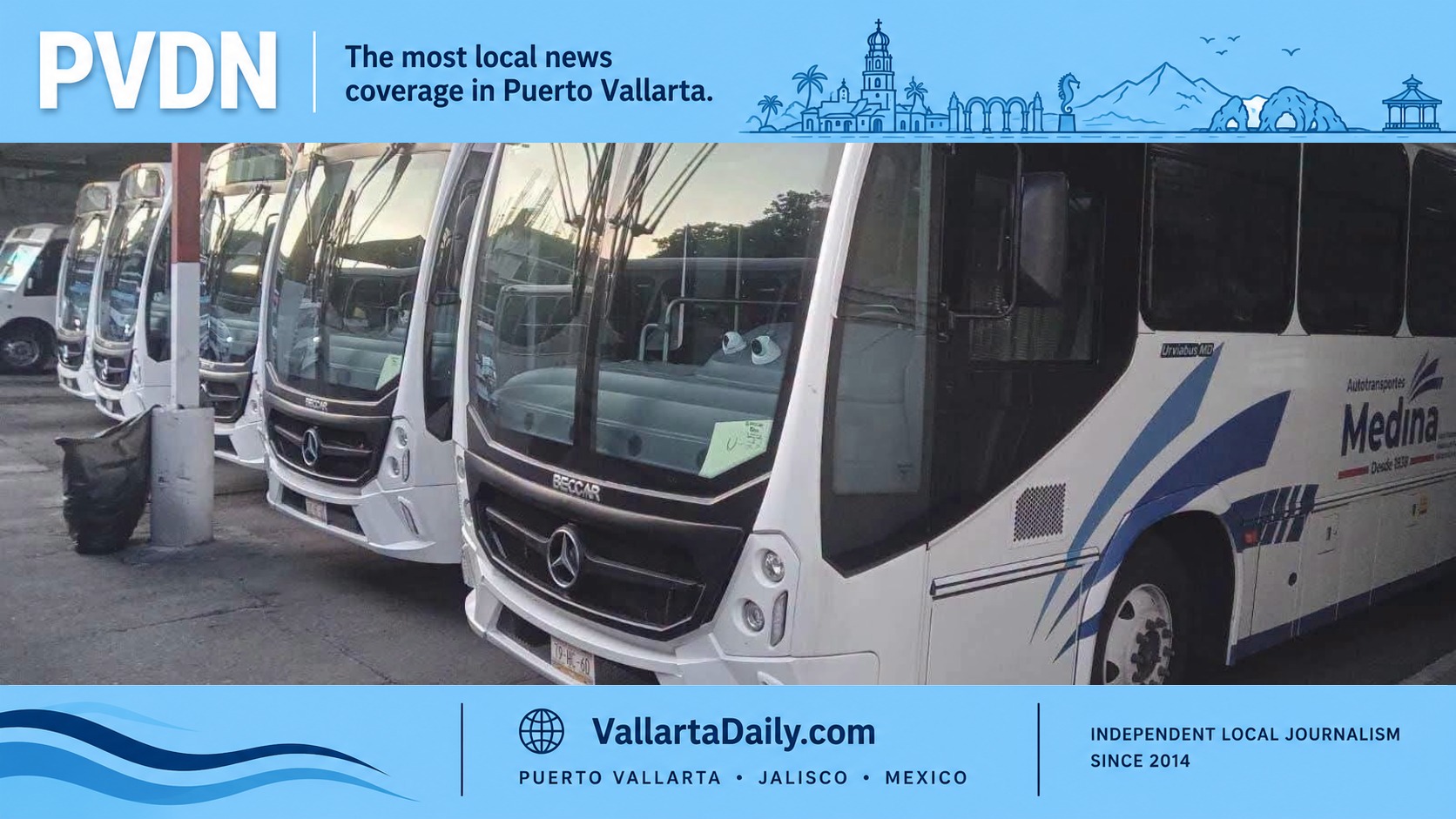
Bahía de Banderas, Nayarit, July 29, 2026 – Twenty new Autotransportes Medina buses have begun entering service across the Bahía de Banderas–Puerto Vallarta transportation network, bringing air conditioning, security cameras, and electronic fare equipment to a heavily used cross-state system.
The buses were presented July 24 in Nuevo Nayarit and will be introduced gradually on routes serving Nuevo Nayarit, Bucerías, Punta de Mita and communities within Bahía de Banderas. The company and transportation authorities have not released a route-by-route assignment list or said how many of the first 20 buses will cross the Ameca River into Puerto Vallarta.
Medina network covers two different types of travel. Some routes circulate within Bahía de Banderas, while others carry workers, students and other passengers between Nayarit and Jalisco. A broad announcement covering the regional system does not necessarily mean every corridor will immediately receive a new bus.
The first vehicles are part of a planned 70-bus renewal, Nayarit Mobility Secretary Sistiel Buhaya said during the presentation. That would leave 50 additional buses awaiting delivery. No public calendar was provided showing when the remaining vehicles will arrive or which older units they will replace.
Some initial reports described the expansion as 20 buses followed by another 70. However, the municipal announcement covering the presentation identified the vehicles as the first 20 within a total fleet renewal of 70.
The new Mercedes-Benz buses include air conditioning and video surveillance. Operators will select a passenger’s destination through an electronic fare system, which calculates the amount due and issues a receipt. Passengers must continue paying the exact fare in coins during the initial rollout.
Autotransportes Medina also announced plans to introduce reloadable cards and a mobile application supporting electronic balance reloads. The company did not give a launch date, explain where cards will be sold or announce any change to current fares.
Drivers assigned to the new vehicles are expected to receive certification through the Universidad Tecnológica de Bahía de Banderas. Training will cover road safety, passenger service, tourism-related service, and emotional control; details will be released after the fleet presentation show.
Officials said the Medina system moves about 90,000 passengers each day across the metropolitan area. That figure applies to the company’s broader network rather than the capacity of the 20 new buses, and no supporting ridership records were released with the announcement.
The rollout is separate from Jalisco’s electric-bus project on Avenida Francisco Medina Ascencio. The Medina fleet serves routes regulated by Nayarit that extend to Puerto Vallarta, while the electric-bus project is part of Puerto Vallarta’s Jalisco transportation overhaul.
Bahía de Banderas officials linked the bus renewal to several planned road projects, including an expansion to eight lanes between Mezcales and San Vicente, a connection between Jarretaderas and the proposed Puente Federaciones, and improvements to alternate roads.
Those projects could eventually change travel through some of the municipality’s most congested areas, but they are separate from the bus purchase. The fleet announcement included no construction dates, budgets, lane-closure plans, or timetable showing when any of the road work will affect daily trips.
The region is also awaiting progress on other cross-state infrastructure, including the Amado Nervo bridge project between Puerto Vallarta and Bahía de Banderas.
The immediate change is limited but visible. Twenty new buses are entering the network; passengers aboard them will have access to air conditioning and cameras, and cash will remain necessary. The larger test will come when Medina identifies the routes that will receive the vehicles, retires older buses, and publishes a delivery schedule for the remaining 50.