Residents in one Cabo San Lucas neighborhood say the water has not reached their homes for weeks, but the bills have kept coming. Their protest has drawn attention to a deeper problem in Los Cabos, where emergency water trucks, rationing schedules, and long-term desalination projects are being used to address a growing water demand. For many families, the question is not about future plans. It is about what happens when the tap stays dry today.
Cabo San Lucas neighborhood protests over water cuts
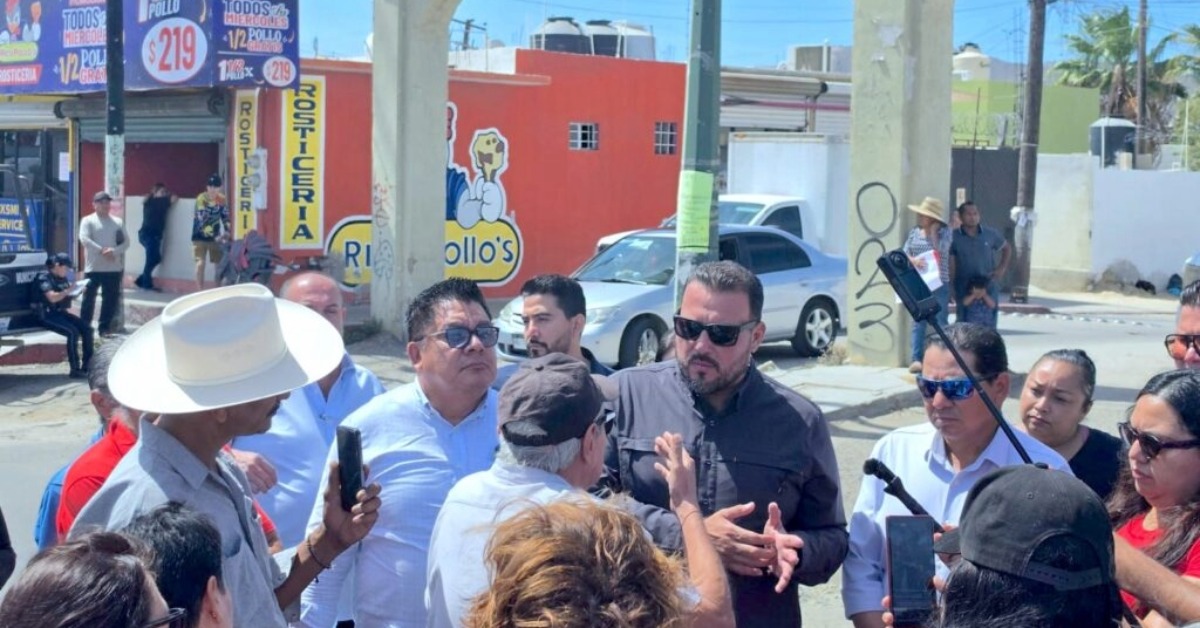
Residents of Brisas del Pacífico Infonavit in Cabo San Lucas took to the streets after more than a month without reliable water service, adding pressure to local authorities over one of Los Cabos’ most persistent public service problems.
The protest took place on Tuesday, May 5, and included partial street blockades. Residents said some homes had gone as long as 38 days without water through the municipal network. When service did return, they said, the flow was not enough to cover basic household needs.
For families, the problem goes beyond inconvenience. Water is needed for bathing, cooking, cleaning, toilets, and basic hygiene. The lack of regular service can be especially difficult for older adults, people with disabilities, and households without large storage tanks.
The residents’ complaint was direct. They said they are still receiving water bills, even while relying on outside deliveries or paying to have their own tanks filled.
Bills, tinacos and the cost of waiting
Several residents said monthly water bills have reached around 750 pesos, despite long periods without service. Some also reported paying around 500 pesos to fill their tinacos, the rooftop or ground-level water tanks used by many homes in Mexico.
That creates a double burden. Families are paying for a public service they say they are not receiving, while also paying extra to get enough water to live day to day.
The frustration is also tied to uncertainty. In neighborhoods served by tandeo (rotating water schedules), families often plan around expected delivery days. When those schedules fail, homes can run out before the next supply arrives.
For foreign residents who are new to Mexico, tandeo can be confusing. It does not always mean water flows every day. In many parts of the country, homes rely on scheduled supply, storage tanks, and pumps. When the schedule breaks down, the household system breaks down with it.
Emergency water trucks are helping but not solving the problem
Municipal and water authority responses have included pipas, or water trucks, to deliver water to affected neighborhoods. These deliveries can provide short-term relief, but residents said the amount is not always enough after weeks without regular service.
In some cases, residents said homes received only one tinaco of water. For a household that has been dry for weeks, that may cover only a limited period.
The local water agency has also announced emergency support in other Cabo San Lucas neighborhoods in recent days. Those efforts have included water trucks, storage tanks, and direct assistance to families in areas facing severe supply problems.
The use of water trucks shows that authorities recognize the shortage. It also shows the limits of the current system. Pipas can help during an outage, but they cannot replace a reliable network for thousands of homes.
Officials promise more deliveries and payment help
After the protest, representatives from the municipal water agency went to the area. Residents did not receive an immediate permanent solution, but officials later outlined several commitments.
The pledges included strengthening free water-truck service, returning to tandeo when conditions allow, and offering payment options for households with accumulated debt.
Those promises may ease some pressure, especially for families facing high bills. But residents said they need regular water, not only temporary assistance.
The protest also reflected wider frustration with municipal priorities. Some residents questioned why water-related activities were being promoted outside their community while their neighborhood remained without service.
A neighborhood complaint tied to a wider Los Cabos shortage
The situation in Brisas del Pacífico Infonavit is part of a broader water shortage in Los Cabos, especially in Cabo San Lucas.
Los Cabos has grown quickly over the past decade. The municipality had more than 351,000 residents in 2020, after growing more than 47 percent from 2010. That population figure does not fully reflect tourists, seasonal residents, workers, and daily demand from hotels, restaurants, and construction.
The result is a system under pressure from several sides. More homes and businesses need water, and more neighborhoods need infrastructure. Some areas still rely on water trucks because they lack full network coverage.
Municipal information has previously pointed to a water deficit measured in hundreds of liters per second, along with dozens of neighborhoods without access to the hydraulic network. That gap helps explain why individual outages can become prolonged neighborhood crises.
Desalination may help, but residents need water now
One major long-term answer is Desaladora 2, the second desalination plant planned for Cabo San Lucas. The project is expected to produce 250 liters per second once operating, which would add an important new source of potable water.
Desalination is often seen as a practical option for coastal cities with limited freshwater sources. In Los Cabos, it is part of the broader plan to reduce pressure on wells and improve supply.
But for residents now facing dry taps, future infrastructure does not fix the immediate problem. A new plant can help the system later, but families still need predictable delivery today.
That is why the protest matters beyond one neighborhood. It shows the gap between long-term planning and daily household reality. Residents are not only asking whether Los Cabos will have enough water in the future. They are asking when the water will reach their homes this week.
What residents will be watching next
The next test will be whether the promised water-truck support reaches affected families consistently, and whether tandeo can resume in a way residents can plan around.
Households will also be watching how billing issues are handled. If residents are being charged during long periods without service, payment flexibility may not be enough. Many will want clear explanations about charges, debt reductions, and how complaints will be reviewed.