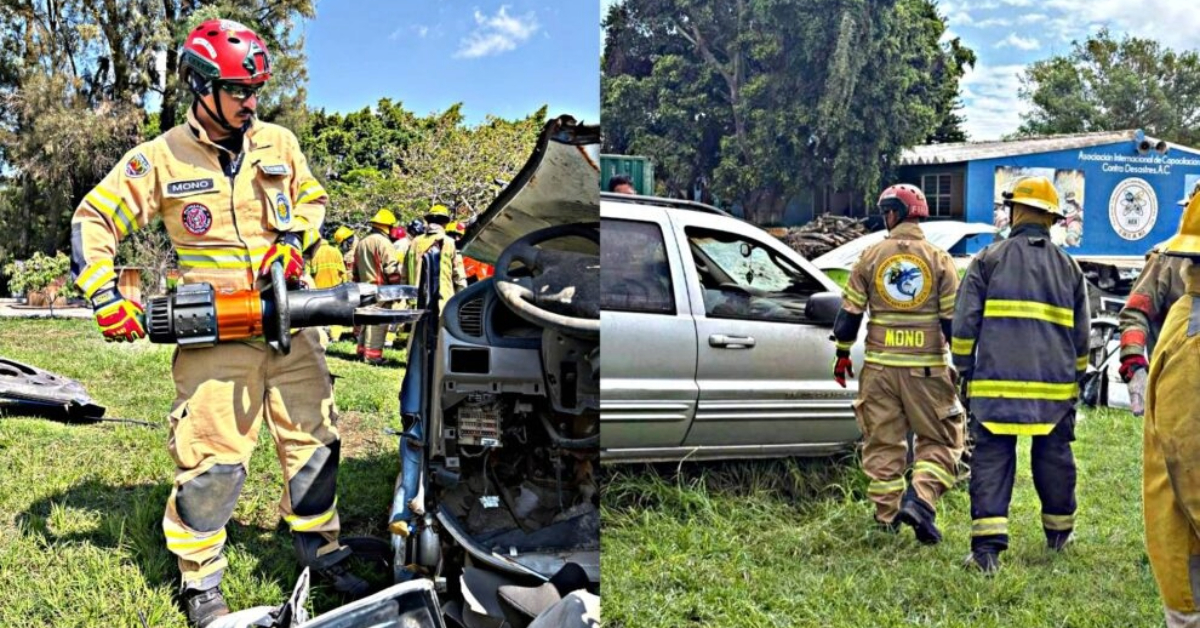
Sergeant Luis Enrique Aguilar joins Vocational Training Team Firefighters program in Mexico to sharpen urban rescue and vehicle extraction skills before swiftwater rescue training.
Sergeant Luis Enrique Aguilar of the Cabo San Lucas Fire Department is taking part in the Vocational Training Team Firefighters program organized by the Guadalajara Metropolitan Rotary Club and the Lake Houston Area Rotary Club. The weeklong course, held in El Salto, Jalisco, focuses on urban rescue and vehicle extraction. It brings together instructors from the United States, Colombia, and Mexico.
Aguilar, a veteran member of the Operations Battalion, said the program targets “previously selected personnel who undergo ongoing training in specialized emergency response techniques.” He noted that the goal is to strengthen the technical skills of operational teams across Latin America.
Over the intensive training week, participants receive both classroom instruction and hands-on drills in controlled scenarios. The curriculum covers advanced vehicle stabilization, patient packaging, hydraulic rescue tool operation, and simulated urban collapse extractions. U.S. and Colombian instructors contributed case studies and led live-action exercises.
In addition to his firefighting duties, Aguilar serves as a lifeguard and one of the founding instructors of the department’s aquatic rescue program. He is also a candidate for an upcoming swiftwater rescue course in Latin America, which will further broaden his emergency response expertise.
“Our department commits to constant professional growth,” said the Cabo San Lucas Fire Department in an official statement. “We support free training initiatives that equip firefighters with cutting-edge skills at no cost to their agencies.”
The Vocational Training Team Firefighters program offers specialized workshops and courses free of charge to fire services throughout Mexico and other Latin American countries. Since its launch, the program has trained over 300 firefighters in urban search and rescue, hazardous materials response, and technical rope rescue.
Local authorities in El Salto welcomed the training, emphasizing its role in enhancing regional disaster readiness. Municipal leaders applauded the Rotary Clubs’ collaboration, which covered logistics, training materials, and accreditation costs.
Aguilar’s participation reflects a broader push by the Cabo San Lucas Fire Department to diversify its rescue capabilities. In recent years, the department has upgraded its fleet, acquired new hydraulic tools, and introduced a marine response unit. Aguilar’s dual expertise in urban and aquatic rescue underlines the department’s all-hazards approach.
Captain Román Cortez, head of the Aquatic Rescue Division, highlighted the importance of cross-training. “When firefighters understand multiple rescue disciplines, they respond faster and safer. This program strengthens both individual skills and team cohesion,” Cortez said.
Looking ahead, the Cabo San Lucas Fire Department plans to nominate more personnel for similar courses. Aguilar and his classmates will also serve as peer instructors during in-house training sessions, passing on fresh techniques and best practices.
By investing in ongoing education, the department aims to reduce response times and improve outcomes in major incidents. Residents and visitors to Cabo San Lucas can take confidence in a fire service that values professional development and regional cooperation.