Cabo San Lucas firefighters are establishing a Cabo San Lucas heavy rescue unit, a specialized team designed for complex emergencies that exceed the capabilities of standard crews. The goal is simple and urgent: faster, safer rescues when every minute matters, whether on Highway 1, at a construction site, or after tropical storms. Early training is underway, and officials say the team could be deployed across Baja California Sur—and even beyond—once certified. What the city hasn’t announced yet is when it will go live, how it will be funded, and what the unit will be like.
Cabo San Lucas heavy rescue unit
Local outlet El Sudcaliforniano reports that the Cabo San Lucas Fire Department will integrate a heavy-rescue team capable of responding within the state and, if needed, to other parts of Mexico or abroad. That mandate suggests a build-out beyond routine firefighting toward complex operations, such as major vehicle entrapments, structural collapses, and high-risk environments that demand specialized tools and training.
A separate report this week quotes Fire Commander Juan Antonio Carbajal Figueroa saying the department is progressing “from light to heavy” capabilities through specialized courses, with an eye to eventual international certification so the team can assist other states or countries. It also frames the initiative as a way to close the time gap before outside reinforcements arrive.
Training and equipment are already in motion
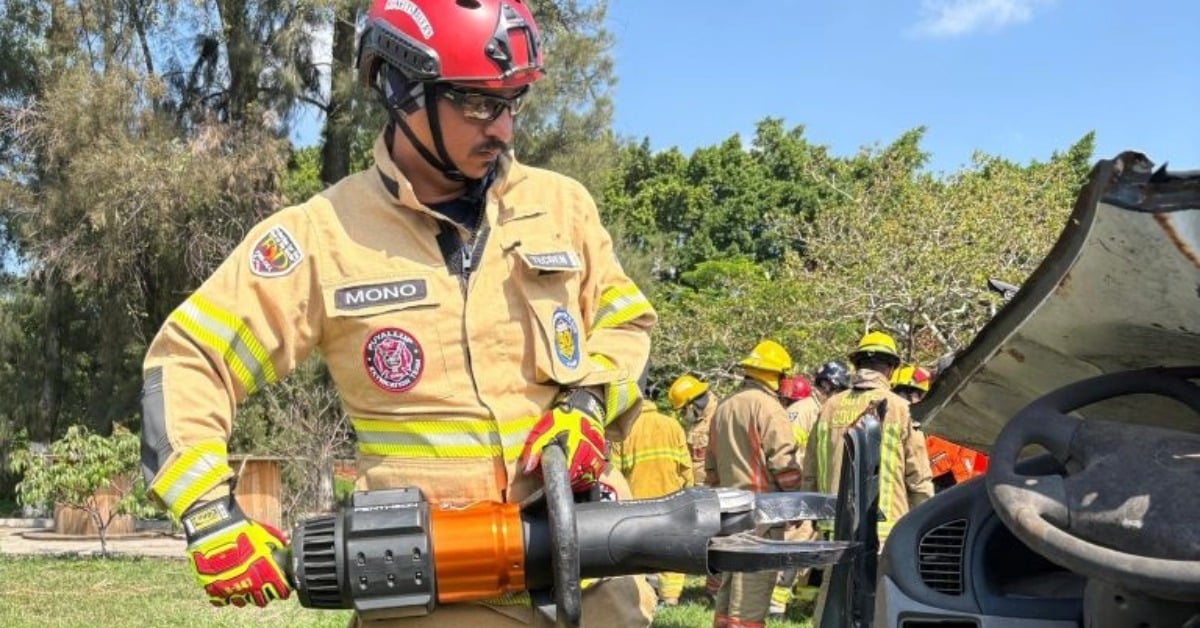
City hall documentation reveals that Cabo San Lucas personnel recently attended hands-on training in El Salto, Jalisco, focusing on urban rescue and vehicle extrication under a Rotary-backed program with instructors from Mexico, Colombia, and the United States. That kind of instruction aligns with the skills a heavy-rescue team needs—stabilizing wreckage, gaining access, and removing victims safely in controlled yet hostile environments.
Local coverage over the past few months also indicates ongoing skills development within the corps, ranging from rescue-vehicle operations to advanced extrication. Together, these steps indicate a structured pipeline: train crews first, add equipment, and then formalize the unit with defined activation protocols and inter-agency agreements.
How it fits in Mexico’s rescue system
Mexico maintains a National USAR accreditation mechanism that standardizes the composition, training, and deployment of urban search-and-rescue teams, with coordination through the Civil Protection. Internationally, INSARAG establishes minimum global standards and a common coordination method for teams that cross borders after earthquakes or other disasters. While Cabo San Lucas has not announced a certification timeline, the commander’s comments about international standards suggest the unit will train against these benchmarks.
Why Los Cabos needs this now
Baja California Sur is at risk from seasonal cyclones. As of August 26–28, Tropical Storm Juliette spun offshore and was forecast to send rain and swell toward the peninsula, a reminder that localized flooding, road closures, and water rescues can escalate quickly. In 2023, Hurricane Norma highlighted the vulnerability, knocking out power for tens of thousands and necessitating rescues in San José del Cabo and Los Cabos. Heavy-rescue capacity based in Cabo San Lucas shortens the time between impact and specialized help.
The geography matters, too. Long road stretches, constant tourist traffic, and construction growth create scenarios where advanced extrication and structural-rescue skills are crucial in saving lives before outside units can arrive. Leaders in the department say the planned capability is meant to bridge precisely that window.
What we still don’t know
Neither the city nor the department has published key operational details: staffing numbers, equipment lists, activation criteria, budget sources, or a go-live date. The El Sudcaliforniano report outlines the mission and reach but stops short of a timetable. Meganoticias adds intent—training up from light to heavy and pursuing certification—but not the specifics of procurement. Those answers will determine how quickly the unit moves from promise to performance, and how often it can deploy outside Los Cabos without thinning coverage at home.
The move to field a Cabo San Lucas heavy rescue unit is more than a new label. It is a shift to higher-risk, time-critical operations backed by formal training and, eventually, national standards. In a corridor exposed to storms and serious crashes, cutting response times by minutes is the difference that matters. We will track staffing, equipment, and accreditation milestones as they become public.