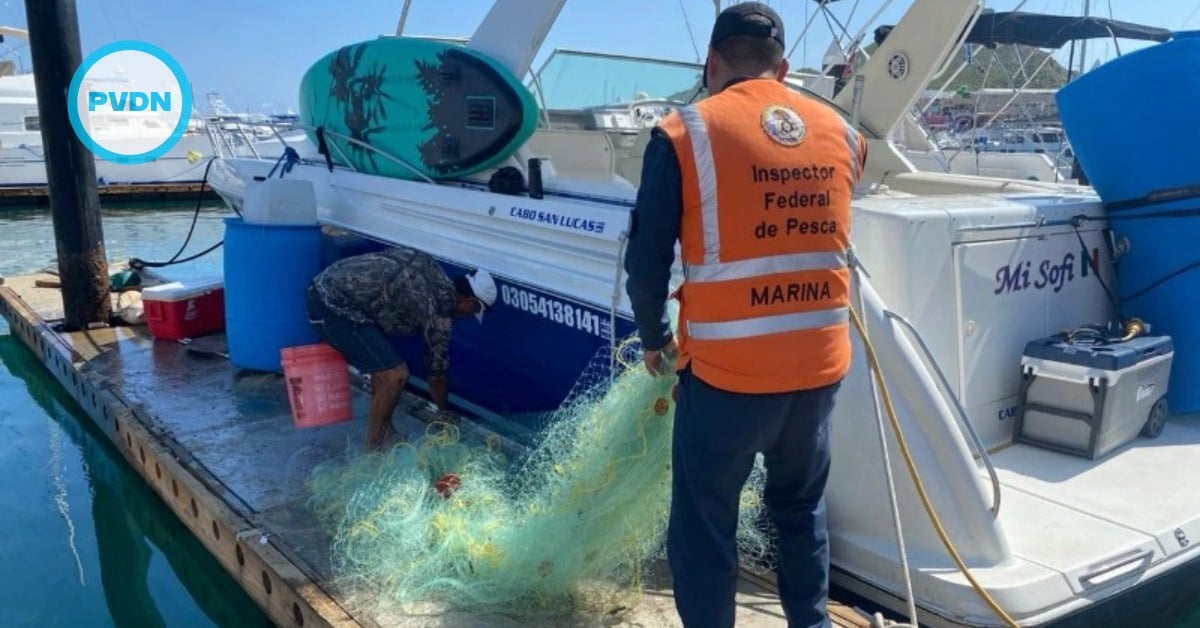
A state patrol found a fishing net inside the Cabo San Lucas protected area and hauled it out with several fish tangled in the gear, including a tiger shark and a roosterfish. No owner has stepped forward, but the case is now under investigation. Officials say nets in the bay don’t just threaten wildlife; they can also foul water taxis and jet skis during peak season. The incident has renewed pressure to police the rules that, on paper, already ban all fishing inside the protected polygon.
Cabo San Lucas protected area
A routine license check by Baja California Sur’s sport-fishing trust ended with a seized gill net in the very waters where fishing is forbidden. FONMAR staff report that the net was found floating inside the protected polygon at Cabo San Lucas, with multiple fish trapped, including a tiger shark, a roosterfish, and “cochitos.” Authorities retrieved the gear, opened a case file, and warned operators about the danger to wildlife and small boats as tournament season ramps up.
The prohibition here isn’t vague. The Cabo San Lucas protected area—formally the Area of Protection for Flora and Fauna (APFF)—was created by federal decree in 1973. That decree states, in black and white, that “fishing of all species is strictly prohibited” within the delimited zone off the tip of the peninsula. The rule also forbids anchoring or dumping waste that could harm marine life.
While the bay hosts whale-watching, snorkeling, water taxis, and jet skis, officials remind visitors that this polygon exists to shield a dense mix of wildlife—sea lions, humpbacks, and sea turtles among them—from harassment and entanglement. The area’s official profile highlights its natural draw but relies on operators and tourists to respect the boundaries that keep the experience viable.
Enforcement and what comes next
FONMAR’s local coordinator said teams work with CONANP, PROFEPA, SEMARNAT, and CONAPESCA to remove illegal gear and file reports against whoever is responsible. The agency has also backed efforts to modernize the protected area’s rulebook—an overdue step, given that many daily activities in the bay have outpaced a decree written half a century ago. In 2023, FONMAR announced a public consultation to update the polygon and regulate tourism routes and bait handling in line with conservation needs.
This latest seizure landed at a sensitive moment. Los Cabos is heading into high season, with high-profile tournaments that celebrate sport fishing outside the protected polygon while crowding its edges with tour boats. That overlap makes enforcement visible—or absent—by design. Mexico’s own experience shows that when bans are enforced in protected seas, nearby fisheries often benefit from spillover. But enforcement gaps in other marine parks have also exposed how fragile paper protections can be without consistent patrols and coordinated penalties.
For now, the message is simple and urgent: inside the polygon, fishing is off-limits. The fishing net seized this week will be evidence, and the hunt for its owner continues. Out on the water, the stakes are obvious. A single wall of mesh can turn a postcard bay into a hazard—for wildlife, for guides, and for visitors who trust that protected means protected.