Residents of the Casa Blanca neighborhood in Cabo San Lucas say water has not been arriving for more than a month. What has not stopped, they add, are the charges. In a written petition, families document over 40 days without potable water while residential bills keep climbing.
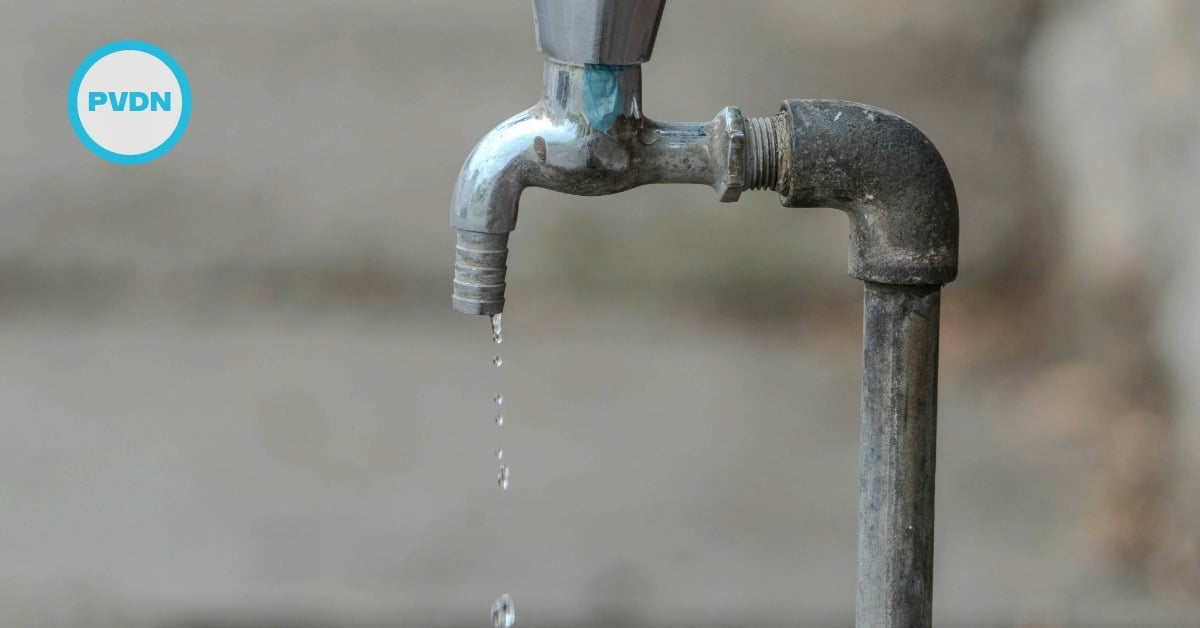
The letter describes a daily routine that now revolves around buckets and plastic tanks. Even on the rare days when the network is opened, neighbors report that the pipes push mostly air rather than water, sending their meters spinning and producing readings that do not match what actually reaches their homes.
Casa Blanca is classified under a high residential tariff, the kind usually applied to upscale subdivisions. Residents argue their modest, family homes bear little resemblance to gated communities with pools and manicured gardens, yet they are billed as if they did. The result, they say, is a double hit: a service that arrives roughly once a month, and a rate that treats them like luxury users.
Cabo San Lucas water
The petition to the Los Cabos municipal government is precise. Neighbors ask for a technical inspection of pipes and meters to identify leaks and air pockets, a reclassification of tariffs based on real consumption and housing type, and a published tandeo calendar that is actually followed. They lean on Article 8 of Mexico’s Constitution, which protects citizens’ right to petition authorities and receive a reply, and demand a written response rather than another verbal promise.
Behind this local dispute sits a structural shortage. Official figures shared at a 2024 meeting of the Mesa Técnica del Agua show Cabo San Lucas receives about 480 liters of potable water per second from wells, the aqueduct, and a desalination plant, but needs around 1,000 liters per second to supply the whole delegation. That leaves a deficit of roughly 600 liters per second, a gap that authorities themselves describe as grave.
To manage scarcity, the municipal utility Oomsapas relies on tandeo, a rotating schedule that opens and closes valves by sector. In social media posts using the hashtag #TandeoCaboSanLucas, Agua Potable Los Cabos repeatedly warns that schedules can change without notice due to well failures, power outages, leaks, or repair work. For Casa Blanca residents, that flexibility has begun to feel like abandonment: they say nearby subdivisions receive more frequent service while their own streets simply vanish from the rotation.
The pattern is not unique to this barrio. In Vista Hermosa, on the San José del Cabo side of the municipality, neighbors also complained this year that they were effectively excluded from tandeo. Authorities there pointed to low levels at the San Lázaro dam and the same 600-liter-per-second deficit to explain weeks without supply. Taken together, these cases suggest that the shortage does not hit every colonia equally. Street by street, the network favors some and forgets others.
That inequality has drawn attention beyond Baja California Sur. An investigation by El País describes how luxury hotels and golf courses in Los Cabos maintain lush greens and full pools while working-class neighborhoods wait weeks for a trickle or pay private truck operators for every drop. The report documents protests by residents who say water has turned into a class privilege in one of Mexico’s fastest-growing tourist corridors, where tourism dollars flow freely but pipes often run dry.
In response to mounting pressure, Oomsapas announced plans to build a geographic “heat map” to identify colonias with the most severe desabasto, using it to prioritize projects and, in theory, reduce tandeo by up to half in some zones as a new desalination plant comes online. Meanwhile, the federal Congress recently received a formal proposal urging urgent investment in Los Cabos’ hydraulic infrastructure, warning that leaks, illegal connections, and aging pipes are wasting water in a municipality with one of the country’s fastest population growth rates.
Families counting every bucket
For the families of Casa Blanca, those long-term plans feel distant. Their petition focuses on concrete, immediate steps: fixing lines that push air instead of water, recalibrating meters that over-register, and correcting a tariff that treats a self-built hillside home like a resort villa. Above all, they want a transparent schedule that tells them when to expect water so they can plan how to fill their storage tanks or arrange for deliveries.
Inside many of these houses, the crisis looks the same. Tinacos sit half empty on the roof. Plastic drums in patios hold cloudy water bought from pipas, a cost that eats into wages already stretched by food and rent. Parents ration showers and laundry loads, and children learn early that flushing is a calculation, not a reflex. Those who work in the tourism industry describe a jarring contrast: they spend hours each day in hotels where water flows at the turn of a tap, then go home to dry sinks and buckets lined up in the shower.
The municipal utility insists it is working to recover lost flows. In a recent project, Oomsapas reported recovering just over 6 liters per second of potable water through leak detection and repairs, the equivalent of supplying roughly 1,000 households. Engineers are also planning network interconnections designed to send more water to about 40 colonias currently disadvantaged by the way pipes were laid out decades ago.
But for Casa Blanca, the question is whether those broader efforts will translate into a steady stream from their own faucets or stay stuck in meeting rooms and press releases. Neighbors say they are not asking for special treatment, only for the Cabo San Lucas water system to recognize them as equal users, with tariffs and schedules that reflect their reality instead of erasing it.
Their petition is now in the hands of the Los Cabos Ayuntamiento. Under Mexican law, authorities must respond. Whether that response comes in the form of a polite letter or the sound of water finally filling rooftop tanks will signal to Casa Blanca — and to other dry colonias watching closely — how seriously the city is prepared to treat the right to open a tap and see water, not air.