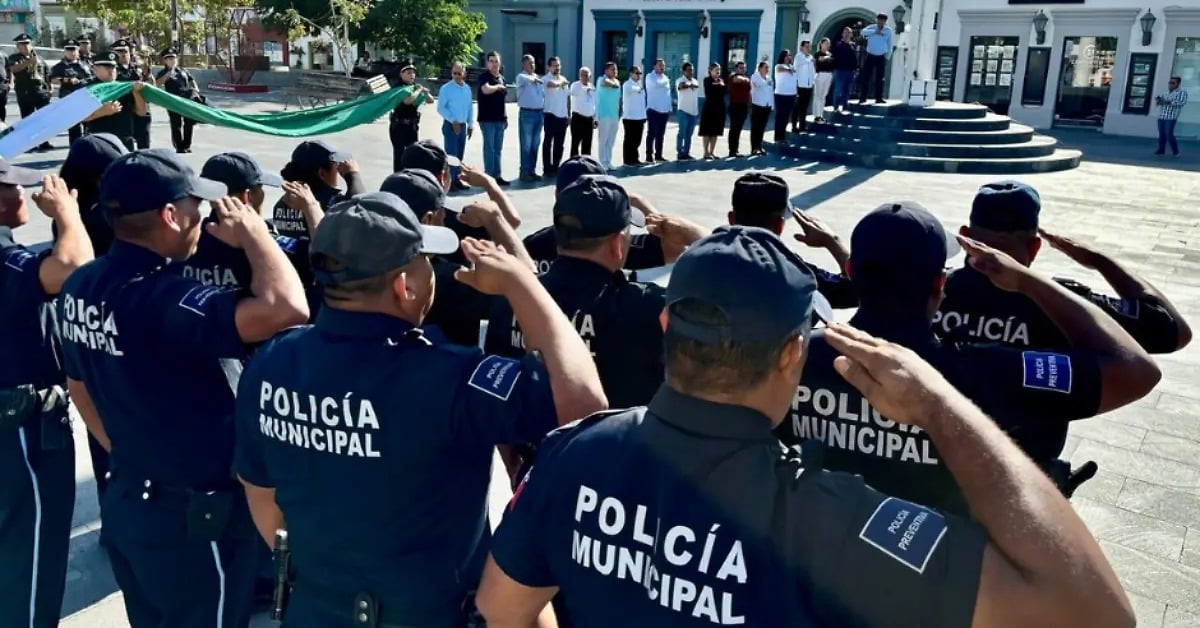
Municipal leaders in Los Cabos concede they do not have enough police to meet demand. They point to a fleet refresh and a new hiring push to close the gap. The current staffing level is approximately 600 officers for one of Mexico’s busiest tourism corridors. National and international benchmarks suggest a larger force is needed. Recent INEGI data also show a jump in the share of residents who feel unsafe, adding pressure to deliver faster response times and more visible patrols.
Municipal officials in Los Cabos have acknowledged a persistent staffing deficit in the local police force and outlined steps to strengthen patrol coverage. The city reported that “about 600” municipal officers were on the street and stated that it is purchasing new patrol vehicles while recruiting additional agents, a shift from past administrations that had leased units. The official mayor, Carlos Alberto Beltrán Olmeda, stated that recent deliveries were purchased through public tenders and that additional hires are currently under evaluation.
Los Cabos police shortfall
The Los Cabos police shortfall is not a new story, but the context has sharpened. The municipality’s 2024–2027 development plan lists 574 “effective” officers as of late 2024, equal to 1.63 police per 1,000 residents, and it flags “an insufficient number of effective elements” as a driver of slow response times and complaints. That plan cites a United Nations reference of 3 police per 1,000 inhabitants as an ideal threshold. Even if today’s headcount is near 600, Los Cabos still sits below both that local benchmark and Mexico’s federal Modelo Óptimo de la Función Policial, which sets a minimum of 1.8 police per 1,000.
What the numbers say
Taken together, those figures help explain the urgency. Using the municipality’s own ratio math, 574 officers implied a rate of roughly 1.63 per 1,000 last year. Meeting the 1.8 minimum would require a larger force than Los Cabos currently has; reaching 3.0 would necessitate a far greater expansion. The debate is not academic. The plan ties a thin force to longer waits, fewer proximity patrols, and declining trust.
Perception trends and patrols
Public concern is also moving. INEGI’s city-level survey shows Los Cabos rose from 24.7% of adults feeling unsafe in March to about 36% in June 2025, even as the area remains safer than many Mexican cities. Officials framed the new patrols and hiring as a way to steady those perceptions before the high season.
Hiring hurdles
Recruitment is active at both the municipal and state levels. Los Cabos reopened its call for policía preventivo municipal with requirements that include residency and control-and-confidence exams. The Baja California Sur public security secretariat likewise issued a 2025 call for new state preventive police, with age, education, mobility, and vetting criteria. Separately, the Los Cabos police directorate announced an internal review of performance and protocols this month, signaling a parallel focus on standards and training.
The bigger picture for a fast-growing city
Los Cabos has experienced rapid growth over the past decade, placing increased pressure on patrol coverage across Cabo San Lucas and San José del Cabo. The municipality counted 351,111 residents in 2020, and local planning documents describe a rapid expansion, low density over a large territory, and service gaps that complicate policing efforts. A smaller force spread thin over longer distances means patrol time gets eaten by driving. That is one reason city leaders are leaning on both fleet upgrades and staffing to boost visibility in tourist zones and in outlying neighborhoods.
Why this matters now
Tourism economies depend on visible, predictable policing. The city’s current approach—buying rather than leasing patrols, recruiting more agents, and auditing internal protocols—addresses both capacity and credibility. But the math is stubborn. If Los Cabos wants to meet the 1.8 per 1,000 floor, it needs more officers than it has today. If it aims at the 3.0 per 1,000 ideal referenced in its own plan, the gap is larger still. Until then, residents and visitors will likely see incremental gains: more units with lights on key corridors, targeted hiring classes, and periodic updates on response times and citizen trust. The follow-through will determine whether the perception curve returns to its original level.