Los Cabos families now build huge home cisterns to survive long water rationing gaps as taps run dry and trucked water bills soar.
Los Cabos has lived with water cuts for years, but the shortages are now reshaping homes themselves. To keep water on hand between long rationing cycles, families are building their own cisterns, some large enough to store up to 15,000 liters at a time. For many households, these tanks have become the only way to avoid running completely dry when the pipes stay empty and the next delivery is uncertain.
Water managers in the municipality have been blunt about the scale of the problem. The local utility has acknowledged a production deficit of about 455 liters per second and says there are still 49 neighborhoods without formal network connections, relying on tanker trucks or improvised lines. To stretch what does exist, officials use tandeo, a rotation system that sends water to certain areas on specific days while shutting off others and asking residents to be patient.
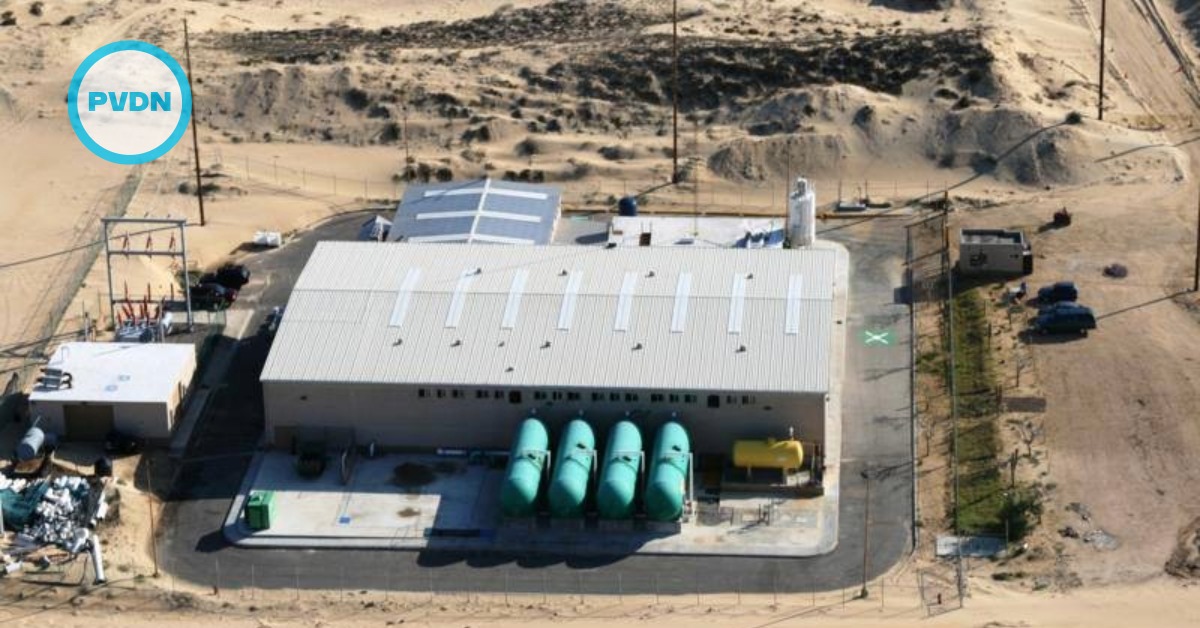
That rotation is fragile. In January 2024, a desalination line in Cabo San Lucas had to be shut down for repairs, and the utility warned that rationing for several neighborhoods would be interrupted for at least two days. For families who had already emptied their rooftop storage, even a short repair window meant another scramble to find water or money for an emergency truck delivery.
The broader backdrop is a tightening drought and rapid growth. Federal drought monitors now show that more than half of Baja California Sur’s territory faces some level of drought, after a recent year in which the state briefly showed no official drought at all. At the same time, Los Cabos has been described by its own authorities as needing more than 1,000 liters of water per second to meet demand, even as the main desalination plant has only recently raised output from 80 to 106 liters per second and still aims to reach about 180 to 190 liters per second. It is a structural gap, not just a bad season.
Against that mismatch, the phrase Los Cabos water crisis is no abstraction for local families. It is the calculation that happens every time they open a tap, check the bottom of a plastic tank or decide whether to pay for another truckload.
Families build cisterns as Los Cabos water crisis deepens
In this context, home cisterns have turned into a survival plan. Households that once relied on one or two small rooftop tanks now invest in underground or semi-buried structures that can hold between 10,000 and 15,000 liters, enough to capture a full high-pressure delivery or several visits from a tanker truck. One widely sold 10,000-liter cistern model, marketed for up to 35 people, retails for more than 40,000 pesos online before any installation costs.
Families adapt those industrial products to their own needs. Some build reinforced concrete boxes and line them with waterproofing before connecting them to pumps and existing plumbing. Others bury large plastic tanks and cover them with simple slabs to keep out sunlight and debris. Many keep their older 750- or 1,000-liter rooftop tanks in place, using the big cistern below as a reservoir to refill them whenever the lines or trucks finally deliver water.
The financial hit is steep for workers whose income depends on tourism, construction or informal jobs. The price of the tank is only the first step. Excavation, concrete, pumps, electrical work and plumbing all add up. For many families, the project moves in stages: buying the tank one month, paying a mason the next, then saving again to install a pump or proper covers. The result is a spread of backyards and patios with fresh concrete lids and half-finished shafts, quiet evidence of how far people are willing to go just to secure basic water.
Even once the cistern is in place, the water itself is far from cheap. Citizen accounts and recent studies have found that more than 27 percent of Cabo San Lucas residents now pay over 1,500 pesos a month for water, once piped service and truck deliveries are taken together. In neighborhoods with weaker service, families describe weeks with dry pipes while utility bills keep arriving. Many now depend on 1,300-liter loads from water trucks that can cost as much as a week’s wages for low-paid workers.
The contrast with the tourist corridor is sharp. Los Cabos has spent decades selling an image of turquoise infinity pools, green golf courses and luxury villas, each with its own assured supply. At the same time, local reporting has documented working-class neighborhoods where the taps stay dry for 40 days, even as residents continue to receive bills and beg officials for basic tandeo. For people there, the backyard cistern is not an upgrade. It is a last line of defense.
Daily life inside the Los Cabos water crisis
Living with a home cistern changes the rhythm of daily life. Families monitor municipal announcements and neighborhood chat groups to know when Tandeo might send water their way, because a single missed delivery can undo careful planning. When the signal finally comes that pressure is rising in the lines, every routine compresses into a narrow window. Laundry, cleaning, showers and refilling containers all have to happen while the cistern takes in as much water as possible.
The psychological toll is harder to measure than the liters inside a tank. Parents talk about teaching children to shower in minutes, to reuse lightly worn clothes and to pour leftover drinking water into plants instead of down the drain. People describe the background anxiety of listening for pumps, checking levels, and wondering whether to spend scarce cash on another truckload in case the next rotation fails to arrive. That stress sits on top of rising food prices, housing costs and the everyday uncertainty of seasonal work.
Climate change and policy choices both sit in the background. Environmental groups warn that the wider northwest of Mexico is facing one of its worst water crises in recent decades, and that drought and heat are likely to intensify. In Los Cabos, officials highlight new desalination projects and network upgrades as part of the answer, yet the gap between capacity and demand remains large even after recent expansions.
Tourism, meanwhile, continues to grow. Developers promote new luxury communities and surf-focused residential projects along the coast, complete with artificial wave pools, multiple swimming pools and lush landscaping. Each new project promises jobs and investment, but residents and analysts worry that without stronger regulation and enforcement, those projects will deepen existing inequalities and leave workers’ neighborhoods even more dependent on private cisterns and expensive tanker trucks.
For now, families who have managed to build their own cisterns feel at least a bit less exposed when the pipes go quiet. A full tank will not last forever, but it can turn a week-long outage into hardship instead of an immediate emergency. The larger question for Los Cabos is whether authorities will treat these backyard tanks as a stopgap on the way to a fairer, more reliable system, or simply as proof that residents can fend for themselves while the resorts and golf courses keep the water flowing.