At a high-profile forum on the shores of the Sea of Cortez, Mexican officials are trying to redraw the story they tell about the country’s environment.
Speaking at the Mar de Cortés Forum in Los Cabos on 12 November, Marina Robles, the federal undersecretary for Biodiversity and Environmental Restoration, said “restoration” is now a priority for President Claudia Sheinbaum’s government and a responsibility owed to the communities living with ecological damage.
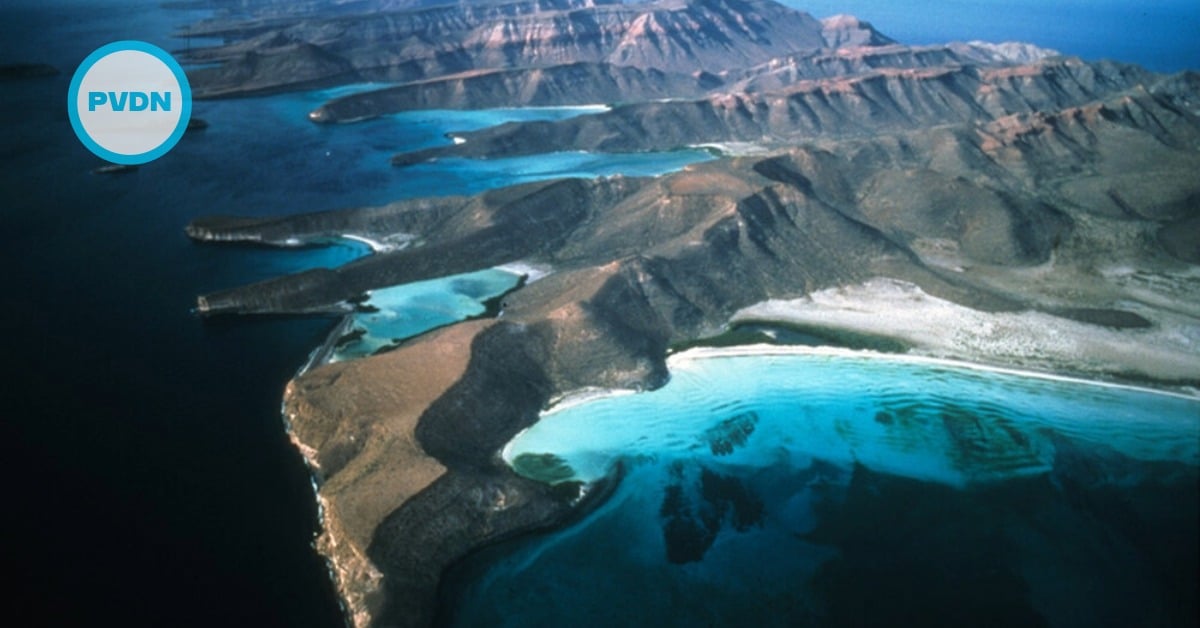
Robles pointed to the Gulf of California, shared by Baja California, Baja California Sur, Sonora, Sinaloa, and Nayarit, as one of the most biologically rich seas on the planet. A third of the world’s marine mammal species live there, some of them nowhere else.
Her message is simple but heavy: Mexico is a megadiverse country that has already spent a lot of its natural capital. Official estimates say it holds roughly 10–12% of the planet’s species, yet more than a quarter of its territory has lost natural ecosystems, and much of what remains is degraded.
Against that backdrop, Mexico environmental restoration is being rebranded as a nation-building project rather than a niche conservation cause.
Mexico environmental restoration
The Sheinbaum administration’s flagship tool is the new National Environmental Restoration Program 2025–2030, known by its Spanish initials PNRA. It was launched in June with backing from the Environment Ministry (Semarnat), the UN Environment Programme, and a coalition of Mexican NGOs and researchers.
The plan maps out 50 priority restoration sites to start work in 2025 and 28 more in 2026. It aims to recover degraded forests, rivers, coasts, and cities, with a strong focus on mangroves, urban green spaces, and polluted watersheds. Targets include restoring tens of thousands of hectares of forest by 2030, rehabilitating urban parks, and helping communities monitor their own territories.
One goal speaks directly to the Sea of Cortez. By 2030, Mexico wants to restore and declare ten damaged sites in the Gulf as new “Marine Prosperity Areas”, while also contributing to a 35% cut in national greenhouse gas emissions.
Robles now heads a restructured Subsecretariat for Biodiversity and Restoration, created this year when Semarnat’s internal rulebook was rewritten to put ecosystem repair on the same level as traditional environmental regulation. For her, restoration is not just about planting trees but about repairing the social fabric that depends on those forests, reefs, and wetlands.
Officials often highlight success on Mexico’s islands, where invasive species have been removed and native plants and seabirds are returning. The UN recently recognised the country’s island restoration work as a “flagship” of global restoration, citing it as proof that damaged ecosystems can rebound when money and political backing align.
Yet the gap between ambition and capacity remains wide. Environmental spending has shrunk over the past decade, even as climate impacts and industrial expansion speed up. Civil society groups warn that without strong enforcement, clear technical criteria, and long-term funding, the PNRA risks staying on paper.
Gulf of California on the front line
Nowhere is that tension more visible than in the Gulf of California itself. UNESCO’s listing for the Islands and Protected Areas of the Gulf of California describes 244 islands and coastal zones, home to almost 900 fish species and roughly a third of the world’s marine mammals. But the site has been on the World Heritage “in danger” list since 2019 because of overfishing, pollution, and coastal development.
Robles echoed those concerns in Los Cabos. Fisheries, she said, are under such pressure that fishers must travel farther for smaller catches. Tourism has exploded, and many towns still discharge untreated wastewater into coastal waters.
The most dramatic warning sign is the vaquita, a tiny porpoise that lives only in the northern Gulf. Scientists now estimate there are likely just six to eight vaquitas left. A recent report suggested fewer than ten survive, despite years of emergency measures. Their main killer is illegal gillnet fishing for totoaba, a large fish whose swim bladder is smuggled to Asia.
Conservation groups say that saving the vaquita would be a powerful test of whether Mexico’s new restoration agenda has teeth. The PNRA includes a goal to restore degraded coastal and marine ecosystems and to expand protection in the Gulf, yet illegal nets still appear inside “zero tolerance” zones.
At the same time, new fossil fuel projects threaten to push the region in the opposite direction. Environmental lawyers have warned that proposed liquefied natural gas export terminals near the Gulf could lock in decades of emissions and further disturb already stressed marine life, including the vaquita.
Mexico’s own climate policies send mixed signals. Sheinbaum’s team has approved a more ambitious 2035 emissions target and launched a new climate pledge ahead of COP30, and the restoration program is presented as a pillar of that effort. But an analysis by Spanish daily El País found that less than 4% of federal climate-labelled spending currently goes to the environment ministry. At the same time, major funds continue to flow to infrastructure projects and the state oil company, Pemex.
Robles argues that alliances and multilateral work will be essential, especially as the global context shifts. She noted that the US President’s renewed order to withdraw the United States from the Paris Agreement has weakened international momentum just as climate impacts intensify.
That makes regional coalitions and new treaties more important. Mexico recently joined countries backing the new UN High Seas Treaty, and officials are pushing for stronger coordination with neighbours on marine protection and illegal fishing.
For communities along the Gulf, though, the measure of success will be local and visible: cleaner water, healthier fisheries, fewer dead animals in nets, and better-paid work that does not depend on stripping the sea bare.
The government’s message in Los Cabos was that Mexico environmental restoration is finally a national priority rather than a side project. Turning that promise into a daily reality in places like the Gulf of California will decide whether the new restoration era is remembered as a turning point or another missed chance.